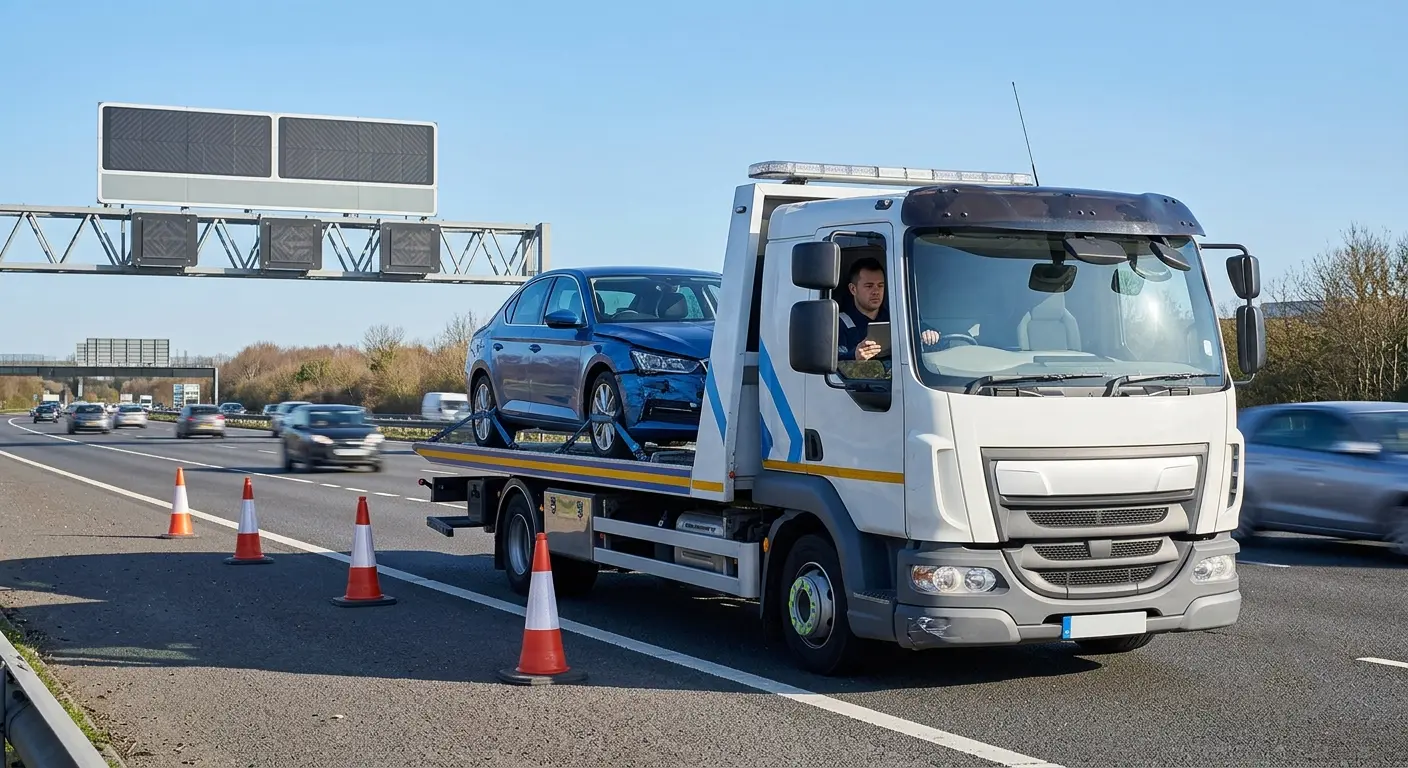
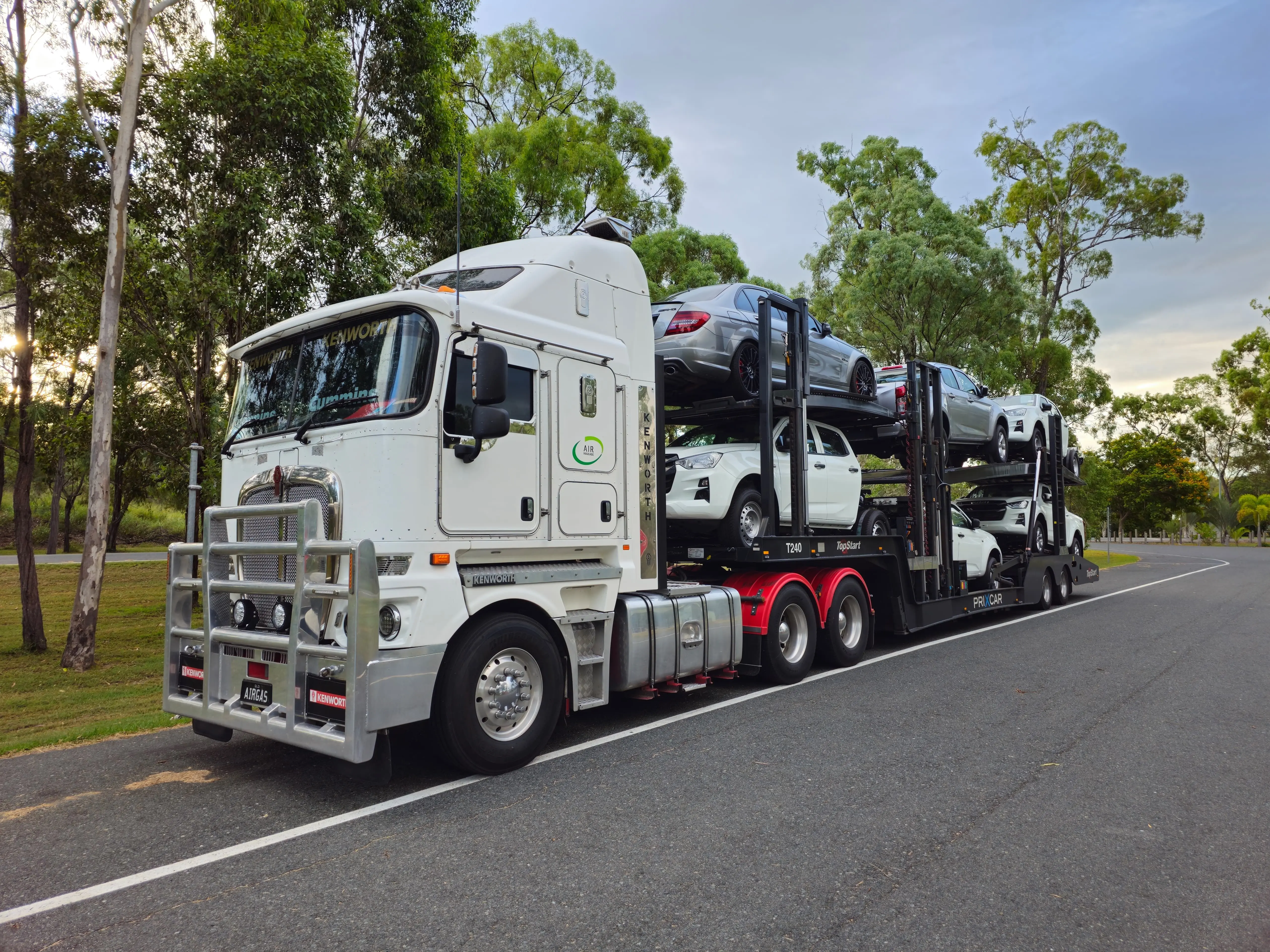
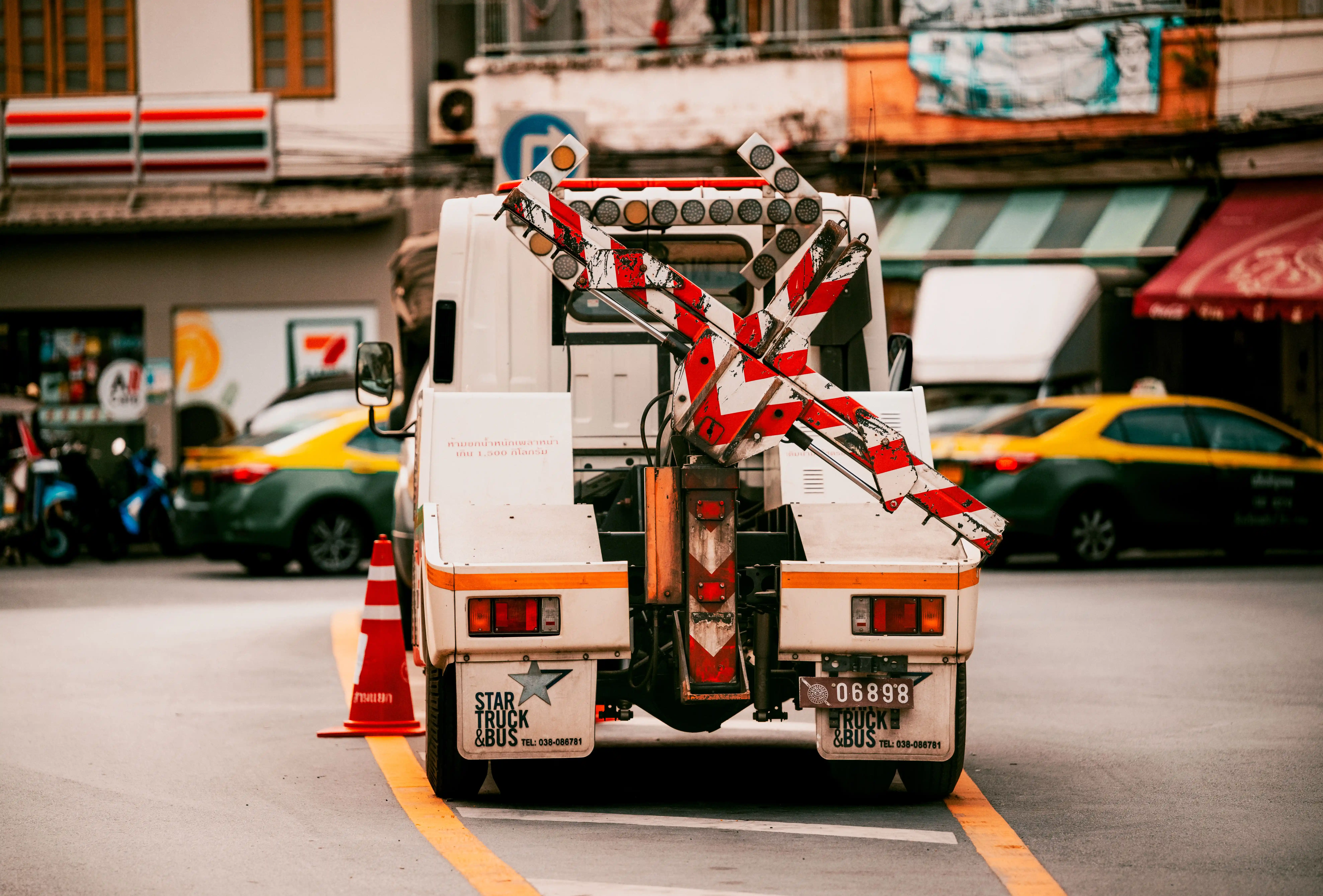
A car that will not start is not always broken — sometimes it has simply stood too long. Either way, the only way to move it is to load it. We transport non-running vehicles across Gijón, including those that will not roll, those with seized brakes, and those that have sat in a garage for years.
Working in a port city like Gijón has one very practical consequence: a good share of moves end at a terminal rather than a front door, with entry windows, access control and paperwork that has to be ready in advance. A truck that turns up without the right documents loses its slot, and with it the day.
What makes Gijón different
It helps to set the context before going into detail. El Musel is one of the main ports on the Cantabrian coast and handles regular ro-ro traffic. Asturias pairs a flat coastal corridor with mountain approaches to the central plateau through the Huerna pass.
Frequent rain in the north makes strapping technique and weather protection a real consideration on open transport. There is more background on the city in its Wikipedia entry.
The legal position: when transport stops being optional
Driving without a current ITV carries a fine and can result in the vehicle being immobilised under the rules the Dirección General de Tráfico (DGT) enforces. There is a larger problem behind it: in the event of an accident, your insurer may reduce or refuse cover entirely.
Royal Decree 920/2017 governing the ITV roadworthiness test allows a limited exception for travelling to a booked inspection, but it does not permit normal use of the vehicle. Any other journey requires it to be carried on a transporter.
Recurring moves for the trade
Garages, dealerships and traders move non-runners regularly: part-exchanges, vehicles awaiting repair, cars destined for dismantling. For them the decisive factor is not the one-off price but reliability of timing.
Grouping several vehicles into one job reduces the cost per unit appreciably. Where there is recurring volume, planning moves in batches is almost always more efficient than handling them one at a time.
Documentation needed for the move
The usual documents are the registration certificate and identification of the keeper, or a signed authorisation. After a recent purchase, the sale contract or receipt is worth bringing too.
A vehicle can be transported even without a valid ITV or insurance, precisely because it travels on a flatbed. What it cannot do is drive itself, and that is the whole reason the service exists.
Moving a car mid-restoration
A vehicle under restoration may be dismantled, without wheels, without brakes, or even without an engine. Each of those has a solution, but they need different approaches and sometimes specific lifting equipment.
Securing matters especially here. A vehicle with bodywork in progress does not have its usual anchor points available, so where to strap without deforming anything has to be worked out first.
Port activity in Gijón also means work happens outside standard office hours. A service that only operates nine to five fits badly with terminal reality.
Buying a car that does not start
Auction purchases of damaged or seized vehicles usually come with a collection deadline, after which storage charges accrue. Arranging transport in advance avoids that cost.
In a private sale it is worth having the change of ownership and insurance resolved before or immediately after the move. The carrier moves the vehicle but plays no part in those formalities.
A car that will not start: the real options
A non-runner is any vehicle that cannot move under its own power: it will not start, will not select a gear, has locked steering or seized brakes. It does not necessarily mean the vehicle is damaged, only that right now it does not work.
The category covers very different situations, from a car that has sat in a garage for two years to one with a seized engine or a broken gearbox. What they share is that the only way to move them is on a transporter.
Cover and liability during transport
A properly run move records the vehicle's condition before loading, normally photographically, and records it again at delivery. That evidence is what settles any later disagreement quickly.
It is worth confirming the company holds the relevant transport authorisation with the Spanish Ministry of Transport and a current policy. That is the difference between a professional service and someone with a hired trailer.
The key question: does it roll?
When arranging transport for a stationary vehicle, the first thing we ask is whether the wheels turn freely, whether the steering moves and whether the handbrake is off. Those three answers determine what equipment is needed.
A vehicle that rolls goes onto the truck by winch without complication. One with locked wheels needs skates — rolling platforms placed under each affected wheel — and that adds time to the job.
Other services in Gijón
There is more detail on non-runner transport, the full list on our services page, and you can reach us through contact for an assessment of your situation in Gijón.
Things to check before booking
Check whether your own policy covers the vehicle while it sits at a third-party workshop or compound. It is a frequent gap between the end of transport and the start of repair, and worth clarifying.
Battery condition matters even for a transport job. If the vehicle has to move a few metres under its own power to get out of a garage or a parking bay, a live battery saves time and avoids resorting to auxiliary equipment.
Make sure the alarm is disabled, or that the driver knows how to disable it. An alarm going off in transit means stopping and complicates the job for no reason.
Keep the job reference or delivery note. If you later need to evidence the move to an insurer, a workshop or the authorities, that document proves when and how the vehicle was moved.
In low-emission zones, verify whether the transport truck can enter during the planned time window. Many restrictions apply to heavy vehicles even where the car being carried would itself be allowed through.
Before the truck arrives, take the documentation, spare keys and anything valuable out of the vehicle. It travels unaccompanied, and items left inside are not covered as luggage.
If you will not be present at collection or delivery, put in writing who hands over and who receives the keys, with a phone number. This is the single most common cause of avoidable delay.
Flag it if the vehicle has stood unused for a long period. Flat tyres, seized brakes or a completely dead battery all change how it has to be loaded.
If the vehicle has any quirk — lowered suspension, an automatic gearbox locked in park, a flat battery — mention it when requesting the quote so the right equipment turns up.
Know where the spare wheel and tools are if the vehicle carries them. On long moves, a loose item in the boot shifts during the journey and can damage the interior or the trim.
If the vehicle contains fuel cans or any flammable material, remove it beforehand. Dangerous goods transport is governed by its own regulations and cannot travel mixed in with the vehicle.
Agree who signs for the vehicle at the destination. If it arrives at a closed workshop or an address where nobody is present, the driver cannot simply leave it, and waiting time or a second attempt both cost money.
Ask whether the price includes waiting time at loading and unloading. On moves to workshops, dealerships or compounds with slow procedures, that time can stretch, and it is worth knowing in advance how it is counted.
If the collection is from a building with a communal garage, tell the manager or concierge. A transporter manoeuvring on a shared ramp without warning creates avoidable friction with neighbours.
On vehicles with large-diameter wheels and low-profile tyres, the approach to the ramps needs more care. It is worth mentioning so the right angle is prepared and the tyre or rim is not scuffed.
Always ask whether the price covers collection and delivery at the points you need, or refers to a terminal-to-terminal move. The difference in cost and convenience is considerable.
On long moves, asking how many loading and unloading points the truck has helps explain the timescale. A truck making several stops takes longer than a direct run.
Realistic timescales depend on distance and route, not optimism. A company that promises any deadline without asking where the vehicle is probably will not meet it.
On classic vehicles with carburettors or older systems, say whether the engine needs any particular starting procedure. If it has to be moved even a few metres, that information saves time.
If you are selling the vehicle and the buyer arranges transport, put in writing when responsibility passes. It is normally at key handover, but both parties benefit from having it stated.
Leave the fuel tank low, around a quarter. It reduces weight, follows standard transport practice, and there is nothing to gain from a full tank during the journey.
A vehicle leaking oil or fuel should be flagged before transport. It does not prevent the move, but it affects where the car sits on the deck and what protection goes underneath it.
If the destination is an ITV test station, confirm you have a booked appointment and the time. Matching the vehicle's arrival to the appointment slot avoids long waits and a second visit.
On moves crossing several autonomous communities, bear in mind that heavy vehicle driving restrictions vary at weekends and on public holidays. That can affect the specific delivery day.
If the vehicle is in an underground car park, check the clearance height first. Many garages cannot take a transporter and the car has to be brought up to street level.
If the move is a private sale, coordinate payment and key handover clearly. The carrier moves the vehicle; it takes no part in the transaction.
Bear in mind that in peak periods — summer, or the start and end of the season — lead times stretch. Booking ahead is the simple way around it.
Before confirming, check the quote is fixed rather than an estimate subject to surcharges. Extras for difficult access or a non-rolling vehicle should be clear from the outset.
In summary
Car Transport 247 works across Gijón and the whole of Spain, 24 hours a day, with goods-in-transit cover for the journey and the price fixed before we start. Tell us your situation and we will give you an honest answer on how it works and what it costs.
Got a car that will not start in Gijón?
We collect from garages, rural properties and units. Fixed quote with no last-minute extras.