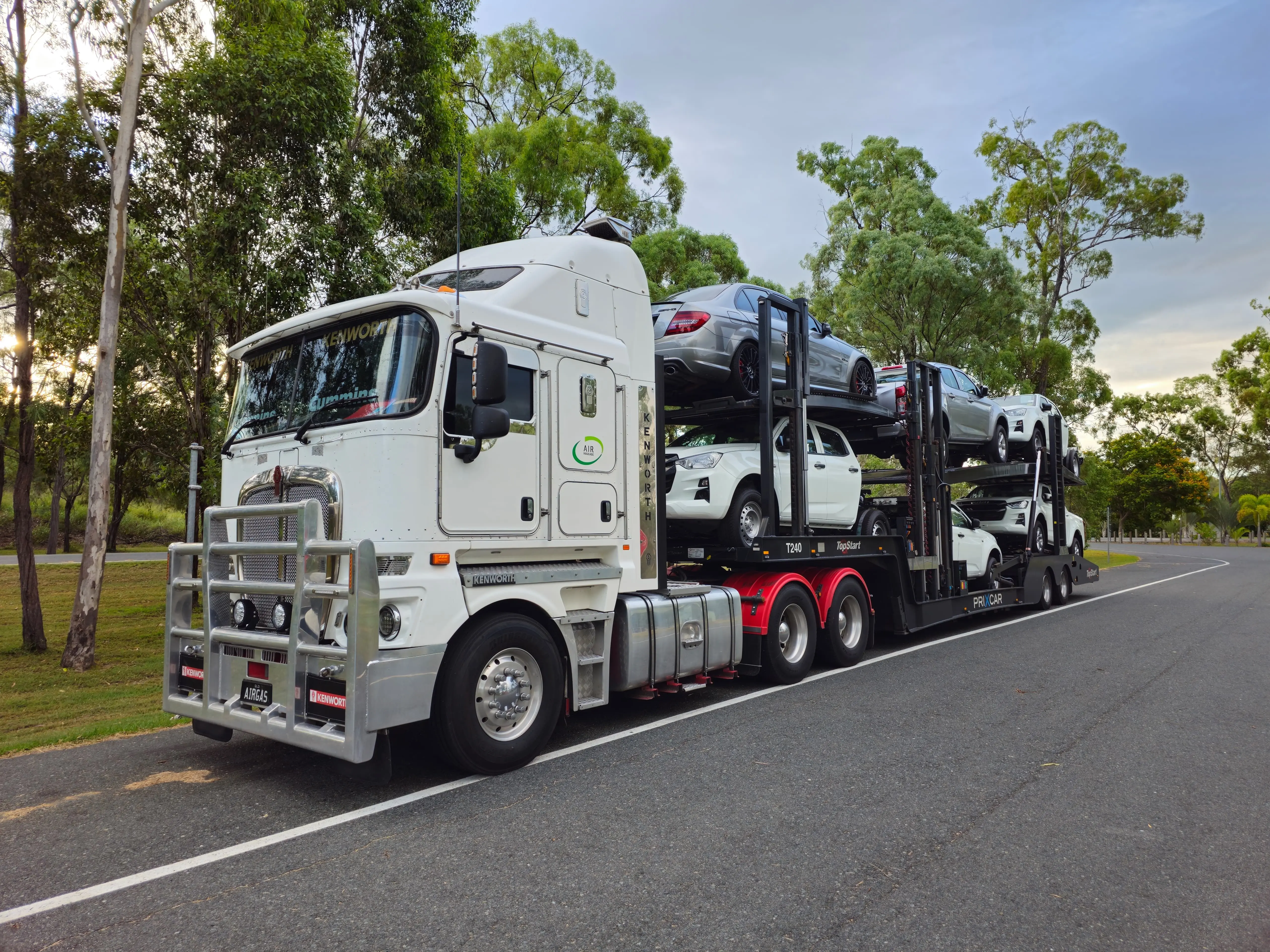
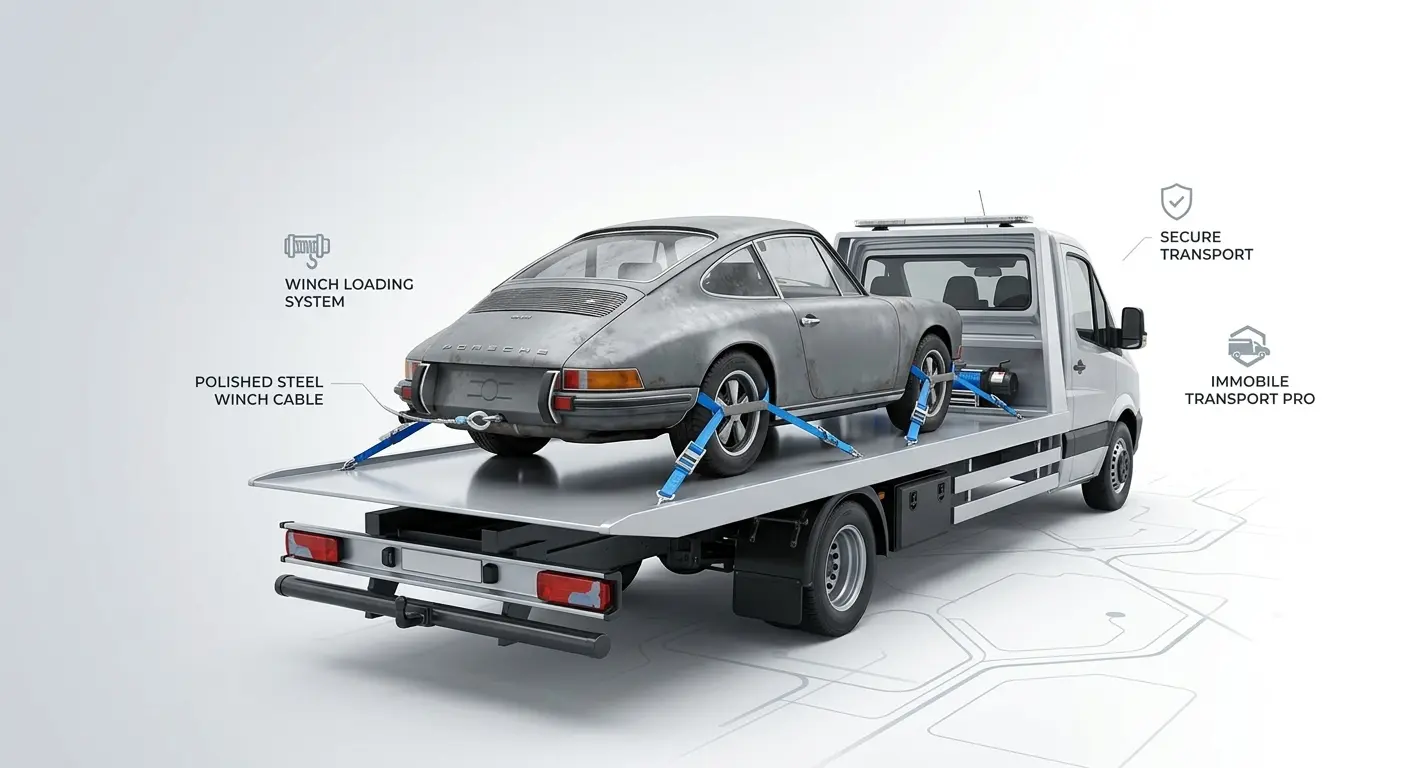
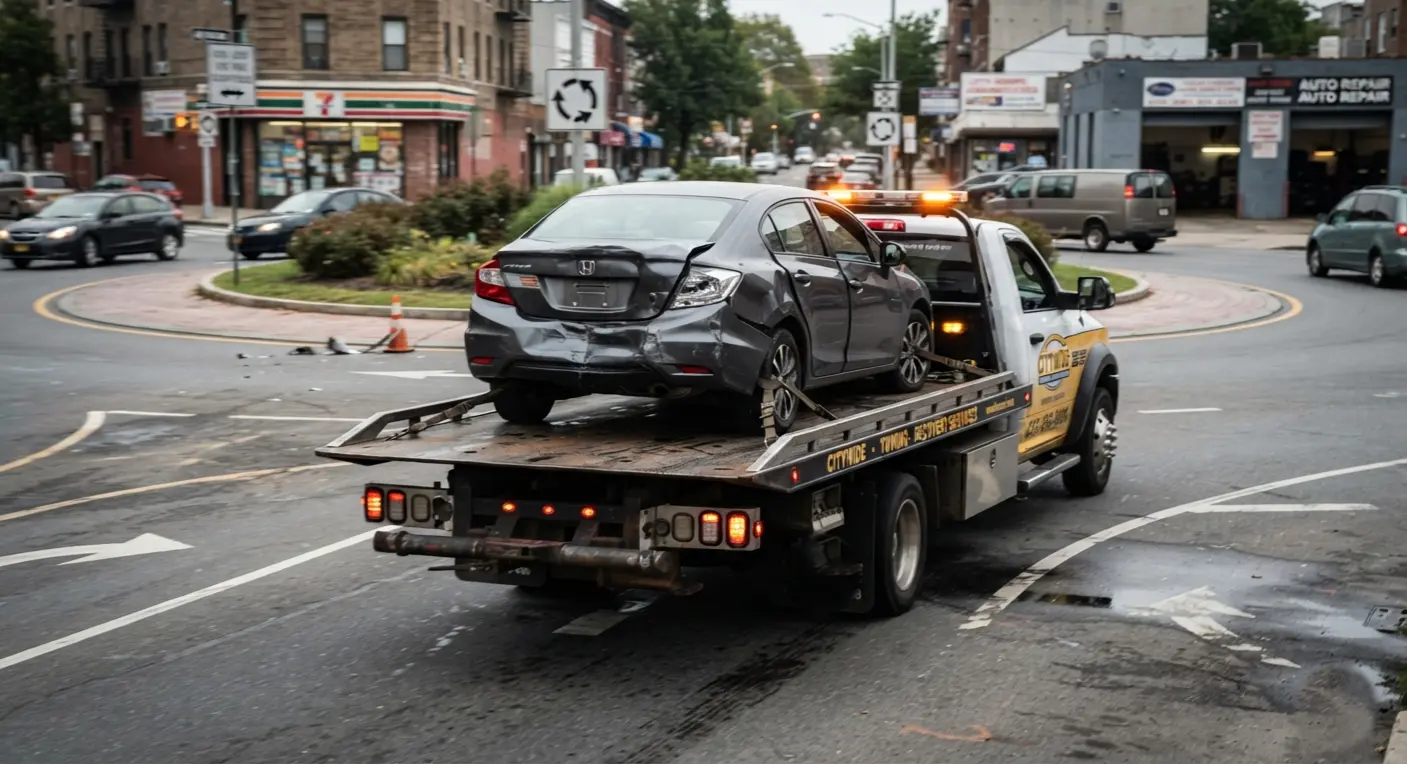
Motorcycle transport concentrates its risks in two moments: loading and strapping. A badly angled ramp and a 250-kilo adventure bike end with a machine on the ground. In Gijón we do that work with the right equipment rather than improvising with hardware-store straps.
Working in a port city like Gijón has one very practical consequence: a good share of moves end at a terminal rather than a front door, with entry windows, access control and paperwork that has to be ready in advance. A truck that turns up without the right documents loses its slot, and with it the day.
Moving a vehicle in Gijón: what to know
It helps to set the context before going into detail. El Musel is one of the main ports on the Cantabrian coast and handles regular ro-ro traffic. Asturias pairs a flat coastal corridor with mountain approaches to the central plateau through the Huerna pass.
Frequent rain in the north makes strapping technique and weather protection a real consideration on open transport. There is more background on the city in its Wikipedia entry.
The legal position: when transport stops being optional
A vehicle without a valid ITV, without insurance, or on temporary deregistration cannot legally be driven on public roads. The Dirección General de Tráfico (DGT) is unambiguous here, and the penalty falls on the registered keeper. Moving it by truck is not a matter of preference — it is the only lawful option.
Royal Decree 920/2017 governing the ITV roadworthiness test sets out the narrow circumstances in which a vehicle may travel to a test station, and outside that specific case driving it is prohibited. That distinction is worth understanding before assuming you can drive to the garage.
Moving the bike without riding the miles
There are plenty of reasons to move a bike by truck rather than ride it: a purchase in another province, a house move, getting it to a holiday destination, or simply avoiding adding a thousand kilometres to a valuable machine.
On long journeys the saving is not only wear. You avoid the fatigue, the risk of a long ride on open roads and, in winter, conditions that make the trip genuinely unpleasant.
How your vehicle is covered while it is being moved
Cover is the detail most often skipped when booking a move. It is not enough for a company to say it is insured — the scope matters, and it should appear on the job documentation alongside the vehicle's condition at the point of loading.
Road haulage is a regulated activity requiring authorisation, overseen by the Spanish Ministry of Transport. An informal operator without authorisation or a transit policy simply shifts the whole risk onto the owner.
The variables behind the quote
Price depends on distance, the type of machine, whether it rolls, and how accessible the collection is. A bike that rolls and can be pushed to the truck is the cheapest scenario.
Moving a motorcycle usually costs less than a car for the space it occupies, and grouping several reduces the unit cost further. It is worth asking whether a route to the destination is already planned.
Port activity in Gijón also means work happens outside standard office hours. A service that only operates nine to five fits badly with terminal reality.
Not all motorcycles travel the same way
Weight matters too. A loaded adventure bike with panniers can comfortably exceed 250 kilos, and manhandling that up a ramp is neither reasonable nor safe for anyone.
On fully faired bikes it is worth removing or protecting the most exposed parts before transport. A mirror or indicator broken by contact during loading is the most avoidable kind of damage there is.
Securing a motorcycle for transport
A motorcycle has none of a car's stability — it stands on two wheels and has to be held upright. The correct method uses a front wheel chock, straps that lightly compress the forks, and anchor points on the frame or footpegs, never on fragile components.
The most common error is strapping by the handlebars without compressing the suspension, which leaves the bike swaying for the whole journey. The second is securing to plastic panels or indicators, which give way under vibration.
Transport for events and track days
Events have two critical moments: the outbound trip, usually well planned, and the return, which can be complicated by a breakdown or a fall during the day. Having return transport arranged provides real peace of mind.
For groups travelling together to an event, moving several bikes on one transport reduces the individual cost substantially against separate jobs.
Preparing the motorcycle for transport
Leaving the tank low is advisable for both weight and safety. Folding the mirrors where possible and protecting the most exposed components also helps.
If the bike has anything unusual — modified suspension, a protruding exhaust, carbon bodywork — mentioning it allows the right protection to be prepared before loading.
Other services in Gijón
More on motorcycle transport and on the rest of our services. If you would rather we called you, leave your details on the contact page and we will assess your case in Gijón.
Practical advice for your move
A vehicle leaking oil or fuel should be flagged before transport. It does not prevent the move, but it affects where the car sits on the deck and what protection goes underneath it.
Always ask whether the price covers collection and delivery at the points you need, or refers to a terminal-to-terminal move. The difference in cost and convenience is considerable.
If you will not be present at collection or delivery, put in writing who hands over and who receives the keys, with a phone number. This is the single most common cause of avoidable delay.
Battery condition matters even for a transport job. If the vehicle has to move a few metres under its own power to get out of a garage or a parking bay, a live battery saves time and avoids resorting to auxiliary equipment.
Photograph the vehicle before loading, including all four corners, the roof and underneath if you can. It takes two minutes and settles any later disagreement about a scratch.
Realistic timescales depend on distance and route, not optimism. A company that promises any deadline without asking where the vehicle is probably will not meet it.
Be wary of quotes well below market rate. In vehicle transport, a low price usually means no goods-in-transit insurance, no operating authorisation, or neither.
Moving several vehicles together usually works out considerably cheaper per unit than separate jobs. If you have more than one to move, it is worth quoting them as one.
Before the truck arrives, take the documentation, spare keys and anything valuable out of the vehicle. It travels unaccompanied, and items left inside are not covered as luggage.
If the vehicle will sit on a public street waiting for collection, check there are no timed restrictions or scheduled clearing on that road. A car towed by the local authority while waiting for transport complicates matters considerably and adds costs nobody planned for.
If the vehicle contains fuel cans or any flammable material, remove it beforehand. Dangerous goods transport is governed by its own regulations and cannot travel mixed in with the vehicle.
On classic vehicles with carburettors or older systems, say whether the engine needs any particular starting procedure. If it has to be moved even a few metres, that information saves time.
On vehicles with large-diameter wheels and low-profile tyres, the approach to the ramps needs more care. It is worth mentioning so the right angle is prepared and the tyre or rim is not scuffed.
Have the vehicle and ownership documents ready. On moves ending at a port terminal or crossing a border, that paperwork matters as much as the vehicle itself.
An accessible collection point saves both time and money. If the street is narrow or the garage has restricted headroom, agreeing a nearby spot where the truck can manoeuvre simplifies everything.
In low-emission zones, verify whether the transport truck can enter during the planned time window. Many restrictions apply to heavy vehicles even where the car being carried would itself be allowed through.
Keep the job reference or delivery note. If you later need to evidence the move to an insurer, a workshop or the authorities, that document proves when and how the vehicle was moved.
If you are selling the vehicle and the buyer arranges transport, put in writing when responsibility passes. It is normally at key handover, but both parties benefit from having it stated.
Open transporters are the standard option and perfectly safe for most vehicles. Enclosed transport makes sense for classics, high-value cars and anything with very low ground clearance.
On moves crossing several autonomous communities, bear in mind that heavy vehicle driving restrictions vary at weekends and on public holidays. That can affect the specific delivery day.
If the destination is an ITV test station, confirm you have a booked appointment and the time. Matching the vehicle's arrival to the appointment slot avoids long waits and a second visit.
Ask whether the price includes waiting time at loading and unloading. On moves to workshops, dealerships or compounds with slow procedures, that time can stretch, and it is worth knowing in advance how it is counted.
On long moves, asking how many loading and unloading points the truck has helps explain the timescale. A truck making several stops takes longer than a direct run.
If the collection is from a building with a communal garage, tell the manager or concierge. A transporter manoeuvring on a shared ramp without warning creates avoidable friction with neighbours.
Know where the spare wheel and tools are if the vehicle carries them. On long moves, a loose item in the boot shifts during the journey and can damage the interior or the trim.
Check the overall height if the vehicle is a van, a camper or a 4x4 with roof accessories. The vehicle's height plus the deck height determines what the loaded truck can pass under.
If the vehicle has any quirk — lowered suspension, an automatic gearbox locked in park, a flat battery — mention it when requesting the quote so the right equipment turns up.
Before collection, check no personal documents are left in the glovebox. It is where forgotten paperwork most often turns up, and some of it contains details you would not want travelling unsupervised.
In summary
Car Transport 247 works across Gijón and the whole of Spain, 24 hours a day, with goods-in-transit cover for the journey and the price fixed before we start. Tell us your situation and we will give you an honest answer on how it works and what it costs.
Motorcycle recovery in Gijón
Breakdowns, drops, track days or purchases. Free quote with no hidden extras.