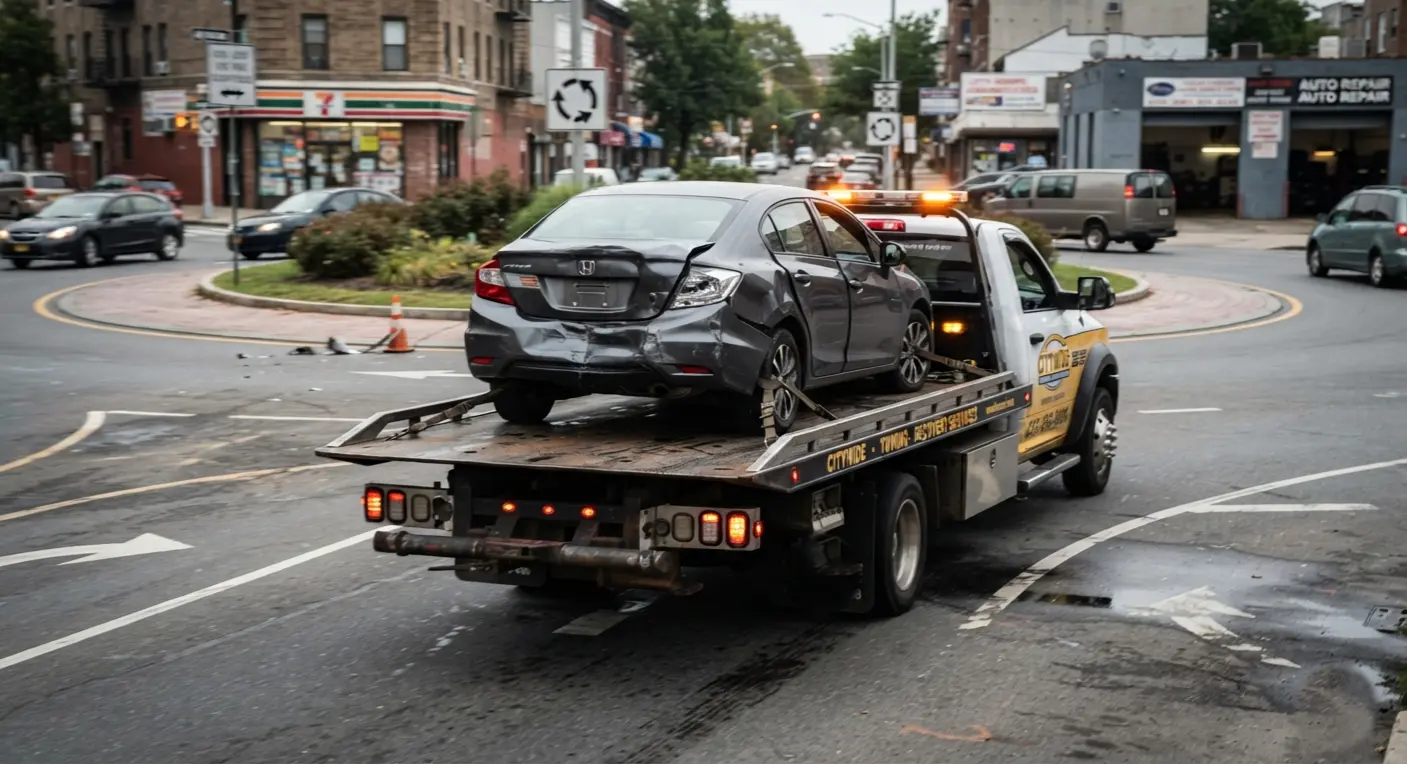
A car that will not start is not always broken — sometimes it has simply stood too long. Either way, the only way to move it is to load it. We transport non-running vehicles across Cádiz, including those that will not roll, those with seized brakes, and those that have sat in a garage for years.
In Cádiz the port sets the rhythm. Ro-ro traffic and vehicle terminals run to time windows, and matching collection or delivery to those windows is half the job. The other half is remembering that port access needs prior accreditation.
Cádiz: how the area shapes the job
Cádiz is a regular destination for our work, and it comes with conditions of its own. Cádiz sits on a narrow peninsula with limited access, which shapes collection logistics completely. The Constitution Bridge has eased approaches, but the old town still has extremely narrow streets.
The bay concentrates shipyards and industry with constant heavy vehicle movement.
Access: what complicates a collection most
A vehicle in an underground car park is a geometry problem before it is a mechanical one. The transporter cannot go down, so the car has to come up to street level, and if it does not roll that has to be done with auxiliary equipment.
Measuring the entrance clearance and ramp width before the appointment avoids the worst outcome, which is a truck that arrives and can do nothing. A figure as simple as the headroom in metres changes the whole plan.
A car that will not start: the real options
A non-runner is any vehicle that cannot move under its own power: it will not start, will not select a gear, has locked steering or seized brakes. It does not necessarily mean the vehicle is damaged, only that right now it does not work.
The category covers very different situations, from a car that has sat in a garage for two years to one with a seized engine or a broken gearbox. What they share is that the only way to move them is on a transporter.
How your vehicle is covered while it is being moved
Cover is the detail most often skipped when booking a move. It is not enough for a company to say it is insured — the scope matters, and it should appear on the job documentation alongside the vehicle's condition at the point of loading.
Road haulage is a regulated activity requiring authorisation, overseen by the Spanish Ministry of Transport. An informal operator without authorisation or a transit policy simply shifts the whole risk onto the owner.
Port activity in Cádiz also means work happens outside standard office hours. A service that only operates nine to five fits badly with terminal reality.
What paperwork is required
The usual documents are the registration certificate and identification of the keeper, or a signed authorisation. After a recent purchase, the sale contract or receipt is worth bringing too.
A vehicle can be transported even without a valid ITV or insurance, precisely because it travels on a flatbed. What it cannot do is drive itself, and that is the whole reason the service exists.
Service for businesses in the sector
For a workshop, a vehicle that does not arrive when expected disrupts the whole day's schedule. That is why predictability outweighs every other variable in trade work.
For moves to authorised treatment facilities, having the deregistration paperwork sorted before transport prevents the delivery stalling halfway.
Before the truck arrives
If the vehicle has stood a long time, the state of the tyres tells you a lot. Completely flat tyres, or sidewalls that have deformed, suggest skates will probably be needed.
It is also worth checking whether the car is in neutral, or whether an automatic can be shifted to neutral. On some models without battery power that requires a specific manual procedure, better known in advance.
Long-term immobilised vehicles
A vehicle that has stood for years accumulates specific problems: tyres deflated or flat-spotted from prolonged loading, brakes seized by corrosion, a completely dead battery and, usually, degraded fluids.
None of that prevents transport, but it changes the approach. Deflated tyres can stop the vehicle rolling up the ramps, and that is exactly where skates solve the problem without damaging the wheels.
The legal position: when transport stops being optional
A vehicle without a valid ITV, without insurance, or on temporary deregistration cannot legally be driven on public roads. The Dirección General de Tráfico (DGT) is unambiguous here, and the penalty falls on the registered keeper. Moving it by truck is not a matter of preference — it is the only lawful option.
Royal Decree 920/2017 governing the ITV roadworthiness test sets out the narrow circumstances in which a vehicle may travel to a test station, and outside that specific case driving it is prohibited. That distinction is worth understanding before assuming you can drive to the garage.
Other services in Cádiz
There is more detail on non-runner transport, the full list on our services page, and you can reach us through contact for an assessment of your situation in Cádiz.
Practical advice for your move
On classic vehicles with carburettors or older systems, say whether the engine needs any particular starting procedure. If it has to be moved even a few metres, that information saves time.
On vehicles with large-diameter wheels and low-profile tyres, the approach to the ramps needs more care. It is worth mentioning so the right angle is prepared and the tyre or rim is not scuffed.
An accessible collection point saves both time and money. If the street is narrow or the garage has restricted headroom, agreeing a nearby spot where the truck can manoeuvre simplifies everything.
If you need the vehicle by a fixed, immovable date, say so when booking rather than afterwards. With enough notice it can almost always be accommodated; with twenty-four hours, often not.
Where a tailgate or bonnet no longer closes properly after an impact, secure it before loading. A tailgate that springs open at eighty kilometres an hour is a genuine hazard to other traffic.
Know where the spare wheel and tools are if the vehicle carries them. On long moves, a loose item in the boot shifts during the journey and can damage the interior or the trim.
Get the name and number of the driver handling the job, or at least a direct operational contact. On the day, being able to resolve a question in two minutes prevents an hour of waiting.
Before collection, check no personal documents are left in the glovebox. It is where forgotten paperwork most often turns up, and some of it contains details you would not want travelling unsupervised.
Before the truck arrives, take the documentation, spare keys and anything valuable out of the vehicle. It travels unaccompanied, and items left inside are not covered as luggage.
If you will not be present at collection or delivery, put in writing who hands over and who receives the keys, with a phone number. This is the single most common cause of avoidable delay.
Check the handbrake works and that the vehicle can be secured on the deck. If it cannot, there are solutions, but it is better known in advance.
A vehicle leaking oil or fuel should be flagged before transport. It does not prevent the move, but it affects where the car sits on the deck and what protection goes underneath it.
In low-emission zones, verify whether the transport truck can enter during the planned time window. Many restrictions apply to heavy vehicles even where the car being carried would itself be allowed through.
Photograph the vehicle before loading, including all four corners, the roof and underneath if you can. It takes two minutes and settles any later disagreement about a scratch.
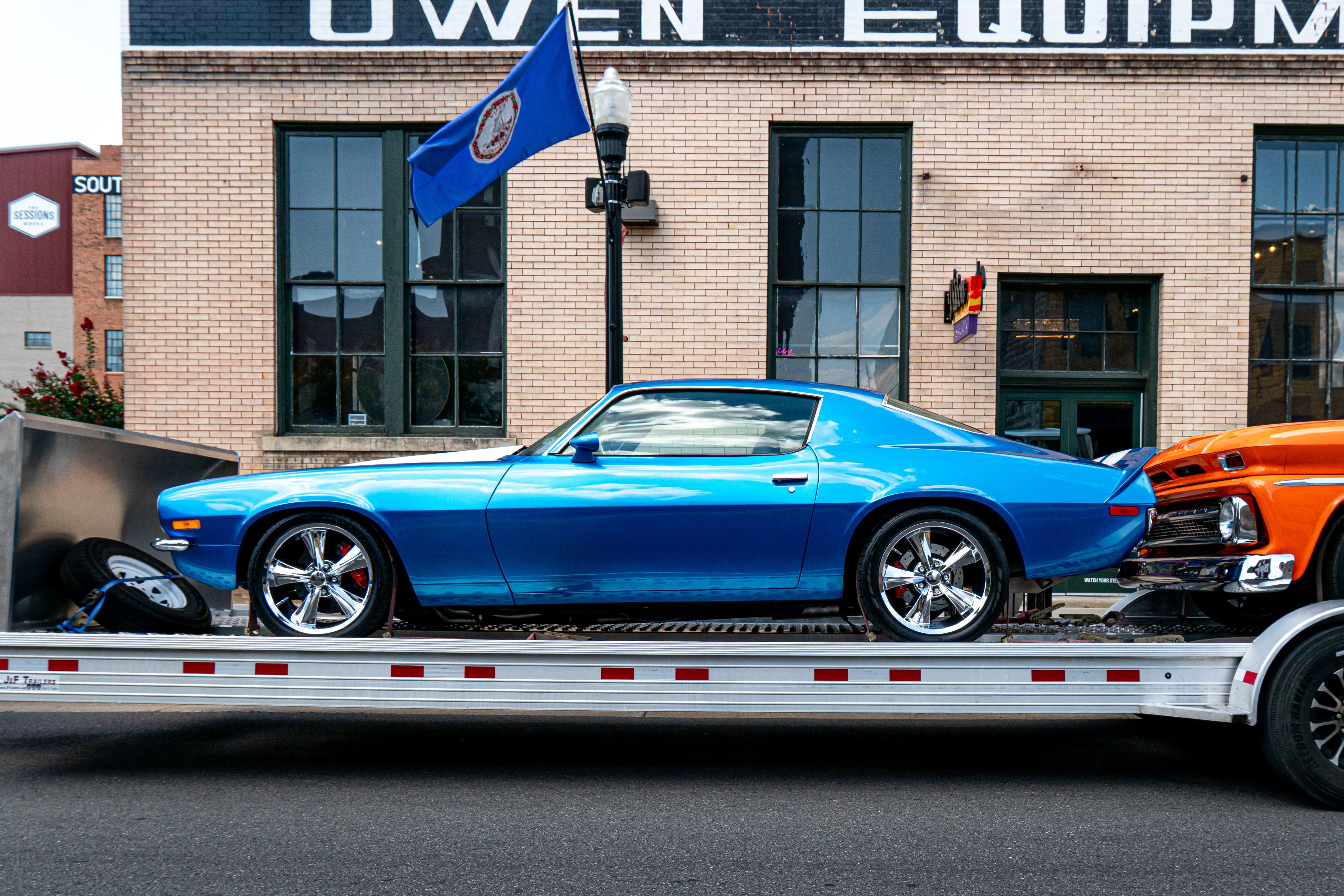
Open transporters are the standard option and perfectly safe for most vehicles. Enclosed transport makes sense for classics, high-value cars and anything with very low ground clearance.
On keyless-start vehicles, remember the fob must travel with you or be handed over at the destination, but never left inside the car in transit. It is a more common oversight than you would think and leaves the vehicle locked on arrival.
Always ask whether the price covers collection and delivery at the points you need, or refers to a terminal-to-terminal move. The difference in cost and convenience is considerable.
If the move includes a sea crossing, check what documentation the ferry operator requires for the vehicle. The registration document and owner details are usually needed, and a missing paper means missing the sailing.
If the vehicle contains fuel cans or any flammable material, remove it beforehand. Dangerous goods transport is governed by its own regulations and cannot travel mixed in with the vehicle.
Realistic timescales depend on distance and route, not optimism. A company that promises any deadline without asking where the vehicle is probably will not meet it.
If the destination is an ITV test station, confirm you have a booked appointment and the time. Matching the vehicle's arrival to the appointment slot avoids long waits and a second visit.
Keep the job documentation recording the vehicle's condition. It is the reference point if a question about damage and its timing comes up later.
Keep the job reference or delivery note. If you later need to evidence the move to an insurer, a workshop or the authorities, that document proves when and how the vehicle was moved.
Agree who signs for the vehicle at the destination. If it arrives at a closed workshop or an address where nobody is present, the driver cannot simply leave it, and waiting time or a second attempt both cost money.
Check whether your own policy covers the vehicle while it sits at a third-party workshop or compound. It is a frequent gap between the end of transport and the start of repair, and worth clarifying.
If the collection is from a building with a communal garage, tell the manager or concierge. A transporter manoeuvring on a shared ramp without warning creates avoidable friction with neighbours.
Be wary of quotes well below market rate. In vehicle transport, a low price usually means no goods-in-transit insurance, no operating authorisation, or neither.
If the vehicle will sit on a public street waiting for collection, check there are no timed restrictions or scheduled clearing on that road. A car towed by the local authority while waiting for transport complicates matters considerably and adds costs nobody planned for.
In summary
If you need a vehicle moved in Cádiz, the most useful thing is an assessment of your specific situation. We give you a total price and a realistic timescale, not a per-kilometre rate that grows later.
Moving a stationary vehicle in Cádiz
We load non-rolling vehicles with winch and skates. Describe the situation and we will sort it.