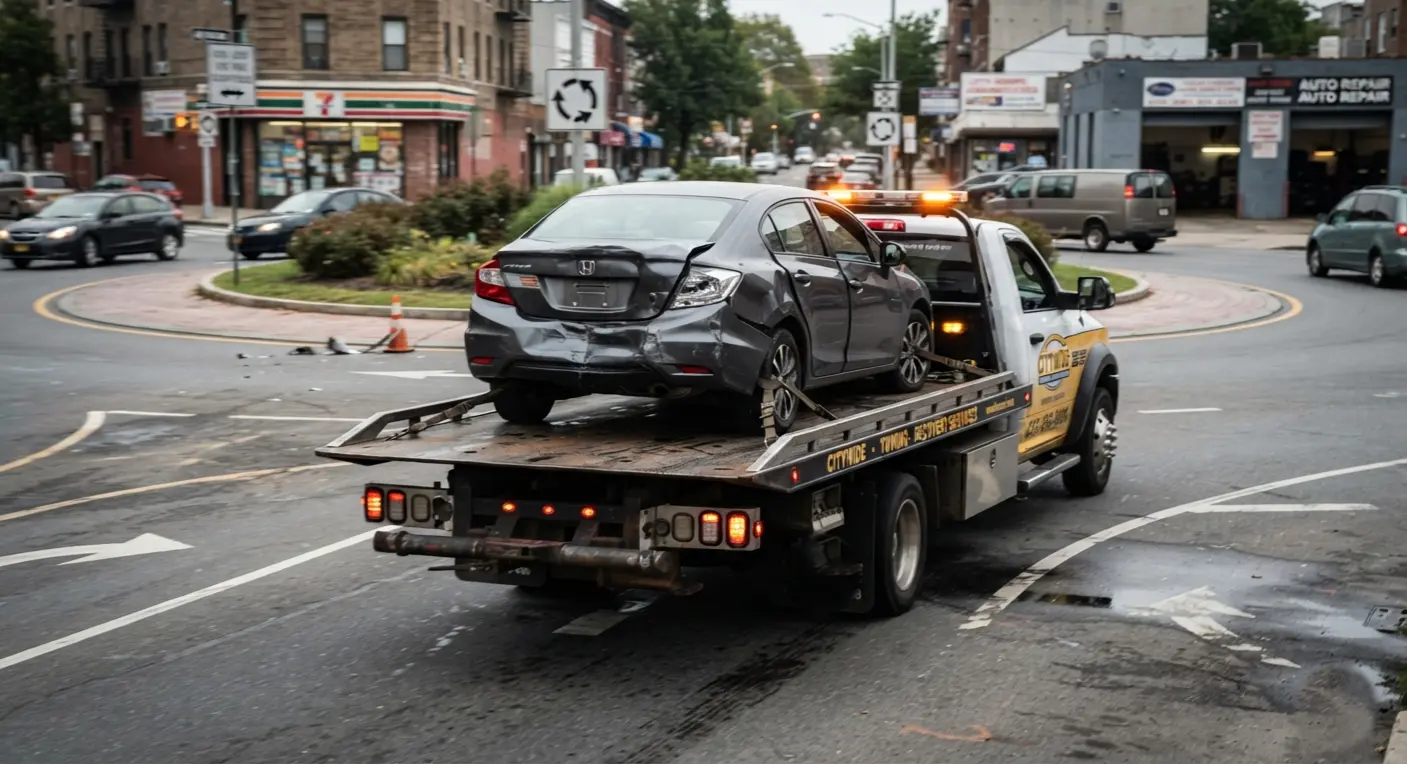
After an accident the car is the last thing on your mind, and rightly so. When the moment comes to move it, what matters is doing so without worsening the damage and recording the condition it was in. We recover accident-damaged vehicles in Almería at any hour, with the equipment needed to load a car that will not roll.
Port activity in Almería means a constant flow of vehicles entering and leaving the country. Plenty of moves therefore carry import or export documentation, and a paperwork error can immobilise a vehicle for longer than any mechanical fault.
What makes Almería different
It helps to set the context before going into detail. Almería's port carries heavy passenger and vehicle traffic to Morocco and Algeria, peaking during the summer crossing operation. The Poniente area is a major agricultural hub with a large population of working commercial vehicles.
The A-7 runs along the coast while the A-92 heads inland towards Granada and Seville. There is more background on the city in its Wikipedia entry.
When the damaged car is something special
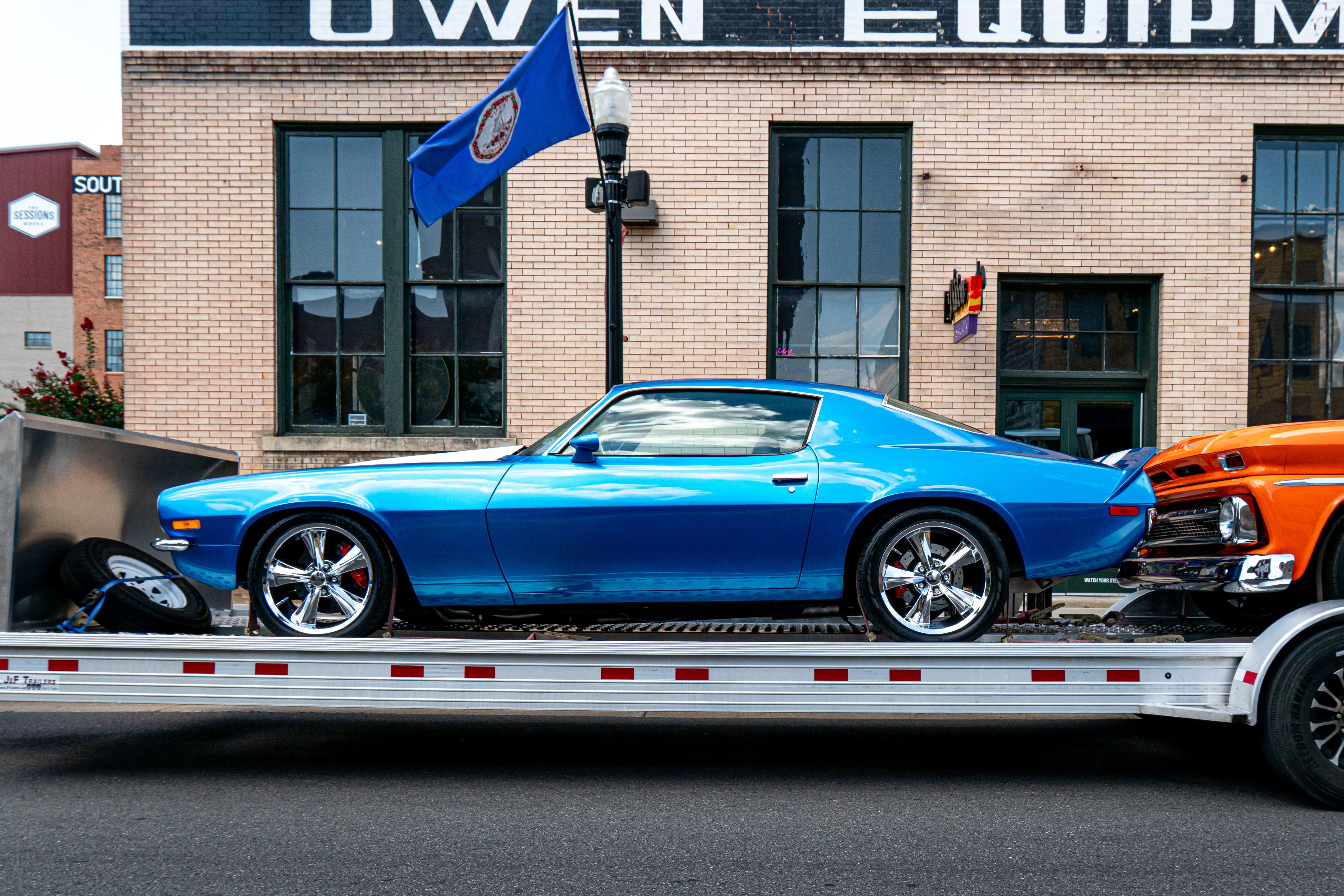
With a classic or high-value vehicle, post-accident transport carries an extra requirement: not worsening the existing damage or adding to it. That may mean enclosed transport, specific securing points and additional bodywork protection.
The documentation changes too. On valuable vehicles a particularly detailed photographic record before loading is worth the time, because the loss assessment afterwards will be equally detailed.
When the vehicle is written off
Being written off does not always mean the car is destroyed — sometimes the vehicle is simply old enough that a moderate repair exceeds its market value. In some cases the owner can retain it, and then the destination changes.
Either way, moving it requires a flatbed. A car awaiting deregistration or carrying structural damage is not in a condition to be driven.
In Almería it is worth distinguishing a door-to-door move from one ending inside the port area: access requirements and waiting times are nothing alike.
What to do at the scene of an accident
The sequence is always the same: protect, alert, assist. Mark the scene to prevent a second impact, call 112 if anyone is injured or the road is blocked, and do not move anyone who may have a neck injury unless there is immediate danger.
With people attended to, the documentation follows: an accident report form, or a police report if officers attend, photographs of the vehicles' positions before anything is moved, and witness details if there are any. All of it matters later with the insurers.
Documenting condition before loading
On an already damaged vehicle, distinguishing pre-existing damage from transport damage would be impossible without a record. That is why the vehicle is photographed from several angles before loading and the condition noted on the job sheet.
The record protects both sides. It evidences the state at handover for the owner, and it defines clearly for the carrier what damage existed before anyone touched the vehicle.
Recovery from a compound or police seizure
Collecting from a compound differs from a normal pickup in two ways: there are formalities beforehand and the hours are limited. Arriving with incomplete paperwork means coming back another day and paying for another day of storage.
Before arranging collection it is worth confirming exactly what documentation that particular compound requires, because the rules vary between municipalities.
The legal position: when transport stops being optional
Driving without a current ITV carries a fine and can result in the vehicle being immobilised under the rules the Dirección General de Tráfico (DGT) enforces. There is a larger problem behind it: in the event of an accident, your insurer may reduce or refuse cover entirely.
Royal Decree 920/2017 governing the ITV roadworthiness test allows a limited exception for travelling to a booked inspection, but it does not permit normal use of the vehicle. Any other journey requires it to be carried on a transporter.
How recovery fits into your claim
After a claim is opened, the vehicle usually goes to an approved garage or a compound pending assessment. What matters is that its condition at collection and at delivery is recorded.
If the vehicle is going to be written off, the destination changes — normally to an authorised treatment facility. Confirming that before the move avoids paying for two jobs.
Transport insurance: the question always worth asking
Before handing keys to anyone, ask one specific question: is the vehicle covered while it sits on the transporter, for how much, and against what. An operator working legally and registered with the Spanish Ministry of Transport can evidence that without difficulty.
The carrier's cover is not the same as your own motor policy. Your insurance covers driving; during transport it is the carrier's goods-in-transit policy that responds. Confusing the two is behind most of the disputes that arise.
Other services in Almería
There is more detail on accident vehicle recovery, the full list on our services page, and you can reach us through contact for an assessment of your situation in Almería.
Practical advice for your move
On long moves, asking how many loading and unloading points the truck has helps explain the timescale. A truck making several stops takes longer than a direct run.
Be wary of quotes well below market rate. In vehicle transport, a low price usually means no goods-in-transit insurance, no operating authorisation, or neither.
If the destination is an ITV test station, confirm you have a booked appointment and the time. Matching the vehicle's arrival to the appointment slot avoids long waits and a second visit.
Have the vehicle and ownership documents ready. On moves ending at a port terminal or crossing a border, that paperwork matters as much as the vehicle itself.
A vehicle leaking oil or fuel should be flagged before transport. It does not prevent the move, but it affects where the car sits on the deck and what protection goes underneath it.
Always ask whether the price covers collection and delivery at the points you need, or refers to a terminal-to-terminal move. The difference in cost and convenience is considerable.
If you need the vehicle by a fixed, immovable date, say so when booking rather than afterwards. With enough notice it can almost always be accommodated; with twenty-four hours, often not.
If the vehicle has any quirk — lowered suspension, an automatic gearbox locked in park, a flat battery — mention it when requesting the quote so the right equipment turns up.
If you will not be present at collection or delivery, put in writing who hands over and who receives the keys, with a phone number. This is the single most common cause of avoidable delay.
Before collection, check no personal documents are left in the glovebox. It is where forgotten paperwork most often turns up, and some of it contains details you would not want travelling unsupervised.
On moves crossing several autonomous communities, bear in mind that heavy vehicle driving restrictions vary at weekends and on public holidays. That can affect the specific delivery day.
If the vehicle will sit on a public street waiting for collection, check there are no timed restrictions or scheduled clearing on that road. A car towed by the local authority while waiting for transport complicates matters considerably and adds costs nobody planned for.
If the vehicle is in an underground car park, check the clearance height first. Many garages cannot take a transporter and the car has to be brought up to street level.
Open transporters are the standard option and perfectly safe for most vehicles. Enclosed transport makes sense for classics, high-value cars and anything with very low ground clearance.
For vehicles with bulky modifications or accessories — roof racks, bike carriers, bull bars — mention them. They can affect the overall height of the loaded truck and whether it clears certain access points.
Check the overall height if the vehicle is a van, a camper or a 4x4 with roof accessories. The vehicle's height plus the deck height determines what the loaded truck can pass under.
In low-emission zones, verify whether the transport truck can enter during the planned time window. Many restrictions apply to heavy vehicles even where the car being carried would itself be allowed through.
Keep the job reference or delivery note. If you later need to evidence the move to an insurer, a workshop or the authorities, that document proves when and how the vehicle was moved.
An accessible collection point saves both time and money. If the street is narrow or the garage has restricted headroom, agreeing a nearby spot where the truck can manoeuvre simplifies everything.
If the vehicle is on rural land or at the end of an unsurfaced track, state the distance from the tarmac road. An articulated truck cannot enter every lane, and sometimes the car has to be brought out to a meeting point.
Before confirming, check the quote is fixed rather than an estimate subject to surcharges. Extras for difficult access or a non-rolling vehicle should be clear from the outset.
Check the handbrake works and that the vehicle can be secured on the deck. If it cannot, there are solutions, but it is better known in advance.
Check whether your own policy covers the vehicle while it sits at a third-party workshop or compound. It is a frequent gap between the end of transport and the start of repair, and worth clarifying.
Know where the spare wheel and tools are if the vehicle carries them. On long moves, a loose item in the boot shifts during the journey and can damage the interior or the trim.
If the vehicle has been in an accident, say what is damaged and whether the wheels still turn. A vehicle that will not roll needs a winch and sometimes dollies.
Bear in mind that in peak periods — summer, or the start and end of the season — lead times stretch. Booking ahead is the simple way around it.
On classic vehicles with carburettors or older systems, say whether the engine needs any particular starting procedure. If it has to be moved even a few metres, that information saves time.
Keep the job documentation recording the vehicle's condition. It is the reference point if a question about damage and its timing comes up later.
In summary
If you need a vehicle moved in Almería, the most useful thing is an assessment of your specific situation. We give you a total price and a realistic timescale, not a per-kilometre rate that grows later.
Had an accident in Almería?
We load with winch and skates even when the vehicle will not roll, and record its condition before moving it.