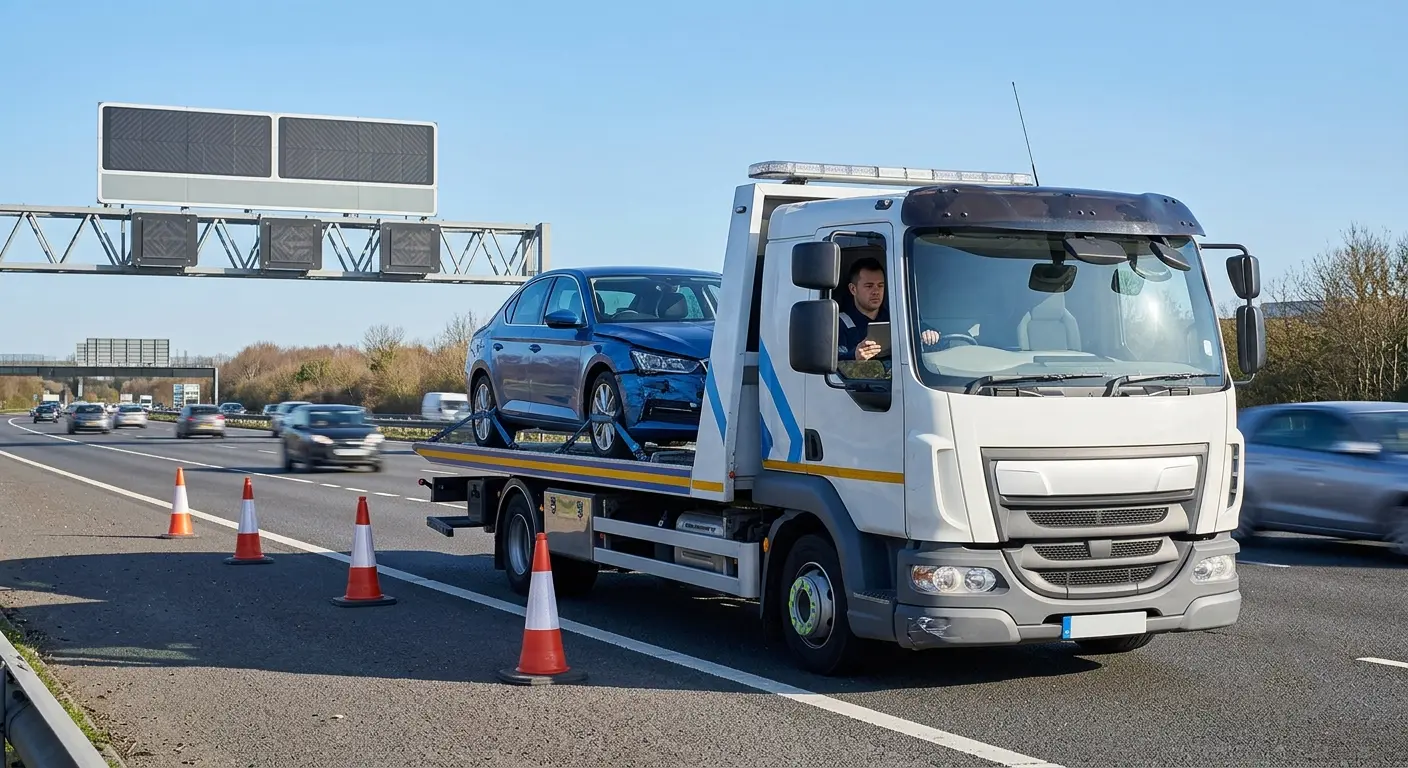
A car stopped on the hard shoulder is uncomfortable and, more to the point, unsafe. In Almería we take breakdown calls at any hour of the day or night, with flatbed vehicles that move the car without putting any further strain on it and without adding kilometres to an engine that is already in trouble.
In Almería the port sets the rhythm. Ro-ro traffic and vehicle terminals run to time windows, and matching collection or delivery to those windows is half the job. The other half is remembering that port access needs prior accreditation.
What makes Almería different
The Poniente area is a major agricultural hub with a large population of working commercial vehicles. The A-7 runs along the coast while the A-92 heads inland towards Granada and Seville.
Almería's port carries heavy passenger and vehicle traffic to Morocco and Algeria, peaking during the summer crossing operation. For general background on the area, the Almería entry on Wikipedia covers the basics.
What 24-hour service means in practice
Breakdowns do not respect office hours, and a substantial share of call-outs come at night, at weekends or on public holidays. A service that only operates nine to five leaves the driver waiting at the worst possible moment.
Operating around the clock is more than leaving a phone switched on — it means having vehicles and crew ready to go at any hour. The difference shows in actual arrival time, not in the answerphone message.
The legal position: when transport stops being optional
Driving without a current ITV carries a fine and can result in the vehicle being immobilised under the rules the Dirección General de Tráfico (DGT) enforces. There is a larger problem behind it: in the event of an accident, your insurer may reduce or refuse cover entirely.
Royal Decree 920/2017 governing the ITV roadworthiness test allows a limited exception for travelling to a booked inspection, but it does not permit normal use of the vehicle. Any other journey requires it to be carried on a transporter.
The line between carrying on and stopping
The urge to make it to the garage under your own power is understandable but usually expensive. With oil pressure compromised, an engine can destroy itself within minutes of running, and no warranty covers that.
The same applies to transmissions. An automatic gearbox that has lost fluid or is making unusual noises should not turn a wheel. On four-wheel-drive vehicles, towing with wheels on the road can damage the drivetrain outright, making flatbed transport the only safe option.
Electric and hybrid vehicle breakdowns
The share of electric and hybrid vehicles on the road grows every year, and call-outs involving them grow with it. The main practical difference is that these vehicles must always travel on a flatbed, without exception, and that securing points must respect the location of the battery pack.
The destination changes too. A broken-down EV cannot go to just any garage — it needs an authorised workshop with high-voltage trained technicians, and that is worth confirming before agreeing a delivery point.
In Almería it is worth distinguishing a door-to-door move from one ending inside the port area: access requirements and waiting times are nothing alike.
What determines the price of a recovery
Price depends on the distance between collection and destination, the vehicle type, how difficult the access is, and the time of day. A night or public holiday call-out costs more, for obvious reasons of availability.
What should not happen is unannounced extras appearing at the end. Charges for awkward access, for a non-rolling vehicle, or for out-of-hours work belong in the original quote.
Cover and liability during transport
Before handing keys to anyone, ask one specific question: is the vehicle covered while it sits on the transporter, for how much, and against what. An operator working legally and registered with the Spanish Ministry of Transport can evidence that without difficulty.
The carrier's cover is not the same as your own motor policy. Your insurance covers driving; during transport it is the carrier's goods-in-transit policy that responds. Confusing the two is behind most of the disputes that arise.
Flatbed transport versus conventional towing
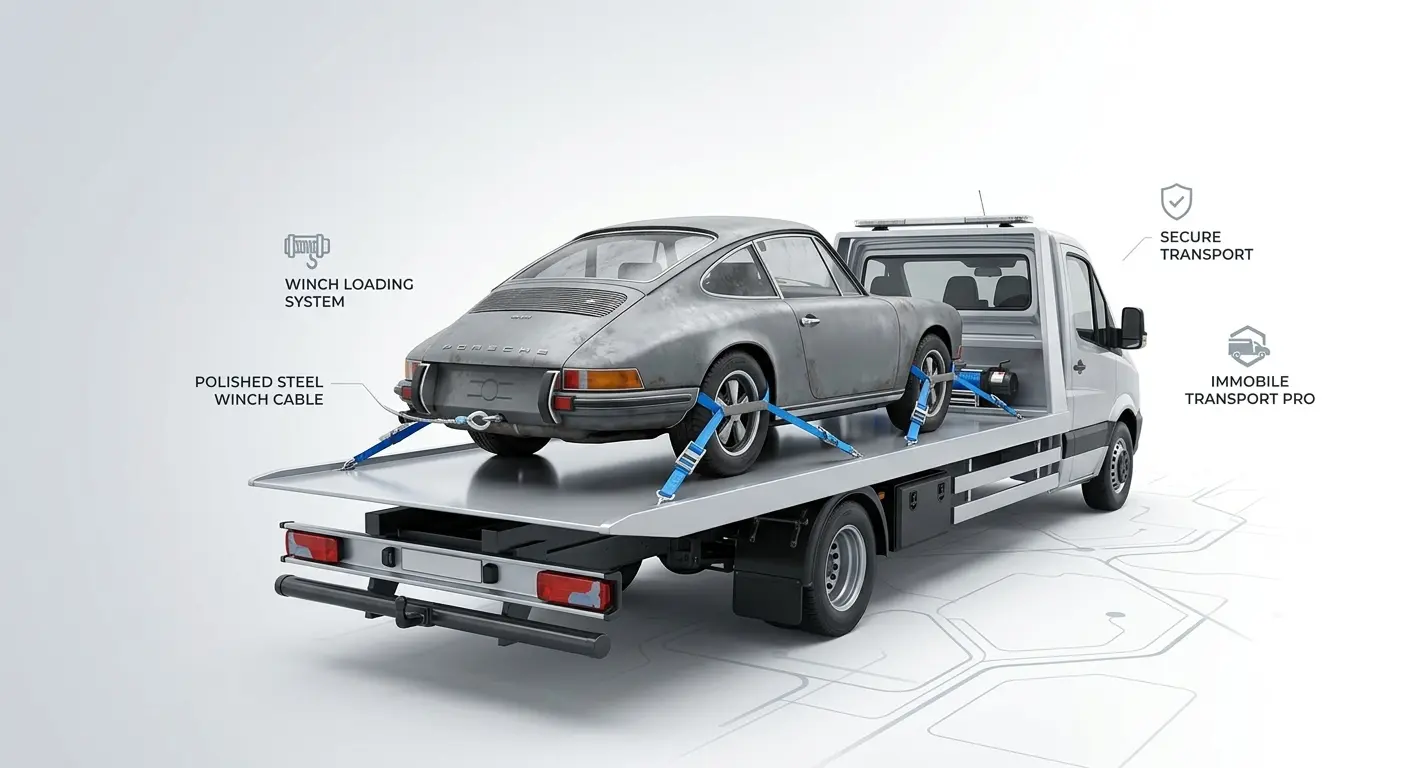
A flatbed carries the whole vehicle on the deck with all four wheels off the ground. That removes tyre wear, spares the transmission a rotation it was never designed for while stationary, and avoids damage to whichever axle would otherwise be rolling.
On vehicles with automatic gearboxes, four-wheel drive or electronic traction systems, a flatbed is not a preference but a manufacturer requirement. Towing with driven wheels in contact with the road can cause serious drivetrain damage.
The faults that most often strand a vehicle
Starting faults account for a large share of call-outs, and it is not always the battery — the starter motor, the alternator or an immobiliser fault produce similar symptoms. Telling them apart on site avoids recovering a car that a jump lead would have solved.
Some symptoms mean stop and do not restart: temperature in the red, oil pressure warning lit, a burning smell, or a new metallic noise. Pressing on in those cases turns a moderate repair into a major one.
Other services in Almería
You can read more about breakdown recovery or browse all our services. For a specific quote in Almería, the quickest route is to get in touch.
Practical advice for your move
Have the vehicle and ownership documents ready. On moves ending at a port terminal or crossing a border, that paperwork matters as much as the vehicle itself.
Get the name and number of the driver handling the job, or at least a direct operational contact. On the day, being able to resolve a question in two minutes prevents an hour of waiting.
On classic vehicles with carburettors or older systems, say whether the engine needs any particular starting procedure. If it has to be moved even a few metres, that information saves time.
Open transporters are the standard option and perfectly safe for most vehicles. Enclosed transport makes sense for classics, high-value cars and anything with very low ground clearance.
Battery condition matters even for a transport job. If the vehicle has to move a few metres under its own power to get out of a garage or a parking bay, a live battery saves time and avoids resorting to auxiliary equipment.
If the vehicle is on rural land or at the end of an unsurfaced track, state the distance from the tarmac road. An articulated truck cannot enter every lane, and sometimes the car has to be brought out to a meeting point.
If the vehicle is in an underground car park, check the clearance height first. Many garages cannot take a transporter and the car has to be brought up to street level.
Before collection, check no personal documents are left in the glovebox. It is where forgotten paperwork most often turns up, and some of it contains details you would not want travelling unsupervised.
Flag it if the vehicle has stood unused for a long period. Flat tyres, seized brakes or a completely dead battery all change how it has to be loaded.
Check the handbrake works and that the vehicle can be secured on the deck. If it cannot, there are solutions, but it is better known in advance.
Check the overall height if the vehicle is a van, a camper or a 4x4 with roof accessories. The vehicle's height plus the deck height determines what the loaded truck can pass under.
Bear in mind that in peak periods — summer, or the start and end of the season — lead times stretch. Booking ahead is the simple way around it.
Keep the job reference or delivery note. If you later need to evidence the move to an insurer, a workshop or the authorities, that document proves when and how the vehicle was moved.
Leave the fuel tank low, around a quarter. It reduces weight, follows standard transport practice, and there is nothing to gain from a full tank during the journey.
Agree who signs for the vehicle at the destination. If it arrives at a closed workshop or an address where nobody is present, the driver cannot simply leave it, and waiting time or a second attempt both cost money.
If the move includes a sea crossing, check what documentation the ferry operator requires for the vehicle. The registration document and owner details are usually needed, and a missing paper means missing the sailing.
If the vehicle will sit on a public street waiting for collection, check there are no timed restrictions or scheduled clearing on that road. A car towed by the local authority while waiting for transport complicates matters considerably and adds costs nobody planned for.
If the vehicle has been in an accident, say what is damaged and whether the wheels still turn. A vehicle that will not roll needs a winch and sometimes dollies.
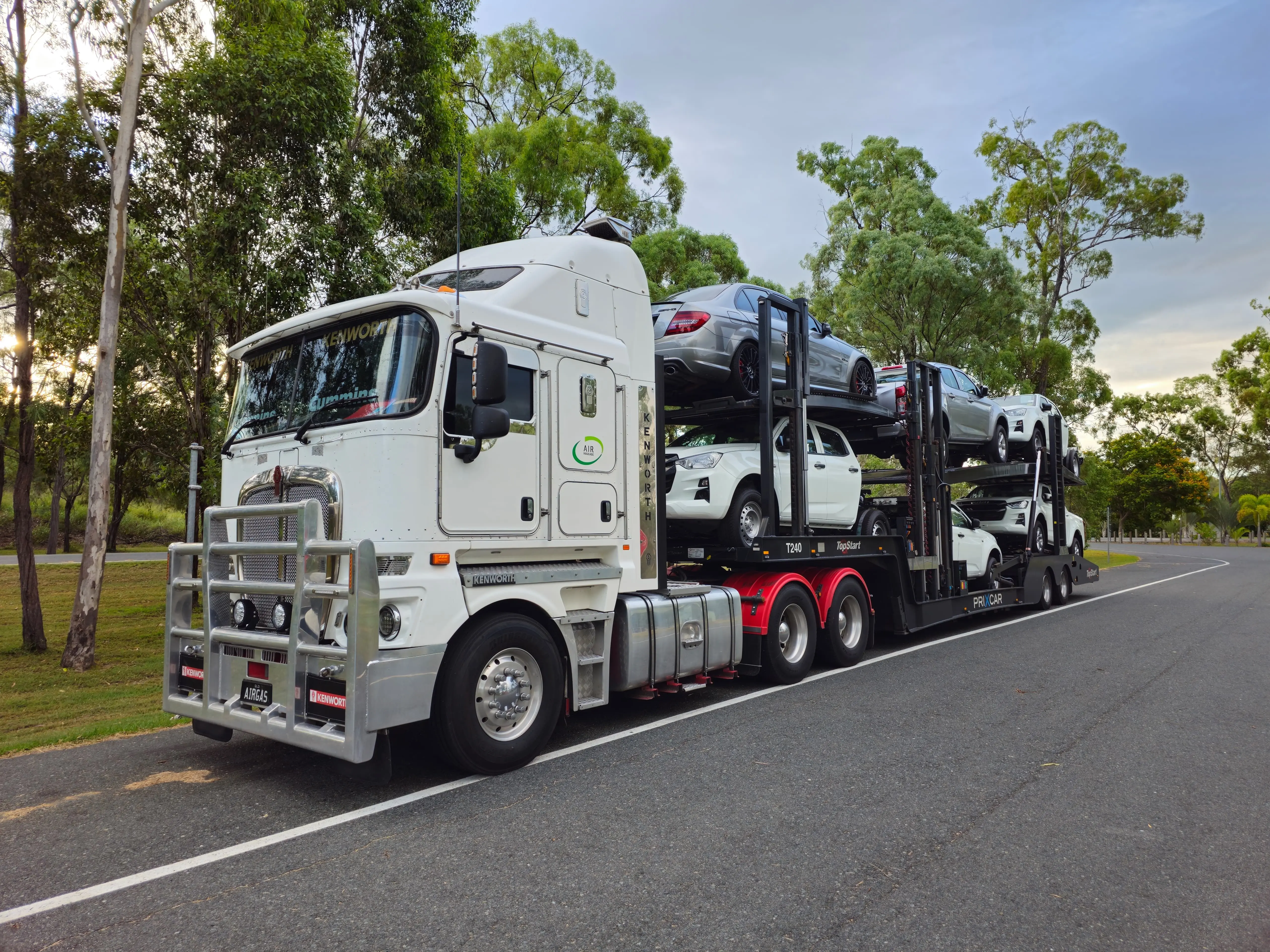
Moving several vehicles together usually works out considerably cheaper per unit than separate jobs. If you have more than one to move, it is worth quoting them as one.
Make sure the alarm is disabled, or that the driver knows how to disable it. An alarm going off in transit means stopping and complicates the job for no reason.
A vehicle leaking oil or fuel should be flagged before transport. It does not prevent the move, but it affects where the car sits on the deck and what protection goes underneath it.
If the vehicle contains fuel cans or any flammable material, remove it beforehand. Dangerous goods transport is governed by its own regulations and cannot travel mixed in with the vehicle.
Know where the spare wheel and tools are if the vehicle carries them. On long moves, a loose item in the boot shifts during the journey and can damage the interior or the trim.
If the vehicle has any quirk — lowered suspension, an automatic gearbox locked in park, a flat battery — mention it when requesting the quote so the right equipment turns up.
If the collection is from a building with a communal garage, tell the manager or concierge. A transporter manoeuvring on a shared ramp without warning creates avoidable friction with neighbours.
Before confirming, check the quote is fixed rather than an estimate subject to surcharges. Extras for difficult access or a non-rolling vehicle should be clear from the outset.
In summary
In short: in Almería what makes the difference is a realistic timescale, a fixed price with no extras, and a move documented from start to finish. That is exactly what we provide, at any hour.
Immediate assistance in Almería
One number, any hour. We tell you how long we will be and what it costs before we set off.