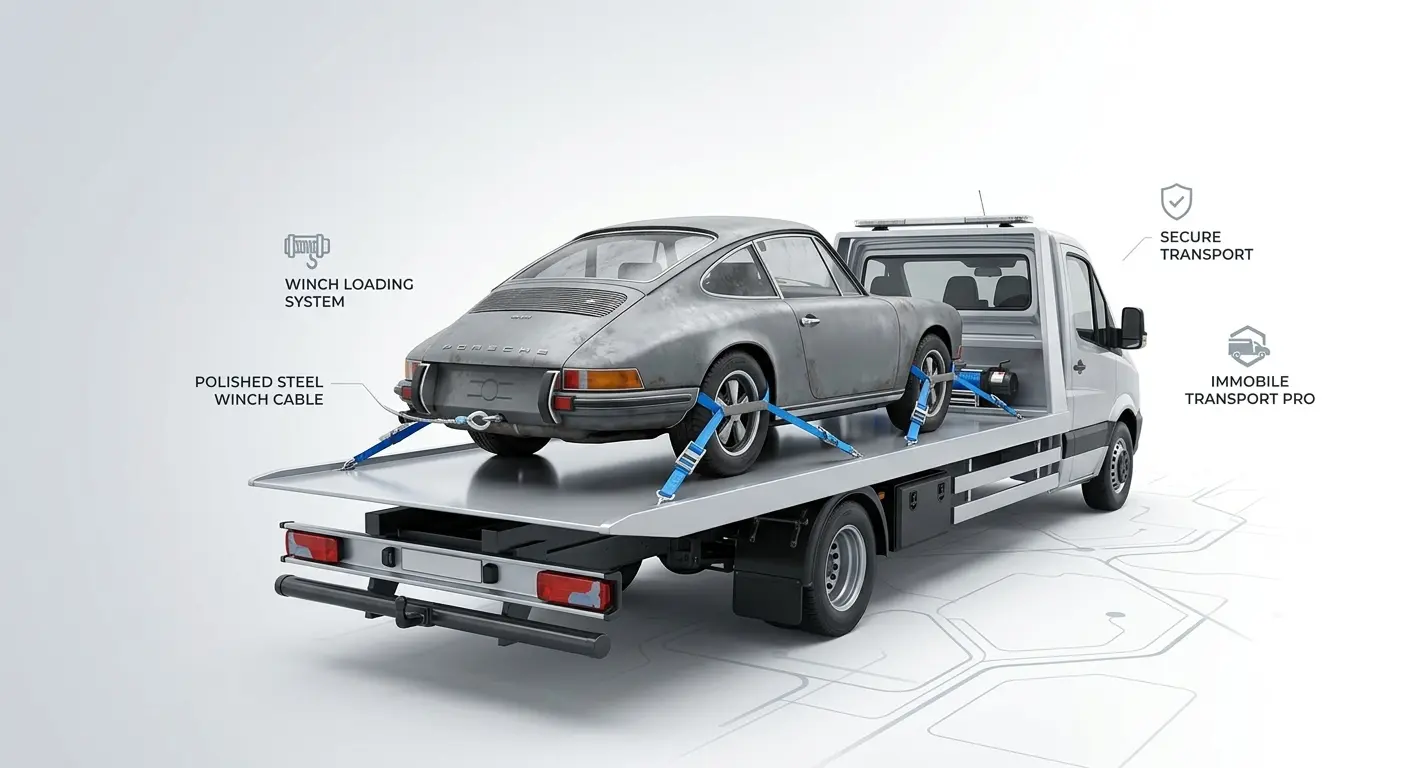
A breakdown never happens at a convenient moment, and at the roadside the first job is getting safe. After that, what you need is someone arriving within a sensible time and taking the vehicle where you choose, not where a policy finds convenient. We run breakdown recovery in Valladolid around the clock, on flatbeds, with the price fixed before we set off.
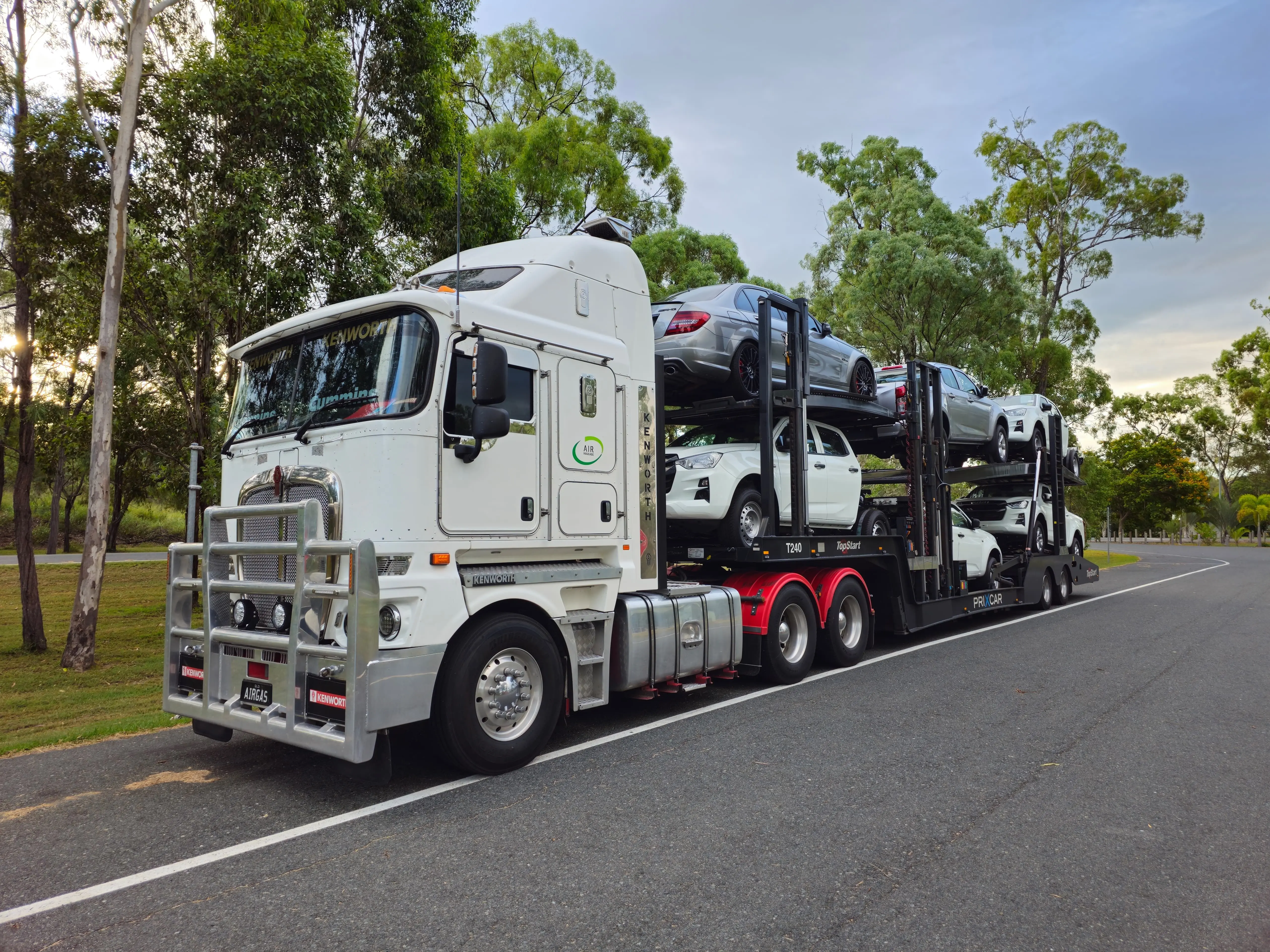
Manufacturing and supplier activity around Valladolid means constant movement of new, demonstration and fleet vehicles. Each of those categories carries its own protection and documentation requirements.
Moving a vehicle in Valladolid: what to know
It sits where the A-6, A-62 and A-601 meet, with good links north and towards Madrid. The plateau's continental climate brings winter frosts that affect day-to-day operations.
Valladolid has a long car manufacturing tradition and a well-established supplier network around it. For general background on the area, the Valladolid entry on Wikipedia covers the basics.
What determines arrival time
The most useful thing a caller can do to shorten the wait is give a precise location: kilometre marker and direction of travel on a road, or exact address and landmarks in a town. Phone location sharing helps a great deal.
Mentioning the vehicle type and whether it rolls matters too. Sending the right truck first time avoids the worst outcome, which is a second trip with the correct equipment.
What actually fails at the roadside
Starting faults account for a large share of call-outs, and it is not always the battery — the starter motor, the alternator or an immobiliser fault produce similar symptoms. Telling them apart on site avoids recovering a car that a jump lead would have solved.
Some symptoms mean stop and do not restart: temperature in the red, oil pressure warning lit, a burning smell, or a new metallic noise. Pressing on in those cases turns a moderate repair into a major one.
Cover and liability during transport
A properly run move records the vehicle's condition before loading, normally photographically, and records it again at delivery. That evidence is what settles any later disagreement quickly.
It is worth confirming the company holds the relevant transport authorisation with the Spanish Ministry of Transport and a current policy. That is the difference between a professional service and someone with a hired trailer.
Moving several vehicles in a single job is common in Valladolid, which brings the cost per unit down against individual transfers.
What 24-hour service means in practice
At three in the morning on a secondary road, waiting feels very long and the situation is objectively less safe. Continuous availability is one of the criteria that matters most when choosing a recovery service.
Being able to resolve the destination out of hours counts too. If the garage is closed, somewhere safe has to be agreed for the vehicle until it opens, and that is part of the job.
Signs to switch off and leave it
The urge to make it to the garage under your own power is understandable but usually expensive. With oil pressure compromised, an engine can destroy itself within minutes of running, and no warranty covers that.
The same applies to transmissions. An automatic gearbox that has lost fluid or is making unusual noises should not turn a wheel. On four-wheel-drive vehicles, towing with wheels on the road can damage the drivetrain outright, making flatbed transport the only safe option.
Before you call anyone
The most common mistake after a breakdown is staying inside the vehicle on a motorway hard shoulder, statistically one of the more dangerous places you can be. Mark the vehicle, get out on the side away from traffic, and stand behind the crash barrier.
With the situation made safe, you can assess the problem. Note any warning lights that appeared before you stopped, along with any noises, smells or smoke — that information speeds up the diagnosis considerably when we arrive.
What determines the price of a recovery
Price depends on the distance between collection and destination, the vehicle type, how difficult the access is, and the time of day. A night or public holiday call-out costs more, for obvious reasons of availability.
What should not happen is unannounced extras appearing at the end. Charges for awkward access, for a non-rolling vehicle, or for out-of-hours work belong in the original quote.
Regulations that apply to moving a vehicle
A vehicle without a valid ITV, without insurance, or on temporary deregistration cannot legally be driven on public roads. The Dirección General de Tráfico (DGT) is unambiguous here, and the penalty falls on the registered keeper. Moving it by truck is not a matter of preference — it is the only lawful option.
Royal Decree 920/2017 governing the ITV roadworthiness test sets out the narrow circumstances in which a vehicle may travel to a test station, and outside that specific case driving it is prohibited. That distinction is worth understanding before assuming you can drive to the garage.
Other services in Valladolid
Breakdown recovery in other cities
More on breakdown recovery and on the rest of our services. If you would rather we called you, leave your details on the contact page and we will assess your case in Valladolid.
Details worth keeping in mind
Photograph the vehicle before loading, including all four corners, the roof and underneath if you can. It takes two minutes and settles any later disagreement about a scratch.
Battery condition matters even for a transport job. If the vehicle has to move a few metres under its own power to get out of a garage or a parking bay, a live battery saves time and avoids resorting to auxiliary equipment.
Bear in mind that in peak periods — summer, or the start and end of the season — lead times stretch. Booking ahead is the simple way around it.
On long moves, asking how many loading and unloading points the truck has helps explain the timescale. A truck making several stops takes longer than a direct run.
If the move includes a sea crossing, check what documentation the ferry operator requires for the vehicle. The registration document and owner details are usually needed, and a missing paper means missing the sailing.
If the vehicle is on rural land or at the end of an unsurfaced track, state the distance from the tarmac road. An articulated truck cannot enter every lane, and sometimes the car has to be brought out to a meeting point.
Always ask whether the price covers collection and delivery at the points you need, or refers to a terminal-to-terminal move. The difference in cost and convenience is considerable.
Before confirming, check the quote is fixed rather than an estimate subject to surcharges. Extras for difficult access or a non-rolling vehicle should be clear from the outset.
If the vehicle has any quirk — lowered suspension, an automatic gearbox locked in park, a flat battery — mention it when requesting the quote so the right equipment turns up.
For vehicles with bulky modifications or accessories — roof racks, bike carriers, bull bars — mention them. They can affect the overall height of the loaded truck and whether it clears certain access points.
If the vehicle is in an underground car park, check the clearance height first. Many garages cannot take a transporter and the car has to be brought up to street level.
Realistic timescales depend on distance and route, not optimism. A company that promises any deadline without asking where the vehicle is probably will not meet it.
Make sure the alarm is disabled, or that the driver knows how to disable it. An alarm going off in transit means stopping and complicates the job for no reason.
Ask whether the price includes waiting time at loading and unloading. On moves to workshops, dealerships or compounds with slow procedures, that time can stretch, and it is worth knowing in advance how it is counted.
If you need the vehicle by a fixed, immovable date, say so when booking rather than afterwards. With enough notice it can almost always be accommodated; with twenty-four hours, often not.
Be wary of quotes well below market rate. In vehicle transport, a low price usually means no goods-in-transit insurance, no operating authorisation, or neither.
If you will not be present at collection or delivery, put in writing who hands over and who receives the keys, with a phone number. This is the single most common cause of avoidable delay.
If the move is a private sale, coordinate payment and key handover clearly. The carrier moves the vehicle; it takes no part in the transaction.
If the vehicle contains fuel cans or any flammable material, remove it beforehand. Dangerous goods transport is governed by its own regulations and cannot travel mixed in with the vehicle.
Leave the fuel tank low, around a quarter. It reduces weight, follows standard transport practice, and there is nothing to gain from a full tank during the journey.
On vehicles with large-diameter wheels and low-profile tyres, the approach to the ramps needs more care. It is worth mentioning so the right angle is prepared and the tyre or rim is not scuffed.
Get the name and number of the driver handling the job, or at least a direct operational contact. On the day, being able to resolve a question in two minutes prevents an hour of waiting.
Check whether your own policy covers the vehicle while it sits at a third-party workshop or compound. It is a frequent gap between the end of transport and the start of repair, and worth clarifying.
Before collection, check no personal documents are left in the glovebox. It is where forgotten paperwork most often turns up, and some of it contains details you would not want travelling unsupervised.
Agree who signs for the vehicle at the destination. If it arrives at a closed workshop or an address where nobody is present, the driver cannot simply leave it, and waiting time or a second attempt both cost money.
On classic vehicles with carburettors or older systems, say whether the engine needs any particular starting procedure. If it has to be moved even a few metres, that information saves time.
If the destination is an ITV test station, confirm you have a booked appointment and the time. Matching the vehicle's arrival to the appointment slot avoids long waits and a second visit.
In summary
Car Transport 247 works across Valladolid and the whole of Spain, 24 hours a day, with goods-in-transit cover for the journey and the price fixed before we start. Tell us your situation and we will give you an honest answer on how it works and what it costs.
Immediate assistance in Valladolid
Flatbed transport to the destination you choose, insured. Fixed quote, no obligation.