There is a widespread misunderstanding about what you can do with a car whose ITV has lapsed. The exception for travelling to a booked test does exist, but it is narrow and does not permit normal use. In Bilbao we handle the move so you do not have to rely on a doubtful interpretation.
Working in a port city like Bilbao has one very practical consequence: a good share of moves end at a terminal rather than a front door, with entry windows, access control and paperwork that has to be ready in advance. A truck that turns up without the right documents loses its slot, and with it the day.
Bilbao: how the area shapes the job
Bilbao is a regular destination for our work, and it comes with conditions of its own. Bilbao's port runs a regular ferry link to the UK, which produces a steady flow of foreign-plated vehicles in both directions. The valley terrain and steep gradients in some districts dictate what size of recovery truck can actually reach an address.
It is the Cantabrian coast's natural gateway to the central plateau via the AP-68.
Special administrative situations
Administrative restrictions on a vehicle — seals, seizures or registry entries — limit what can be done with it. Checking the vehicle report before the move avoids unpleasant surprises.
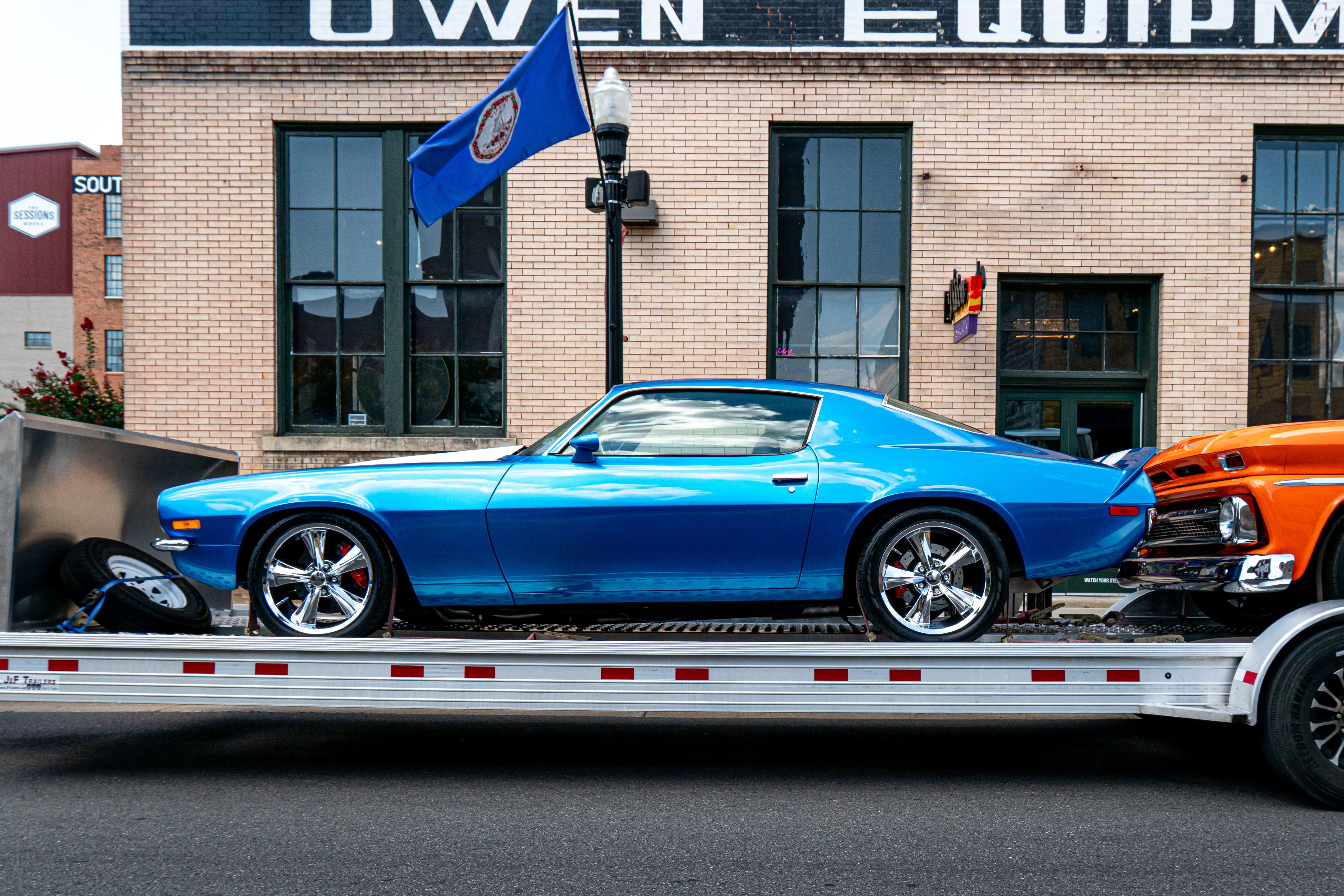
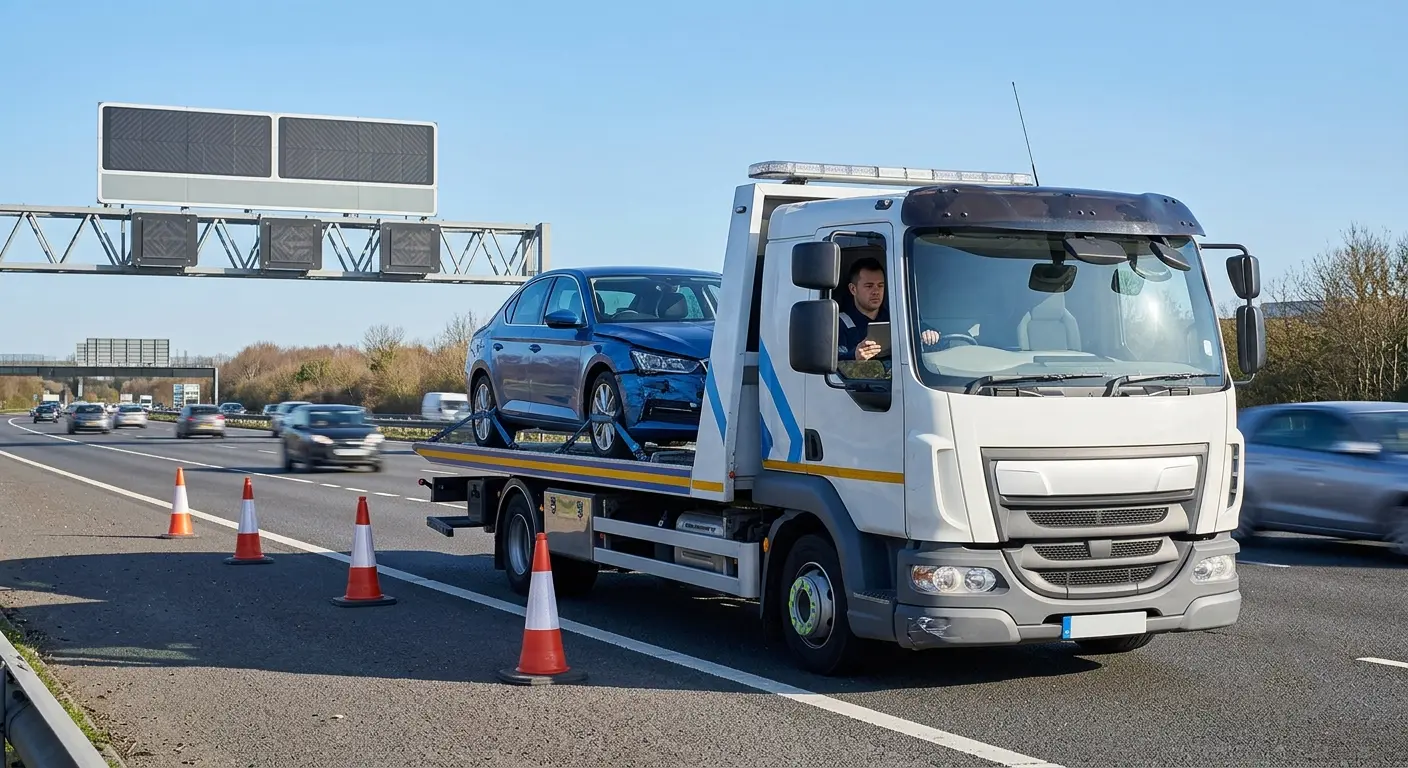
Once the situation is regularised and all that remains is getting the vehicle to a specific place, flatbed transport is the standard procedure.
The legal position: when transport stops being optional
Driving without a current ITV carries a fine and can result in the vehicle being immobilised under the rules the Dirección General de Tráfico (DGT) enforces. There is a larger problem behind it: in the event of an accident, your insurer may reduce or refuse cover entirely.
Royal Decree 920/2017 governing the ITV roadworthiness test allows a limited exception for travelling to a booked inspection, but it does not permit normal use of the vehicle. Any other journey requires it to be carried on a transporter.
The real consequences
The consequences come at three levels. The fine is the most visible and the least serious. Immobilisation is worse, because it adds compound and administration costs. The loss of insurance cover is the one that can genuinely ruin someone.
In an accident with injuries where the vehicle had no ITV or no insurance, the driver can end up personally liable for damages a policy would normally cover. That is the risk almost nobody calculates.
How your vehicle is covered while it is being moved
Cover is the detail most often skipped when booking a move. It is not enough for a company to say it is insured — the scope matters, and it should appear on the job documentation alongside the vehicle's condition at the point of loading.
Road haulage is a regulated activity requiring authorisation, overseen by the Spanish Ministry of Transport. An informal operator without authorisation or a transit policy simply shifts the whole risk onto the owner.
Port activity in Bilbao also means work happens outside standard office hours. A service that only operates nine to five fits badly with terminal reality.
Vehicles on temporary deregistration or without insurance
Temporary deregistration is a useful option for vehicles that will not be used for a long period, but it means giving up the right to drive them. When the time comes to move the car, transport is the only lawful route.
It is worth checking the vehicle's administrative status before arranging the move. Knowing whether it is temporarily deregistered, permanently deregistered or simply without an ITV determines what formalities apply at the destination.
Expired ITV: the actual position
With an expired ITV, the vehicle cannot be driven on public roads except in one narrow case: travelling to a test station with a booked appointment. Outside that, any journey is an offence and can end with the vehicle immobilised.
The bigger problem is not the fine but the insurance. In an accident with an expired ITV, your insurer may reduce the settlement or recover its costs from you, leaving the driver exposed to a figure far larger than the penalty.
The quote: the variables that count
Ask for a fixed quote and confirm it covers collection and delivery at the specific points you need. The difference between a door-to-door service and one between agreed points is significant in both cost and convenience.
On long-distance moves the cost per kilometre falls. If the vehicle has to cross the country, ask for the total rather than working from a per-kilometre rate.
Reaching the test centre without breaking the rules
A vehicle that has stood for a long time and is going for its ITV usually has accumulated problems. Driving it to the station, even relying on the exception, can be a poor idea if the brakes or steering are not responding.
Transport to the station and, if it fails, on to the garage, is a routine service. It avoids penalties and avoids the risk of driving a vehicle whose actual condition is unknown.
Other services in Bilbao
There is more detail on non-road-legal vehicle transport, the full list on our services page, and you can reach us through contact for an assessment of your situation in Bilbao.
Practical advice for your move
Make sure the alarm is disabled, or that the driver knows how to disable it. An alarm going off in transit means stopping and complicates the job for no reason.
Flag it if the vehicle has stood unused for a long period. Flat tyres, seized brakes or a completely dead battery all change how it has to be loaded.
Check the handbrake works and that the vehicle can be secured on the deck. If it cannot, there are solutions, but it is better known in advance.
On vehicles with large-diameter wheels and low-profile tyres, the approach to the ramps needs more care. It is worth mentioning so the right angle is prepared and the tyre or rim is not scuffed.
Before collection, check no personal documents are left in the glovebox. It is where forgotten paperwork most often turns up, and some of it contains details you would not want travelling unsupervised.
Battery condition matters even for a transport job. If the vehicle has to move a few metres under its own power to get out of a garage or a parking bay, a live battery saves time and avoids resorting to auxiliary equipment.
If the vehicle has any quirk — lowered suspension, an automatic gearbox locked in park, a flat battery — mention it when requesting the quote so the right equipment turns up.
If the move includes a sea crossing, check what documentation the ferry operator requires for the vehicle. The registration document and owner details are usually needed, and a missing paper means missing the sailing.
If you need the vehicle by a fixed, immovable date, say so when booking rather than afterwards. With enough notice it can almost always be accommodated; with twenty-four hours, often not.
Before confirming, check the quote is fixed rather than an estimate subject to surcharges. Extras for difficult access or a non-rolling vehicle should be clear from the outset.
A vehicle leaking oil or fuel should be flagged before transport. It does not prevent the move, but it affects where the car sits on the deck and what protection goes underneath it.
Realistic timescales depend on distance and route, not optimism. A company that promises any deadline without asking where the vehicle is probably will not meet it.
Keep the job reference or delivery note. If you later need to evidence the move to an insurer, a workshop or the authorities, that document proves when and how the vehicle was moved.
Photograph the vehicle before loading, including all four corners, the roof and underneath if you can. It takes two minutes and settles any later disagreement about a scratch.
Be wary of quotes well below market rate. In vehicle transport, a low price usually means no goods-in-transit insurance, no operating authorisation, or neither.
If the vehicle is in an underground car park, check the clearance height first. Many garages cannot take a transporter and the car has to be brought up to street level.
Have the vehicle and ownership documents ready. On moves ending at a port terminal or crossing a border, that paperwork matters as much as the vehicle itself.
Know where the spare wheel and tools are if the vehicle carries them. On long moves, a loose item in the boot shifts during the journey and can damage the interior or the trim.
Before the truck arrives, take the documentation, spare keys and anything valuable out of the vehicle. It travels unaccompanied, and items left inside are not covered as luggage.
Always ask whether the price covers collection and delivery at the points you need, or refers to a terminal-to-terminal move. The difference in cost and convenience is considerable.
Moving several vehicles together usually works out considerably cheaper per unit than separate jobs. If you have more than one to move, it is worth quoting them as one.
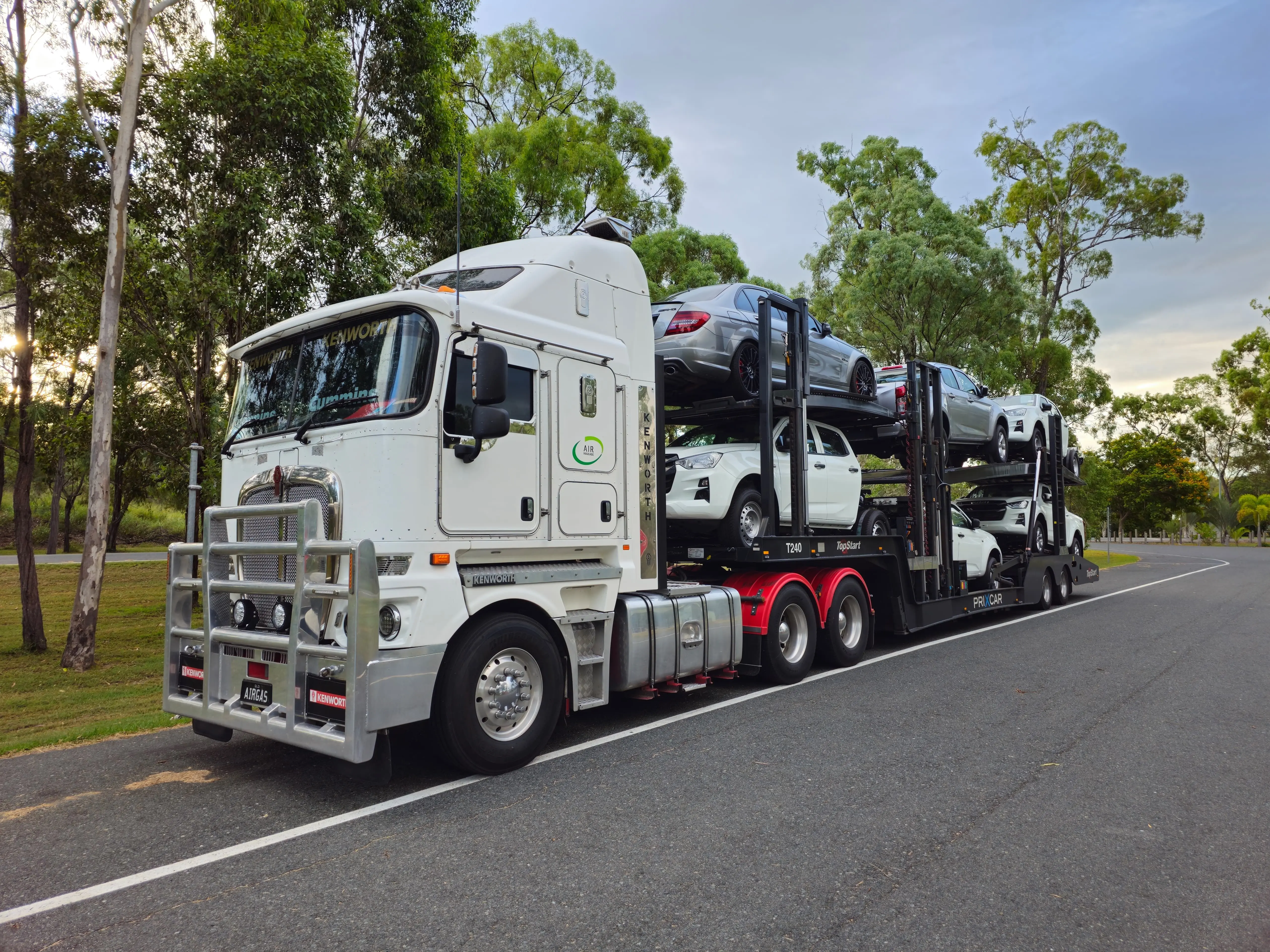
On long moves, asking how many loading and unloading points the truck has helps explain the timescale. A truck making several stops takes longer than a direct run.
If the vehicle contains fuel cans or any flammable material, remove it beforehand. Dangerous goods transport is governed by its own regulations and cannot travel mixed in with the vehicle.
Bear in mind that in peak periods — summer, or the start and end of the season — lead times stretch. Booking ahead is the simple way around it.
If you will not be present at collection or delivery, put in writing who hands over and who receives the keys, with a phone number. This is the single most common cause of avoidable delay.
Keep the job documentation recording the vehicle's condition. It is the reference point if a question about damage and its timing comes up later.
Check the overall height if the vehicle is a van, a camper or a 4x4 with roof accessories. The vehicle's height plus the deck height determines what the loaded truck can pass under.
An accessible collection point saves both time and money. If the street is narrow or the garage has restricted headroom, agreeing a nearby spot where the truck can manoeuvre simplifies everything.
In summary
If you need a vehicle moved in Bilbao, the most useful thing is an assessment of your specific situation. We give you a total price and a realistic timescale, not a per-kilometre rate that grows later.
Vehicle not road legal in Bilbao?
To the test centre, the garage or an authorised treatment facility. We handle the move, you handle the paperwork.