There is a widespread misunderstanding about what you can do with a car whose ITV has lapsed. The exception for travelling to a booked test does exist, but it is narrow and does not permit normal use. In Algeciras we handle the move so you do not have to rely on a doubtful interpretation.
Port activity in Algeciras means a constant flow of vehicles entering and leaving the country. Plenty of moves therefore carry import or export documentation, and a paperwork error can immobilise a vehicle for longer than any mechanical fault.
What makes Algeciras different
Algeciras is a regular destination for our work, and it comes with conditions of its own. Algeciras is Spain's largest port by freight volume and the main crossing point to North Africa. During the summer straits crossing operation vehicle traffic multiplies and access times stretch considerably.
The Campo de Gibraltar setting adds customs considerations to certain movements.
Temporary deregistration and what it means
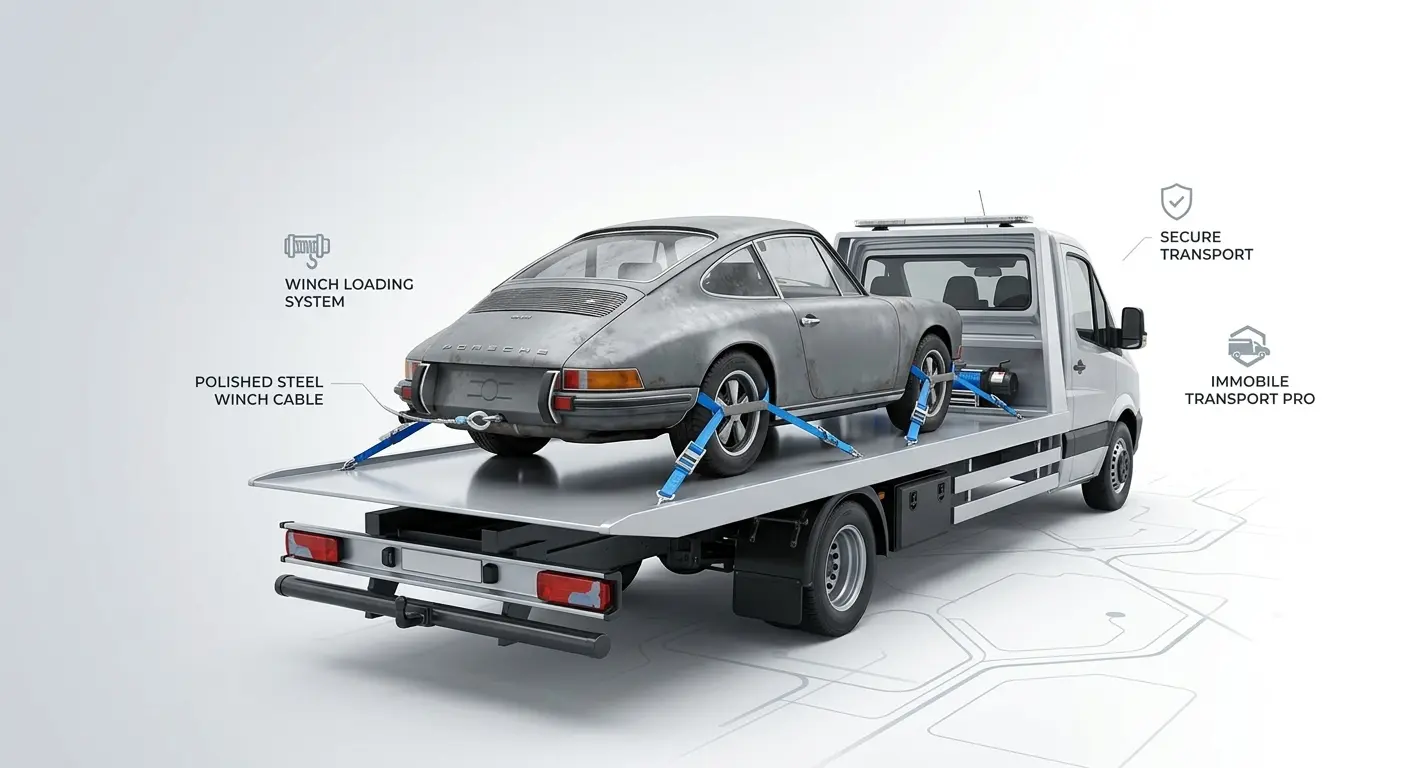
A vehicle on temporary deregistration is, for road purposes, out of service: it cannot be used on public roads under any circumstances. It can be moved on a flatbed, which is the normal way of getting it to a garage or a new address.
The same applies to a vehicle without compulsory insurance in force. Driving uninsured is among the most serious traffic offences in Spain and can bring immobilisation of the vehicle on top of the fine.
Permanently deregistering a vehicle
To deregister a vehicle permanently it must be handed over to an authorised treatment facility, which issues the certificate of destruction needed to complete deregistration with the traffic authority. That cannot be done at any scrapyard.
Since a vehicle being scrapped is usually no longer roadworthy, the move to the facility is made on a flatbed. It is worth confirming beforehand what documentation that particular facility requires.
In Algeciras it is worth distinguishing a door-to-door move from one ending inside the port area: access requirements and waiting times are nothing alike.
Why the shortcut does not pay
Driving a few kilometres with an expired ITV feels like a minor risk, and in terms of the odds of being stopped it perhaps is. The problem is the asymmetry: the saving is the price of a transport job, and the potential loss has no defined ceiling.
There is also liability towards others. A vehicle that has not passed inspection may carry undetected safety defects, and if those contribute to an accident the driver's legal position becomes considerably worse.
What to expect from the job
A well-organised move holds no surprises: a fixed quote before starting, an agreed time window, condition recorded at loading and at delivery, and a clear contact at both ends.
If the vehicle is in a compound, a scrapyard or premises with restricted hours, that is resolved before the date is set so the day is not wasted.
What the law says about moving a vehicle that cannot be driven
Driving without a current ITV carries a fine and can result in the vehicle being immobilised under the rules the Dirección General de Tráfico (DGT) enforces. There is a larger problem behind it: in the event of an accident, your insurer may reduce or refuse cover entirely.
Royal Decree 920/2017 governing the ITV roadworthiness test allows a limited exception for travelling to a booked inspection, but it does not permit normal use of the vehicle. Any other journey requires it to be carried on a transporter.
What it costs and what that depends on
Price is calculated on distance, vehicle type, rolling condition and accessibility. The absence of an ITV or insurance does not itself make the job more expensive — on the deck the vehicle is cargo and travels like any other.
What does affect it is physical condition. A vehicle that has stood for years with seized brakes takes more time and equipment than one that rolls normally.
When there is a legal restriction on the vehicle
A vehicle under an administrative seal or subject to a restriction on disposal cannot be driven and, in many cases, cannot be moved without express authorisation. The status needs verifying in the relevant register before transport is arranged.
It is an uncommon situation but worth knowing about, because attempting to move a vehicle under a live restriction can worsen the owner's position rather than resolve it.
Cover and liability during transport
Cover is the detail most often skipped when booking a move. It is not enough for a company to say it is insured — the scope matters, and it should appear on the job documentation alongside the vehicle's condition at the point of loading.
Road haulage is a regulated activity requiring authorisation, overseen by the Spanish Ministry of Transport. An informal operator without authorisation or a transit policy simply shifts the whole risk onto the owner.
Other services in Algeciras
More on non-road-legal vehicle transport and on the rest of our services. If you would rather we called you, leave your details on the contact page and we will assess your case in Algeciras.
Points to review in Algeciras
If the vehicle is on rural land or at the end of an unsurfaced track, state the distance from the tarmac road. An articulated truck cannot enter every lane, and sometimes the car has to be brought out to a meeting point.
Agree who signs for the vehicle at the destination. If it arrives at a closed workshop or an address where nobody is present, the driver cannot simply leave it, and waiting time or a second attempt both cost money.
Be wary of quotes well below market rate. In vehicle transport, a low price usually means no goods-in-transit insurance, no operating authorisation, or neither.
If the move includes a sea crossing, check what documentation the ferry operator requires for the vehicle. The registration document and owner details are usually needed, and a missing paper means missing the sailing.
On vehicles with large-diameter wheels and low-profile tyres, the approach to the ramps needs more care. It is worth mentioning so the right angle is prepared and the tyre or rim is not scuffed.
On long moves, asking how many loading and unloading points the truck has helps explain the timescale. A truck making several stops takes longer than a direct run.
If the collection is from a building with a communal garage, tell the manager or concierge. A transporter manoeuvring on a shared ramp without warning creates avoidable friction with neighbours.
Always ask whether the price covers collection and delivery at the points you need, or refers to a terminal-to-terminal move. The difference in cost and convenience is considerable.
If you are selling the vehicle and the buyer arranges transport, put in writing when responsibility passes. It is normally at key handover, but both parties benefit from having it stated.
On moves crossing several autonomous communities, bear in mind that heavy vehicle driving restrictions vary at weekends and on public holidays. That can affect the specific delivery day.
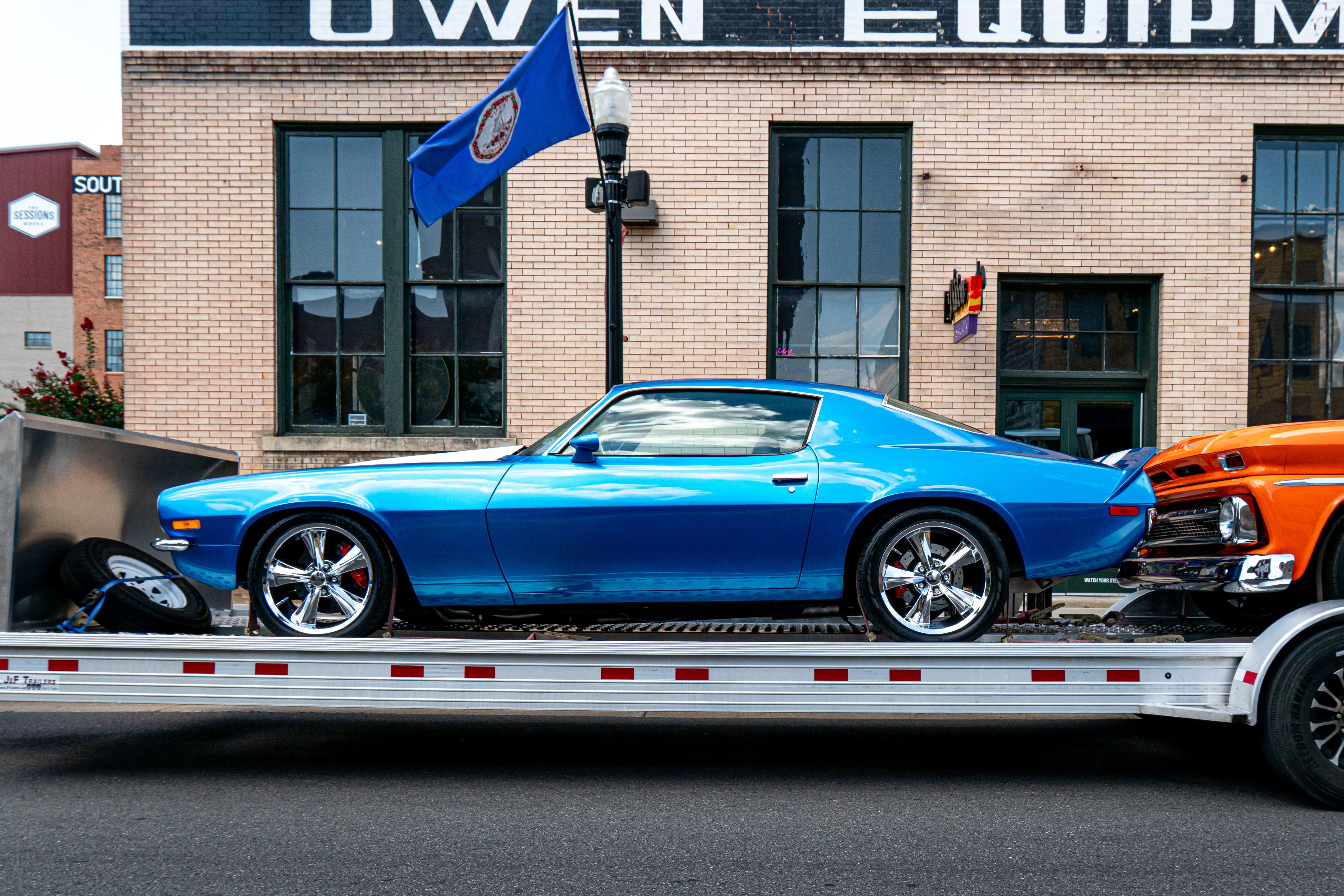
Open transporters are the standard option and perfectly safe for most vehicles. Enclosed transport makes sense for classics, high-value cars and anything with very low ground clearance.
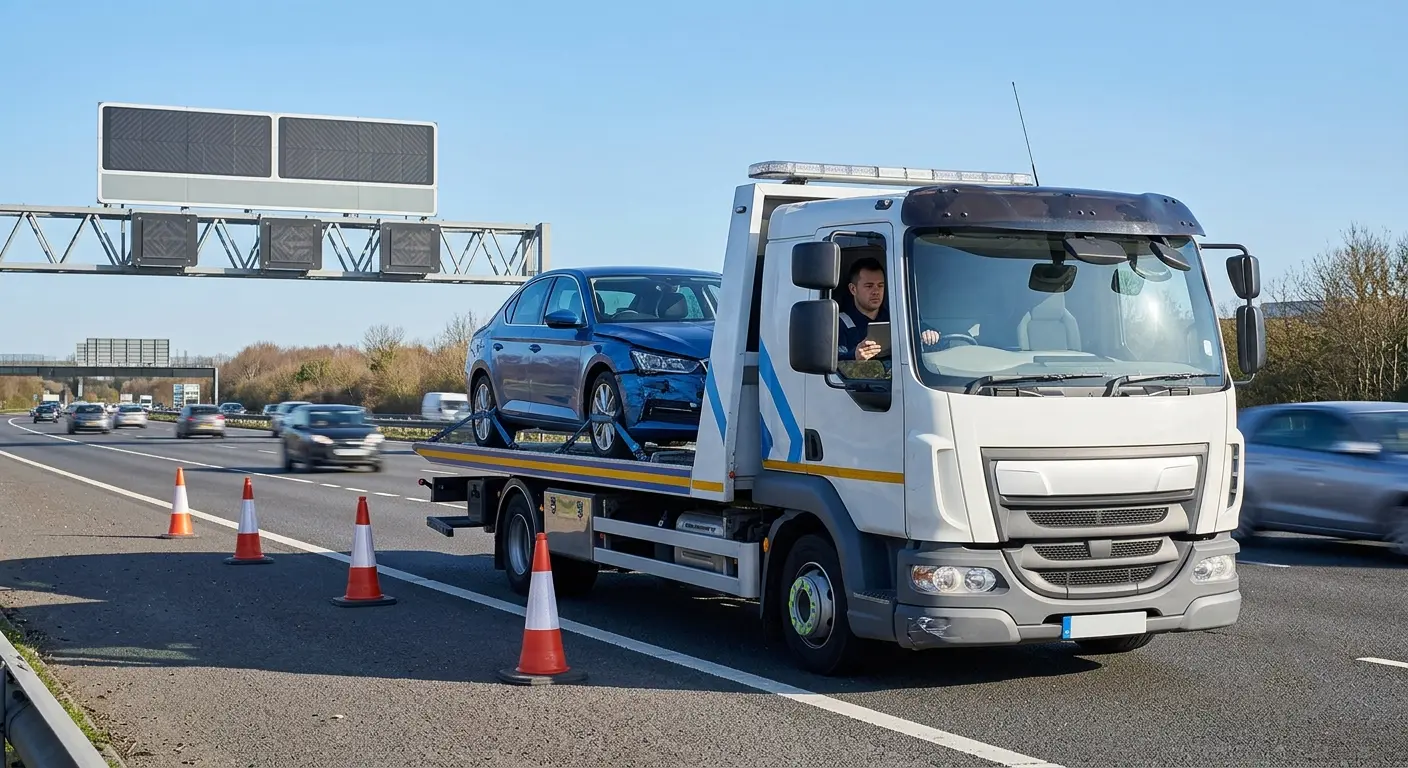
If the vehicle has been in an accident, say what is damaged and whether the wheels still turn. A vehicle that will not roll needs a winch and sometimes dollies.
On classic vehicles with carburettors or older systems, say whether the engine needs any particular starting procedure. If it has to be moved even a few metres, that information saves time.
If you will not be present at collection or delivery, put in writing who hands over and who receives the keys, with a phone number. This is the single most common cause of avoidable delay.
If the destination is an ITV test station, confirm you have a booked appointment and the time. Matching the vehicle's arrival to the appointment slot avoids long waits and a second visit.
Bear in mind that in peak periods — summer, or the start and end of the season — lead times stretch. Booking ahead is the simple way around it.
Battery condition matters even for a transport job. If the vehicle has to move a few metres under its own power to get out of a garage or a parking bay, a live battery saves time and avoids resorting to auxiliary equipment.
An accessible collection point saves both time and money. If the street is narrow or the garage has restricted headroom, agreeing a nearby spot where the truck can manoeuvre simplifies everything.
Flag it if the vehicle has stood unused for a long period. Flat tyres, seized brakes or a completely dead battery all change how it has to be loaded.
Where a tailgate or bonnet no longer closes properly after an impact, secure it before loading. A tailgate that springs open at eighty kilometres an hour is a genuine hazard to other traffic.
Check whether your own policy covers the vehicle while it sits at a third-party workshop or compound. It is a frequent gap between the end of transport and the start of repair, and worth clarifying.
If the move is a private sale, coordinate payment and key handover clearly. The carrier moves the vehicle; it takes no part in the transaction.
A vehicle leaking oil or fuel should be flagged before transport. It does not prevent the move, but it affects where the car sits on the deck and what protection goes underneath it.
Make sure the alarm is disabled, or that the driver knows how to disable it. An alarm going off in transit means stopping and complicates the job for no reason.
If the vehicle contains fuel cans or any flammable material, remove it beforehand. Dangerous goods transport is governed by its own regulations and cannot travel mixed in with the vehicle.
Before collection, check no personal documents are left in the glovebox. It is where forgotten paperwork most often turns up, and some of it contains details you would not want travelling unsupervised.
If the vehicle will sit on a public street waiting for collection, check there are no timed restrictions or scheduled clearing on that road. A car towed by the local authority while waiting for transport complicates matters considerably and adds costs nobody planned for.
Photograph the vehicle before loading, including all four corners, the roof and underneath if you can. It takes two minutes and settles any later disagreement about a scratch.
In summary
If you need a vehicle moved in Algeciras, the most useful thing is an assessment of your specific situation. We give you a total price and a realistic timescale, not a per-kilometre rate that grows later.
Vehicle not road legal in Algeciras?
We move it on a flatbed, which is the lawful route. Fixed quote and no risk of a penalty.