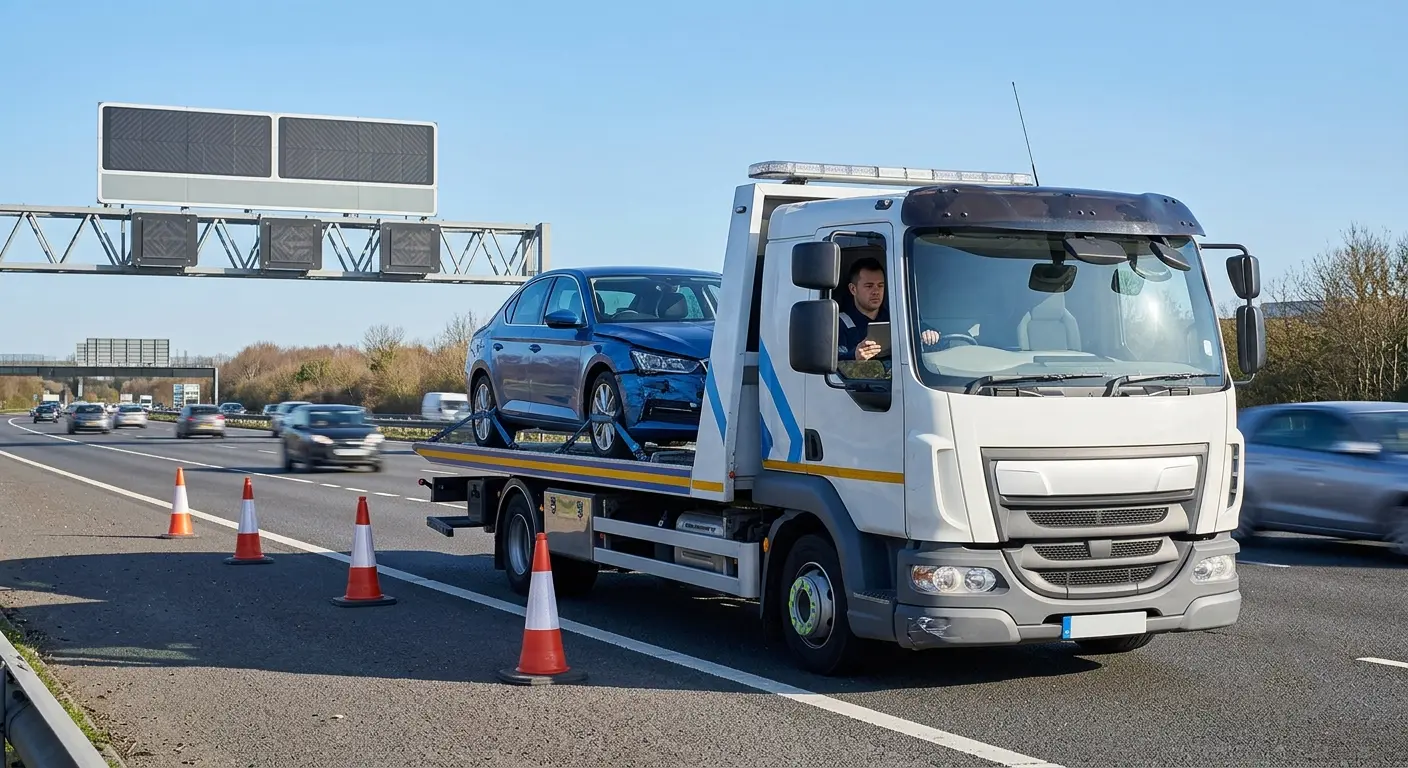
We recover accident vehicles in Las Palmas de Gran Canaria, coordinating with whoever is involved: officers, the municipal compound, the destination garage or your insurer. The aim is to get the vehicle away promptly, without racking up storage charges and without adding a single further mark to it.
In Las Palmas de Gran Canaria the timescale is set by the ship, not the road. The land legs can be done in a day, but the crossing and the loading formalities impose their own calendar, especially in peak season when space is scarce.
Moving a vehicle in Las Palmas de Gran Canaria: what to know
It helps to set the context before going into detail. The Canary Islands have their own tax and customs regime, so moving a vehicle from the mainland involves extra formalities. The Port of La Luz is one of the major Atlantic ports and a routine stopover point.
Internal distances are short but the island's terrain is steep and demanding. There is more background on the city in its Wikipedia entry.
Damage you cannot see from outside
A vehicle that has taken an impact can look driveable without being so. Steering geometry may have shifted, the brake circuit may be compromised, the chassis may have deformed invisibly, and safety systems may have been rendered inoperative.
There is a legal dimension too: driving a vehicle whose safety equipment does not function is an offence, and in the event of a second incident the driver's position with their insurer becomes very weak indeed.
Transport insurance: the question always worth asking
A properly run move records the vehicle's condition before loading, normally photographically, and records it again at delivery. That evidence is what settles any later disagreement quickly.
It is worth confirming the company holds the relevant transport authorisation with the Spanish Ministry of Transport and a current policy. That is the difference between a professional service and someone with a hired trailer.
In Las Palmas de Gran Canaria it makes sense to confirm the sailing date before committing to anything that depends on the vehicle arriving.
When more than one vehicle needs clearing
In a multi-vehicle accident, clearance has to be sequenced: first whatever is obstructing traffic, then the rest. Coordinating several units keeps the road closed for less time than it otherwise would be.
Where the vehicles have different owners, each may have a different destination. Establishing which vehicle goes where at the outset prevents confusion on site.
First steps after a collision
After a collision the car is last on the list. First the safety of the occupants and of other traffic, then the emergency call, and only then an assessment of the damage.
One detail that is often forgotten: photograph the scene before the vehicles are moved. Once they have been shifted, reconstructing their relative positions is much harder and can complicate the question of liability.
Write-offs and where the vehicle goes
A vehicle is written off when the repair cost exceeds its market value, or when structural damage makes a safe repair impossible. At that point it normally goes to an authorised treatment facility for permanent deregistration.
That final move is still the transport of a vehicle unfit for the road, with the same requirements as any other. It cannot be driven there even if the engine starts.
Getting a car out of the pound
Collecting from a compound differs from a normal pickup in two ways: there are formalities beforehand and the hours are limited. Arriving with incomplete paperwork means coming back another day and paying for another day of storage.
Before arranging collection it is worth confirming exactly what documentation that particular compound requires, because the rules vary between municipalities.
The reason we photograph the vehicle
The pre-loading photographic record matters most on accident vehicles, which arrive with damage from several sources. Without that reference, any later disagreement becomes one word against another.
Owners should keep a copy of those images and the job documentation. It is useful material for the insurance assessment as well.
Regulations that apply to moving a vehicle
Driving without a current ITV carries a fine and can result in the vehicle being immobilised under the rules the Dirección General de Tráfico (DGT) enforces. There is a larger problem behind it: in the event of an accident, your insurer may reduce or refuse cover entirely.
Royal Decree 920/2017 governing the ITV roadworthiness test allows a limited exception for travelling to a booked inspection, but it does not permit normal use of the vehicle. Any other journey requires it to be carried on a transporter.
Other services in Las Palmas de Gran Canaria
Accident recovery in other cities
More on accident vehicle recovery and on the rest of our services. If you would rather we called you, leave your details on the contact page and we will assess your case in Las Palmas de Gran Canaria.
Details worth keeping in mind
Keep the job reference or delivery note. If you later need to evidence the move to an insurer, a workshop or the authorities, that document proves when and how the vehicle was moved.
Make sure the alarm is disabled, or that the driver knows how to disable it. An alarm going off in transit means stopping and complicates the job for no reason.
If the vehicle is in an underground car park, check the clearance height first. Many garages cannot take a transporter and the car has to be brought up to street level.
Before the truck arrives, take the documentation, spare keys and anything valuable out of the vehicle. It travels unaccompanied, and items left inside are not covered as luggage.
Check whether your own policy covers the vehicle while it sits at a third-party workshop or compound. It is a frequent gap between the end of transport and the start of repair, and worth clarifying.
An accessible collection point saves both time and money. If the street is narrow or the garage has restricted headroom, agreeing a nearby spot where the truck can manoeuvre simplifies everything.
If the move includes a sea crossing, check what documentation the ferry operator requires for the vehicle. The registration document and owner details are usually needed, and a missing paper means missing the sailing.
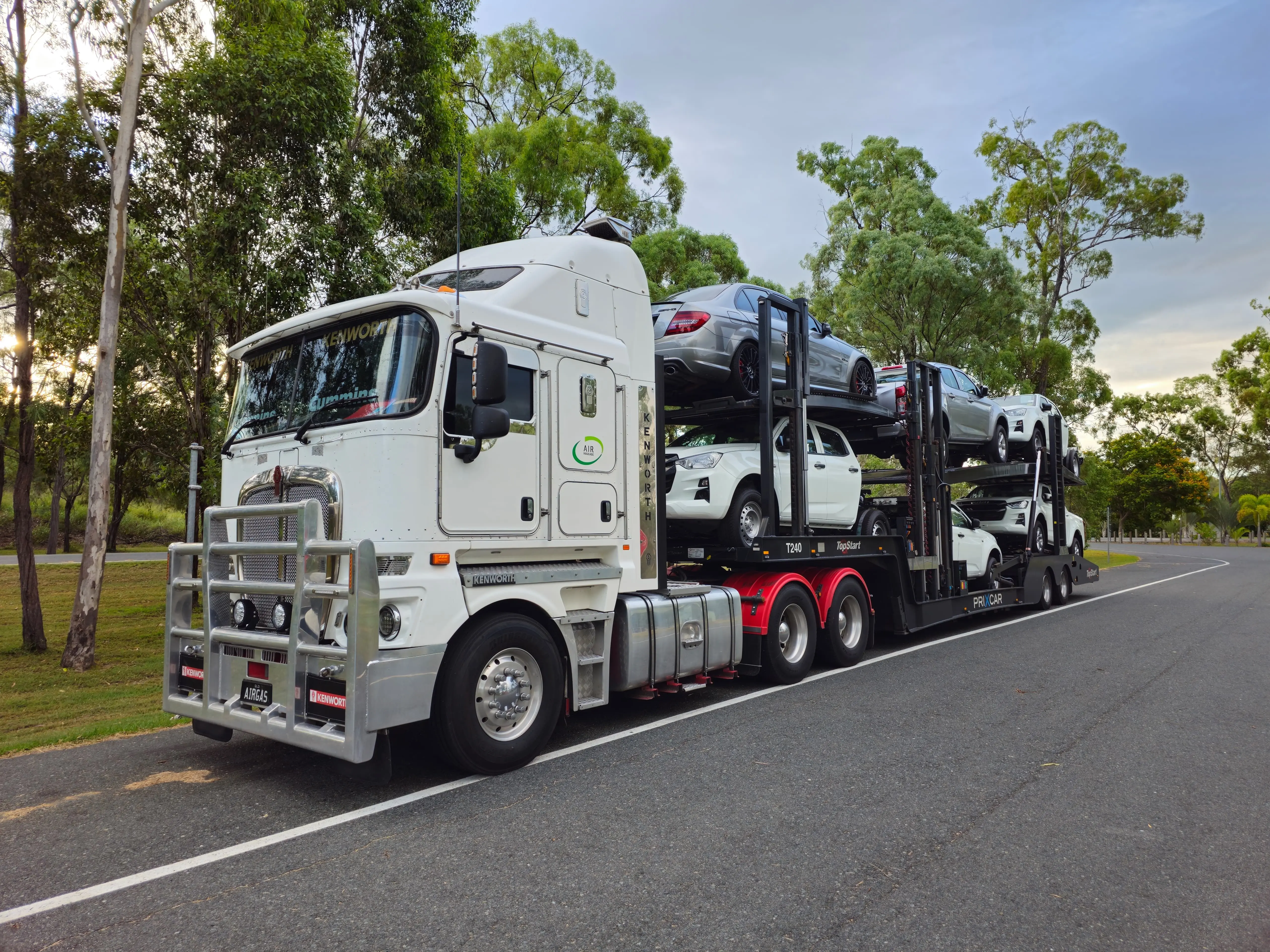
Moving several vehicles together usually works out considerably cheaper per unit than separate jobs. If you have more than one to move, it is worth quoting them as one.
On vehicles with large-diameter wheels and low-profile tyres, the approach to the ramps needs more care. It is worth mentioning so the right angle is prepared and the tyre or rim is not scuffed.
If the move is a private sale, coordinate payment and key handover clearly. The carrier moves the vehicle; it takes no part in the transaction.
Be wary of quotes well below market rate. In vehicle transport, a low price usually means no goods-in-transit insurance, no operating authorisation, or neither.
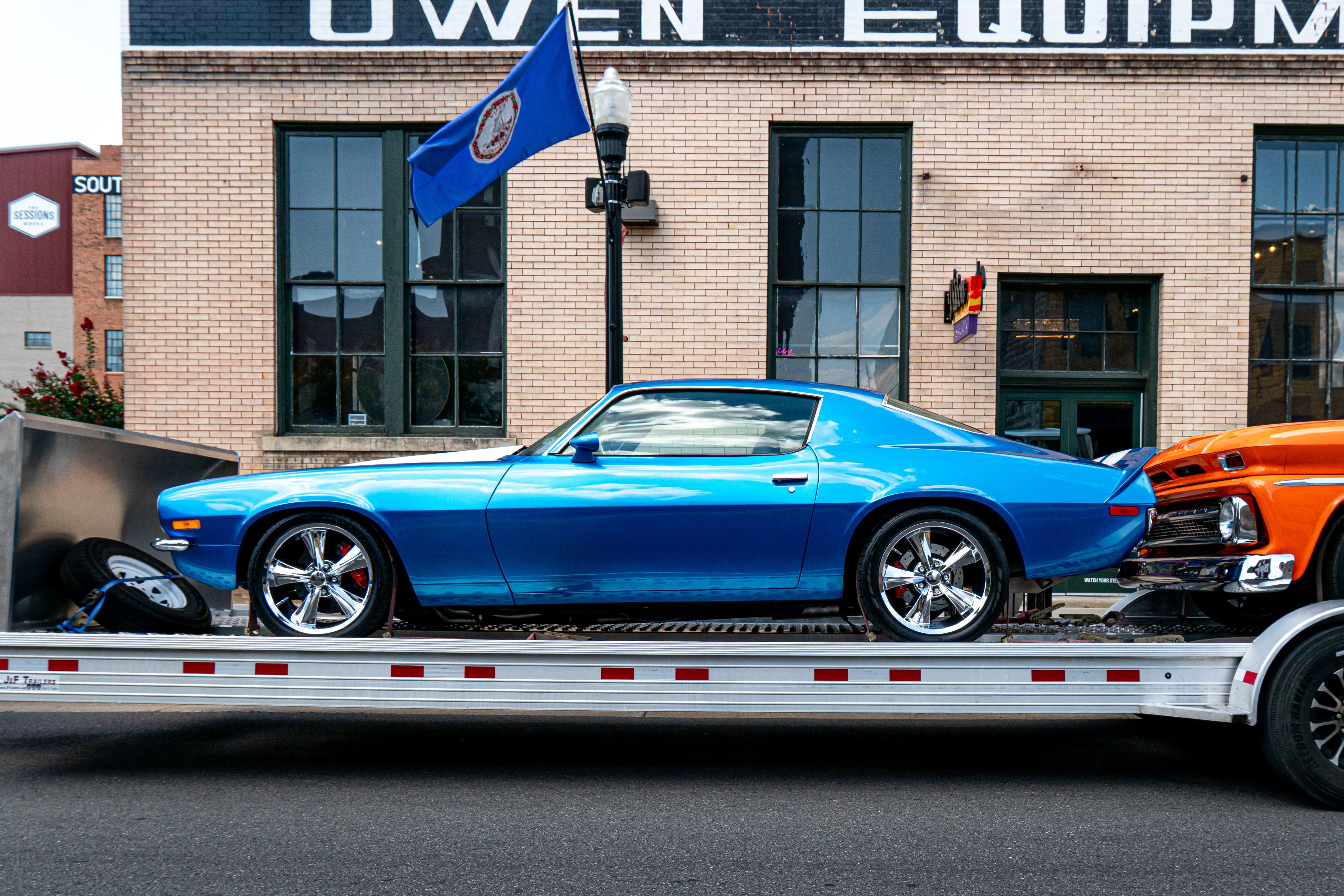
Open transporters are the standard option and perfectly safe for most vehicles. Enclosed transport makes sense for classics, high-value cars and anything with very low ground clearance.
Leave the fuel tank low, around a quarter. It reduces weight, follows standard transport practice, and there is nothing to gain from a full tank during the journey.
If the vehicle contains fuel cans or any flammable material, remove it beforehand. Dangerous goods transport is governed by its own regulations and cannot travel mixed in with the vehicle.
If the vehicle has been in an accident, say what is damaged and whether the wheels still turn. A vehicle that will not roll needs a winch and sometimes dollies.
On keyless-start vehicles, remember the fob must travel with you or be handed over at the destination, but never left inside the car in transit. It is a more common oversight than you would think and leaves the vehicle locked on arrival.
A vehicle leaking oil or fuel should be flagged before transport. It does not prevent the move, but it affects where the car sits on the deck and what protection goes underneath it.
Check the overall height if the vehicle is a van, a camper or a 4x4 with roof accessories. The vehicle's height plus the deck height determines what the loaded truck can pass under.
If the collection is from a building with a communal garage, tell the manager or concierge. A transporter manoeuvring on a shared ramp without warning creates avoidable friction with neighbours.
If the vehicle is on rural land or at the end of an unsurfaced track, state the distance from the tarmac road. An articulated truck cannot enter every lane, and sometimes the car has to be brought out to a meeting point.
Bear in mind that in peak periods — summer, or the start and end of the season — lead times stretch. Booking ahead is the simple way around it.
For vehicles with bulky modifications or accessories — roof racks, bike carriers, bull bars — mention them. They can affect the overall height of the loaded truck and whether it clears certain access points.
If the destination is an ITV test station, confirm you have a booked appointment and the time. Matching the vehicle's arrival to the appointment slot avoids long waits and a second visit.
Know where the spare wheel and tools are if the vehicle carries them. On long moves, a loose item in the boot shifts during the journey and can damage the interior or the trim.
Where a tailgate or bonnet no longer closes properly after an impact, secure it before loading. A tailgate that springs open at eighty kilometres an hour is a genuine hazard to other traffic.
Battery condition matters even for a transport job. If the vehicle has to move a few metres under its own power to get out of a garage or a parking bay, a live battery saves time and avoids resorting to auxiliary equipment.
On classic vehicles with carburettors or older systems, say whether the engine needs any particular starting procedure. If it has to be moved even a few metres, that information saves time.
Check the handbrake works and that the vehicle can be secured on the deck. If it cannot, there are solutions, but it is better known in advance.
In summary
If you need a vehicle moved in Las Palmas de Gran Canaria, the most useful thing is an assessment of your specific situation. We give you a total price and a realistic timescale, not a per-kilometre rate that grows later.
Urgent recovery in Las Palmas de Gran Canaria
We load with winch and skates even when the vehicle will not roll, and record its condition before moving it.