Driving a thousand kilometres to move a car costs more than it looks: fuel, tolls, a night away, meals, real wear and a whole day of your time. Once you total it up, the gap against transport is far smaller than most people assume. We move vehicles from Ávila to anywhere in Spain.
Winter shapes operations in Ávila. Frost, snow on the mountain passes and reduced visibility force route and timing adjustments, and occasionally mean waiting until conditions allow the work to be done safely.
Ávila: how the area shapes the job
Ávila is a regular destination for our work, and it comes with conditions of its own. Ávila is Spain's highest provincial capital, with cold winters and regular snowfall. The medieval walls restrict vehicle access to the historic core.
The AP-6 and N-403 link it to Madrid across the Central System mountains.
When the right car is at the other end of the country
Online marketplaces have made buying hundreds of kilometres away perfectly normal. What many buyers do not calculate is the real cost of collecting it: the trip out, the time, and a long drive home.
In a private sale it is worth agreeing clearly who arranges transport and at what point the vehicle counts as delivered. That single point prevents most misunderstandings.
Moving house and relocations
On international or long-distance moves within Spain, the vehicle tends to be the last thing organised and the one that causes most difficulty. Planning it as early as everything else simplifies matters considerably.
Where two vehicles move together, the cost per unit drops appreciably against two separate jobs.
Rural dispersion around Ávila often makes grouping nearby collections into one job the most sensible approach.
The legal position: when transport stops being optional
Driving without a current ITV carries a fine and can result in the vehicle being immobilised under the rules the Dirección General de Tráfico (DGT) enforces. There is a larger problem behind it: in the event of an accident, your insurer may reduce or refuse cover entirely.
Royal Decree 920/2017 governing the ITV roadworthiness test allows a limited exception for travelling to a booked inspection, but it does not permit normal use of the vehicle. Any other journey requires it to be carried on a transporter.
How your vehicle is covered while it is being moved
Cover is the detail most often skipped when booking a move. It is not enough for a company to say it is insured — the scope matters, and it should appear on the job documentation alongside the vehicle's condition at the point of loading.
Road haulage is a regulated activity requiring authorisation, overseen by the Spanish Ministry of Transport. An informal operator without authorisation or a transit policy simply shifts the whole risk onto the owner.
Vehicles that should not make the trip on their own wheels
On a classic, every kilometre counts twice: it adds wear to mechanicals that are hard to repair and exposes the bodywork to stones, insects and weather. Enclosed transport addresses both.
Sports cars with low ground clearance add a loading problem: they need shallow-angle ramps or skates so the underside and front splitter do not ground while going up.
When transport beats driving it yourself
An honest comparison includes more than fuel. Driving a thousand kilometres means fuel, tolls, a hotel night if the trip is long, meals, real wear on the vehicle and a full day of your own time.
Added together, the gap against transport is usually far smaller than people assume, and on valuable cars, classics or vehicles already carrying high mileage the balance tips clearly towards transport.
Delivery times on long-distance moves
Moves between major cities usually run on frequent routes and therefore shorter lead times. Those involving rural areas or islands depend on scheduling and need more margin.
For moves to the Balearics or Canaries, the sea crossing and sailing frequency have to be added, and in high season that becomes the factor that most affects the delivery date.
When more than one car needs moving
Moving several vehicles on one job cuts the cost per unit considerably. It is the natural option for dealerships, companies with fleets and private owners relocating two cars in a house move.
On multiple consignments it helps to establish whether everything goes to one destination or to different points within the same area. Both work, but the route planning differs.
Other services in Ávila
More on nationwide vehicle transport and on the rest of our services. If you would rather we called you, leave your details on the contact page and we will assess your case in Ávila.
Things to check before booking
Leave the fuel tank low, around a quarter. It reduces weight, follows standard transport practice, and there is nothing to gain from a full tank during the journey.
If the vehicle has any quirk — lowered suspension, an automatic gearbox locked in park, a flat battery — mention it when requesting the quote so the right equipment turns up.
Realistic timescales depend on distance and route, not optimism. A company that promises any deadline without asking where the vehicle is probably will not meet it.
If the destination is an ITV test station, confirm you have a booked appointment and the time. Matching the vehicle's arrival to the appointment slot avoids long waits and a second visit.
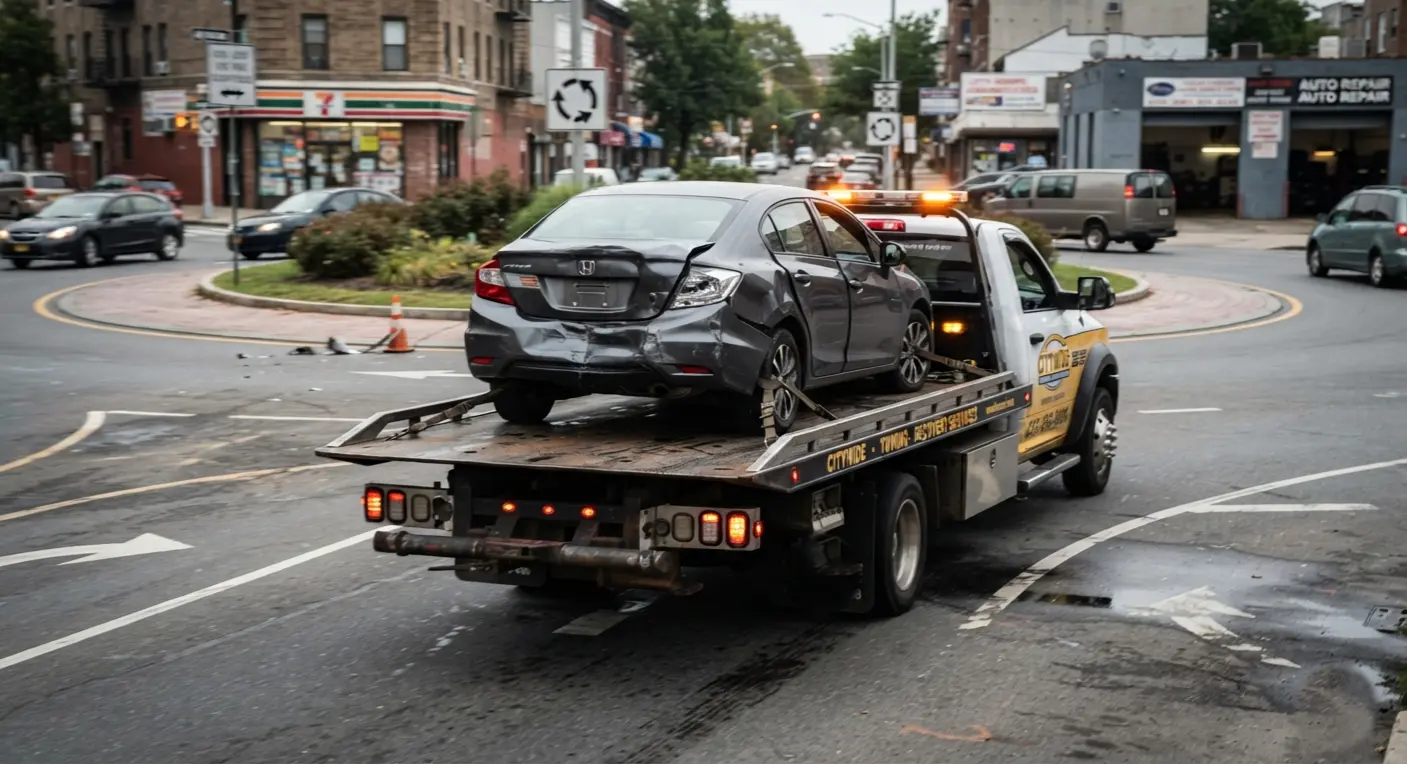
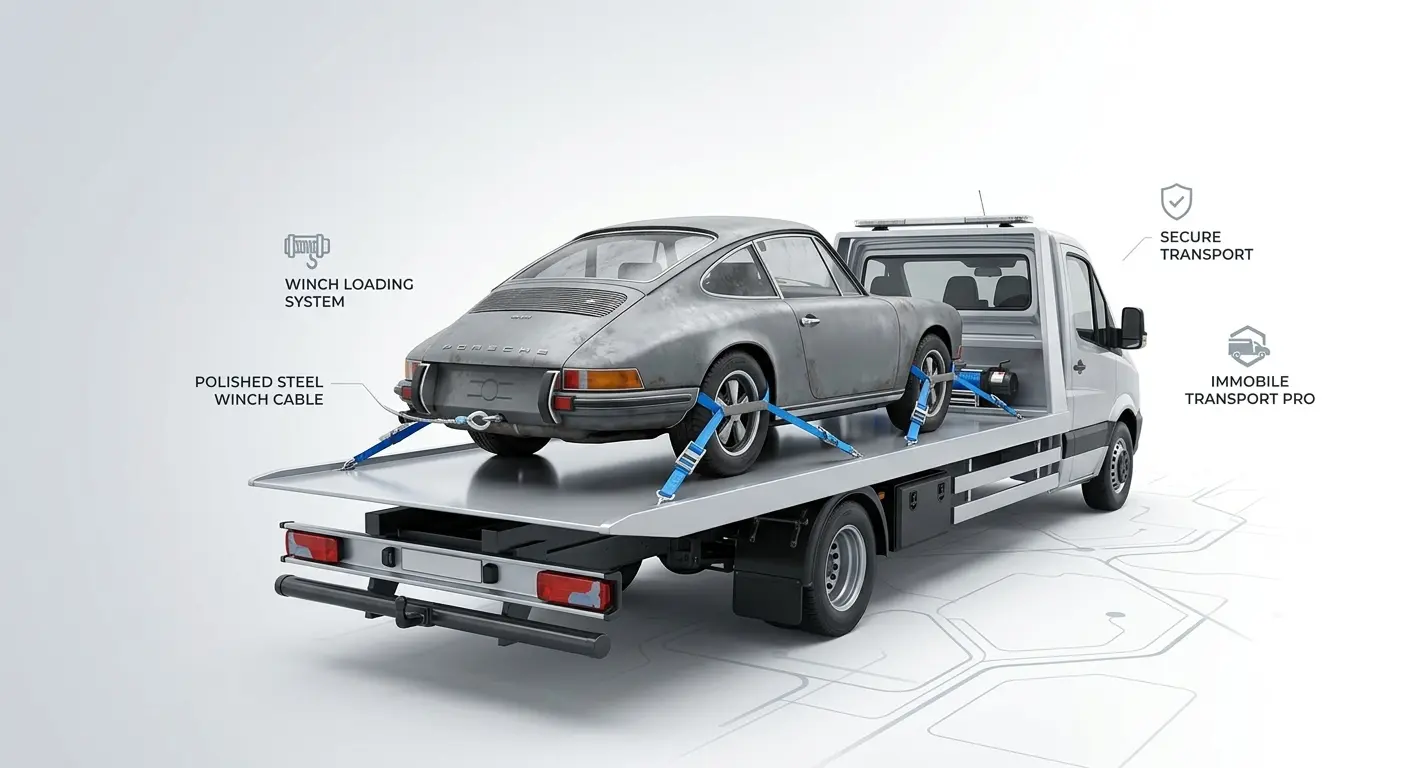
If the vehicle has been in an accident, say what is damaged and whether the wheels still turn. A vehicle that will not roll needs a winch and sometimes dollies.
On classic vehicles with carburettors or older systems, say whether the engine needs any particular starting procedure. If it has to be moved even a few metres, that information saves time.
For vehicles with bulky modifications or accessories — roof racks, bike carriers, bull bars — mention them. They can affect the overall height of the loaded truck and whether it clears certain access points.
If you are selling the vehicle and the buyer arranges transport, put in writing when responsibility passes. It is normally at key handover, but both parties benefit from having it stated.
If the vehicle will sit on a public street waiting for collection, check there are no timed restrictions or scheduled clearing on that road. A car towed by the local authority while waiting for transport complicates matters considerably and adds costs nobody planned for.
Make sure the alarm is disabled, or that the driver knows how to disable it. An alarm going off in transit means stopping and complicates the job for no reason.
A vehicle leaking oil or fuel should be flagged before transport. It does not prevent the move, but it affects where the car sits on the deck and what protection goes underneath it.
If you need the vehicle by a fixed, immovable date, say so when booking rather than afterwards. With enough notice it can almost always be accommodated; with twenty-four hours, often not.
Know where the spare wheel and tools are if the vehicle carries them. On long moves, a loose item in the boot shifts during the journey and can damage the interior or the trim.
Be wary of quotes well below market rate. In vehicle transport, a low price usually means no goods-in-transit insurance, no operating authorisation, or neither.
Photograph the vehicle before loading, including all four corners, the roof and underneath if you can. It takes two minutes and settles any later disagreement about a scratch.
Flag it if the vehicle has stood unused for a long period. Flat tyres, seized brakes or a completely dead battery all change how it has to be loaded.
An accessible collection point saves both time and money. If the street is narrow or the garage has restricted headroom, agreeing a nearby spot where the truck can manoeuvre simplifies everything.
On keyless-start vehicles, remember the fob must travel with you or be handed over at the destination, but never left inside the car in transit. It is a more common oversight than you would think and leaves the vehicle locked on arrival.
Check the overall height if the vehicle is a van, a camper or a 4x4 with roof accessories. The vehicle's height plus the deck height determines what the loaded truck can pass under.
Check the handbrake works and that the vehicle can be secured on the deck. If it cannot, there are solutions, but it is better known in advance.
Keep the job documentation recording the vehicle's condition. It is the reference point if a question about damage and its timing comes up later.
If the vehicle is on rural land or at the end of an unsurfaced track, state the distance from the tarmac road. An articulated truck cannot enter every lane, and sometimes the car has to be brought out to a meeting point.
Always ask whether the price covers collection and delivery at the points you need, or refers to a terminal-to-terminal move. The difference in cost and convenience is considerable.
Before the truck arrives, take the documentation, spare keys and anything valuable out of the vehicle. It travels unaccompanied, and items left inside are not covered as luggage.
Moving several vehicles together usually works out considerably cheaper per unit than separate jobs. If you have more than one to move, it is worth quoting them as one.
If you will not be present at collection or delivery, put in writing who hands over and who receives the keys, with a phone number. This is the single most common cause of avoidable delay.
Ask whether the price includes waiting time at loading and unloading. On moves to workshops, dealerships or compounds with slow procedures, that time can stretch, and it is worth knowing in advance how it is counted.
Before confirming, check the quote is fixed rather than an estimate subject to surcharges. Extras for difficult access or a non-rolling vehicle should be clear from the outset.
If the vehicle is in an underground car park, check the clearance height first. Many garages cannot take a transporter and the car has to be brought up to street level.
Get the name and number of the driver handling the job, or at least a direct operational contact. On the day, being able to resolve a question in two minutes prevents an hour of waiting.
In summary
If you need a vehicle moved in Ávila, the most useful thing is an assessment of your specific situation. We give you a total price and a realistic timescale, not a per-kilometre rate that grows later.
Transport quote in Ávila
Door to door, insured, at a fixed price. No per-kilometre rates that grow later.