We work in Salamanca on a simple principle: arrive when we say we will, and take the vehicle to the garage you choose. No imposed destinations and no extras appearing at the end. Flatbed recovery, goods-in-transit cover for the journey, and a fixed price from the first call.
The street layout in central Salamanca was not designed for car transporters. Knowing the street width, the timed restrictions and where a truck can actually turn is what separates a clean collection from a wasted afternoon.
Moving a vehicle in Salamanca: what to know
Salamanca is a regular destination for our work, and it comes with conditions of its own. Salamanca's historic centre is a World Heritage site with limited vehicle access. The A-62 links it to Valladolid and the Portuguese border at Fuentes de Oñoro.
The province has extensive, thinly populated rural areas.
How your vehicle is covered while it is being moved
Before handing keys to anyone, ask one specific question: is the vehicle covered while it sits on the transporter, for how much, and against what. An operator working legally and registered with the Spanish Ministry of Transport can evidence that without difficulty.
The carrier's cover is not the same as your own motor policy. Your insurance covers driving; during transport it is the carrier's goods-in-transit policy that responds. Confusing the two is behind most of the disputes that arise.
Garage, home, or an agreed point
Many drivers prefer their own trusted garage even if it is further away, and that is a reasonable call: someone who knows the car's history diagnoses faster and the repair is often cheaper.
On long-distance moves, taking the vehicle straight to the destination garage rather than an intermediate one saves a second job. It is worth considering from the first phone call.
A recovery quote, broken down
A serious quote follows three questions: where is the vehicle, where is it going, and what condition is it in. Without those, any figure is a guess that will probably change.
On long-distance moves the cost per kilometre falls compared with a short urban job, because the fixed cost of turning out is spread further. Ask for the total rather than a per-kilometre rate.
What determines arrival time
Arrival time depends on the exact location, the hour, traffic and whether a suitable vehicle is available nearby. A call from an urban street mid-morning gets attended faster than one from a mountain road at three in the morning.
What should always be given is an honest estimate. A deadline promised without asking where the vehicle is means nothing, and produces a worse wait than a realistic figure given up front.
Because Salamanca is a road junction, long-distance moves from here usually have more route options and therefore more scheduling flexibility.
Should I call my insurer or arrange it myself?
It is worth reading what your assistance actually covers before you need it. Many policies tow only to the nearest approved garage, which can leave the vehicle a hundred kilometres from where you want it.
There is one situation where policy assistance does not apply at all: a vehicle without a valid ITV or without insurance. Transport then has to be arranged separately, and it helps to know that before you are stranded.
When you should not restart the engine
Four signals mean switch off and do not try again: the oil pressure light, the temperature gauge in the red, a new internal metallic noise, and any smell of burning. In those situations transport is not a convenience — it is how you limit the damage.
Overheating deserves separate mention. An engine that has run without sufficient coolant may have distorted the cylinder head, and restarting it to cover a few kilometres to the garage can turn a manageable repair into a full engine replacement.
The legal position: when transport stops being optional
Spanish law draws a clear line between a vehicle fit for the road and one that is not. Where the ITV has lapsed, insurance has ended, or the vehicle is on temporary deregistration, driving it stops being legal and the Dirección General de Tráfico (DGT) can penalise it.
Beyond Royal Decree 920/2017 governing the ITV roadworthiness test, road transport of vehicles is subject to operating requirements overseen by the Spanish Ministry of Transport, including transport authorisation and goods-in-transit insurance.
Why a flatbed beats a tow
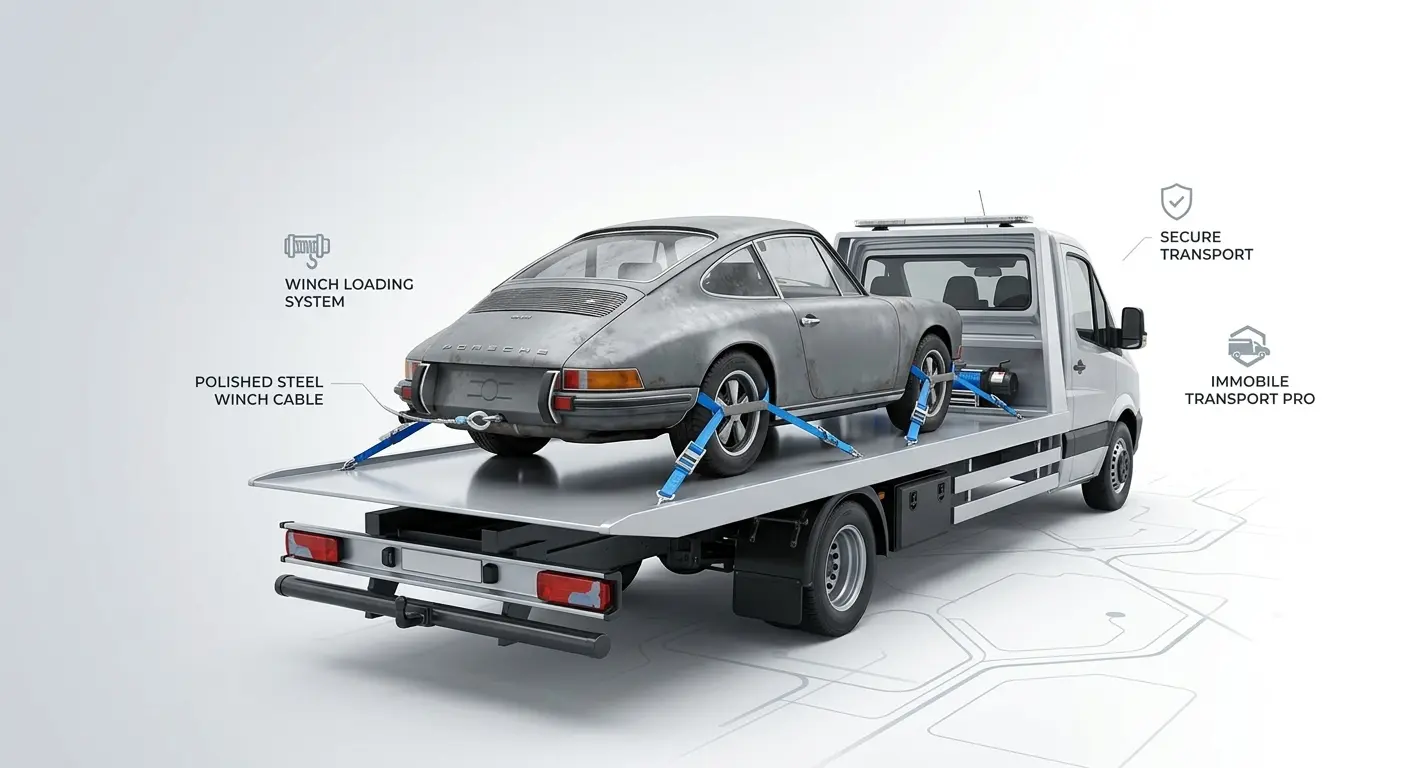
Flatbed transport also protects the underside of the vehicle, which matters on low cars and anything with sports bodywork. Shallow-angle ramps and, where needed, skates prevent the front splitter grounding during loading.
For electric and hybrid vehicles the flatbed is simply the only sensible option. Towing an EV with its driven wheels turning spins the motor as a generator and can damage the high-voltage system.
Other services in Salamanca
You can read more about breakdown recovery or browse all our services. For a specific quote in Salamanca, the quickest route is to get in touch.
Details worth keeping in mind
If the collection is from a building with a communal garage, tell the manager or concierge. A transporter manoeuvring on a shared ramp without warning creates avoidable friction with neighbours.
Check the handbrake works and that the vehicle can be secured on the deck. If it cannot, there are solutions, but it is better known in advance.
If the vehicle contains fuel cans or any flammable material, remove it beforehand. Dangerous goods transport is governed by its own regulations and cannot travel mixed in with the vehicle.
Agree who signs for the vehicle at the destination. If it arrives at a closed workshop or an address where nobody is present, the driver cannot simply leave it, and waiting time or a second attempt both cost money.
Get the name and number of the driver handling the job, or at least a direct operational contact. On the day, being able to resolve a question in two minutes prevents an hour of waiting.
Have the vehicle and ownership documents ready. On moves ending at a port terminal or crossing a border, that paperwork matters as much as the vehicle itself.
If the move is a private sale, coordinate payment and key handover clearly. The carrier moves the vehicle; it takes no part in the transaction.
Always ask whether the price covers collection and delivery at the points you need, or refers to a terminal-to-terminal move. The difference in cost and convenience is considerable.
On vehicles with large-diameter wheels and low-profile tyres, the approach to the ramps needs more care. It is worth mentioning so the right angle is prepared and the tyre or rim is not scuffed.
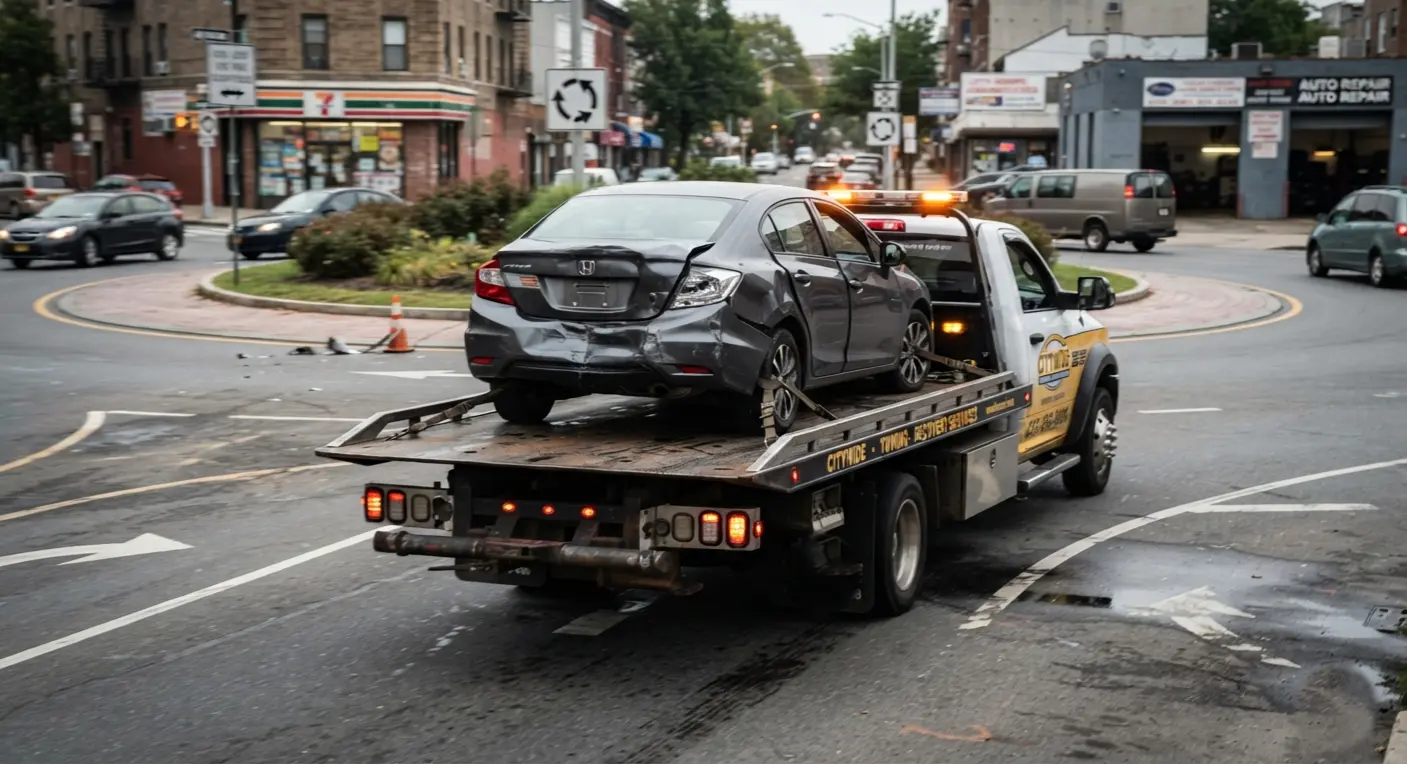
If the vehicle has been in an accident, say what is damaged and whether the wheels still turn. A vehicle that will not roll needs a winch and sometimes dollies.
If you need the vehicle by a fixed, immovable date, say so when booking rather than afterwards. With enough notice it can almost always be accommodated; with twenty-four hours, often not.
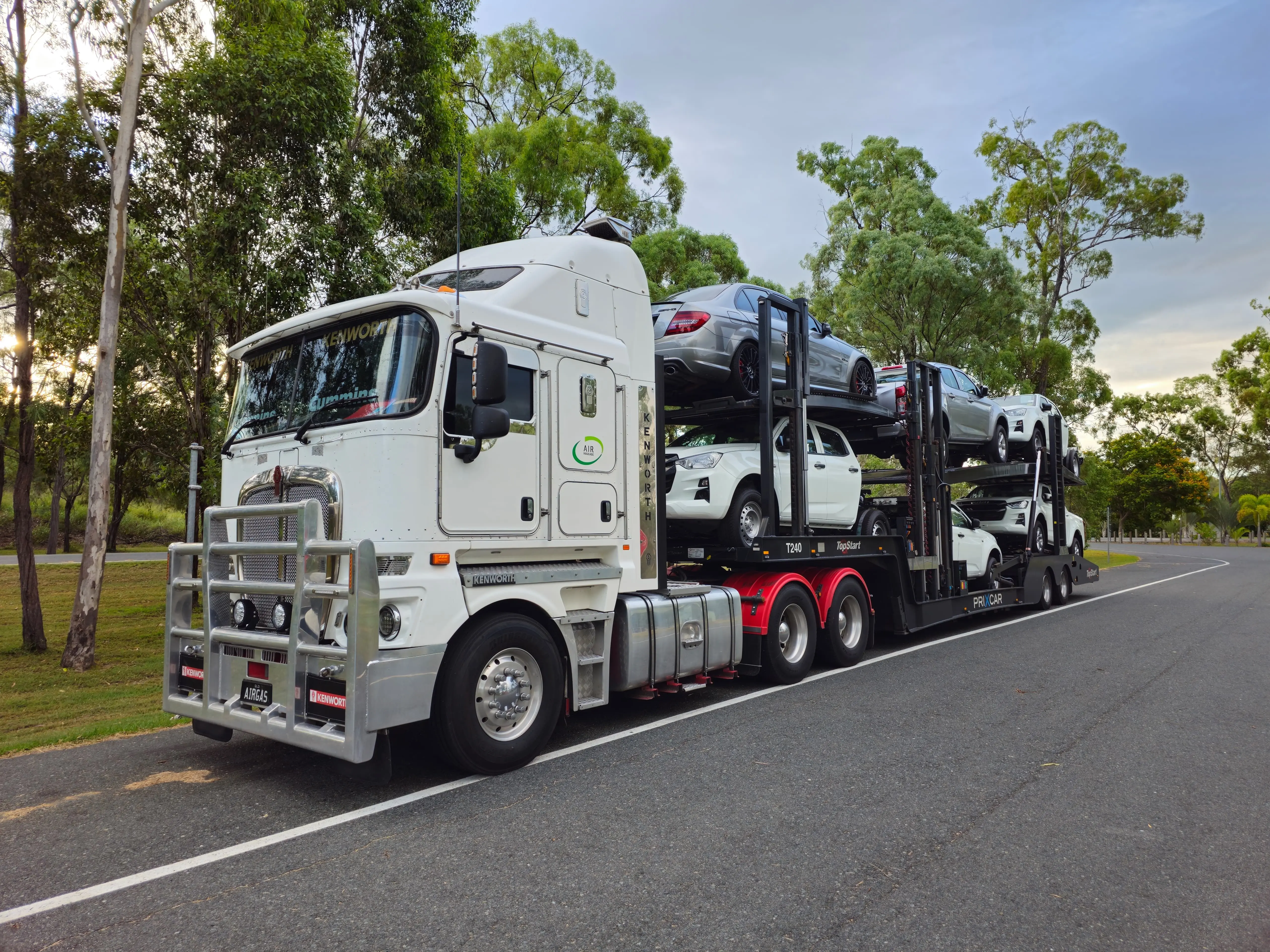
Open transporters are the standard option and perfectly safe for most vehicles. Enclosed transport makes sense for classics, high-value cars and anything with very low ground clearance.
If the vehicle will sit on a public street waiting for collection, check there are no timed restrictions or scheduled clearing on that road. A car towed by the local authority while waiting for transport complicates matters considerably and adds costs nobody planned for.
On keyless-start vehicles, remember the fob must travel with you or be handed over at the destination, but never left inside the car in transit. It is a more common oversight than you would think and leaves the vehicle locked on arrival.
A vehicle leaking oil or fuel should be flagged before transport. It does not prevent the move, but it affects where the car sits on the deck and what protection goes underneath it.
If the vehicle is in an underground car park, check the clearance height first. Many garages cannot take a transporter and the car has to be brought up to street level.
Battery condition matters even for a transport job. If the vehicle has to move a few metres under its own power to get out of a garage or a parking bay, a live battery saves time and avoids resorting to auxiliary equipment.
On moves crossing several autonomous communities, bear in mind that heavy vehicle driving restrictions vary at weekends and on public holidays. That can affect the specific delivery day.
Leave the fuel tank low, around a quarter. It reduces weight, follows standard transport practice, and there is nothing to gain from a full tank during the journey.
Before confirming, check the quote is fixed rather than an estimate subject to surcharges. Extras for difficult access or a non-rolling vehicle should be clear from the outset.
If the vehicle is on rural land or at the end of an unsurfaced track, state the distance from the tarmac road. An articulated truck cannot enter every lane, and sometimes the car has to be brought out to a meeting point.
Where a tailgate or bonnet no longer closes properly after an impact, secure it before loading. A tailgate that springs open at eighty kilometres an hour is a genuine hazard to other traffic.
Bear in mind that in peak periods — summer, or the start and end of the season — lead times stretch. Booking ahead is the simple way around it.
Flag it if the vehicle has stood unused for a long period. Flat tyres, seized brakes or a completely dead battery all change how it has to be loaded.
If the destination is an ITV test station, confirm you have a booked appointment and the time. Matching the vehicle's arrival to the appointment slot avoids long waits and a second visit.
Keep the job documentation recording the vehicle's condition. It is the reference point if a question about damage and its timing comes up later.
Make sure the alarm is disabled, or that the driver knows how to disable it. An alarm going off in transit means stopping and complicates the job for no reason.
Before collection, check no personal documents are left in the glovebox. It is where forgotten paperwork most often turns up, and some of it contains details you would not want travelling unsupervised.
In summary
Car Transport 247 works across Salamanca and the whole of Spain, 24 hours a day, with goods-in-transit cover for the journey and the price fixed before we start. Tell us your situation and we will give you an honest answer on how it works and what it costs.
Broken down in Salamanca? Call us
We operate 24 hours a day. Tell us where you are and what has happened, and we will give you a price and a time.