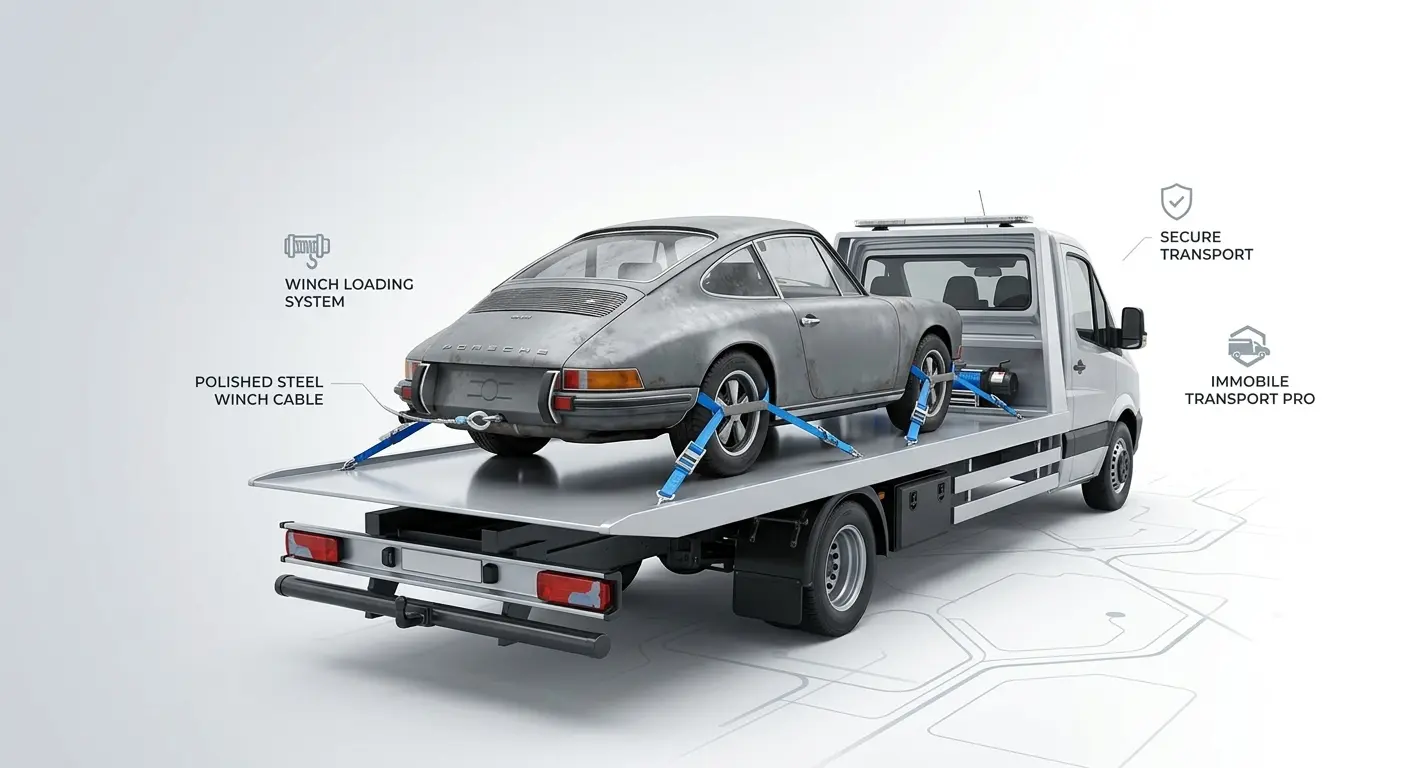
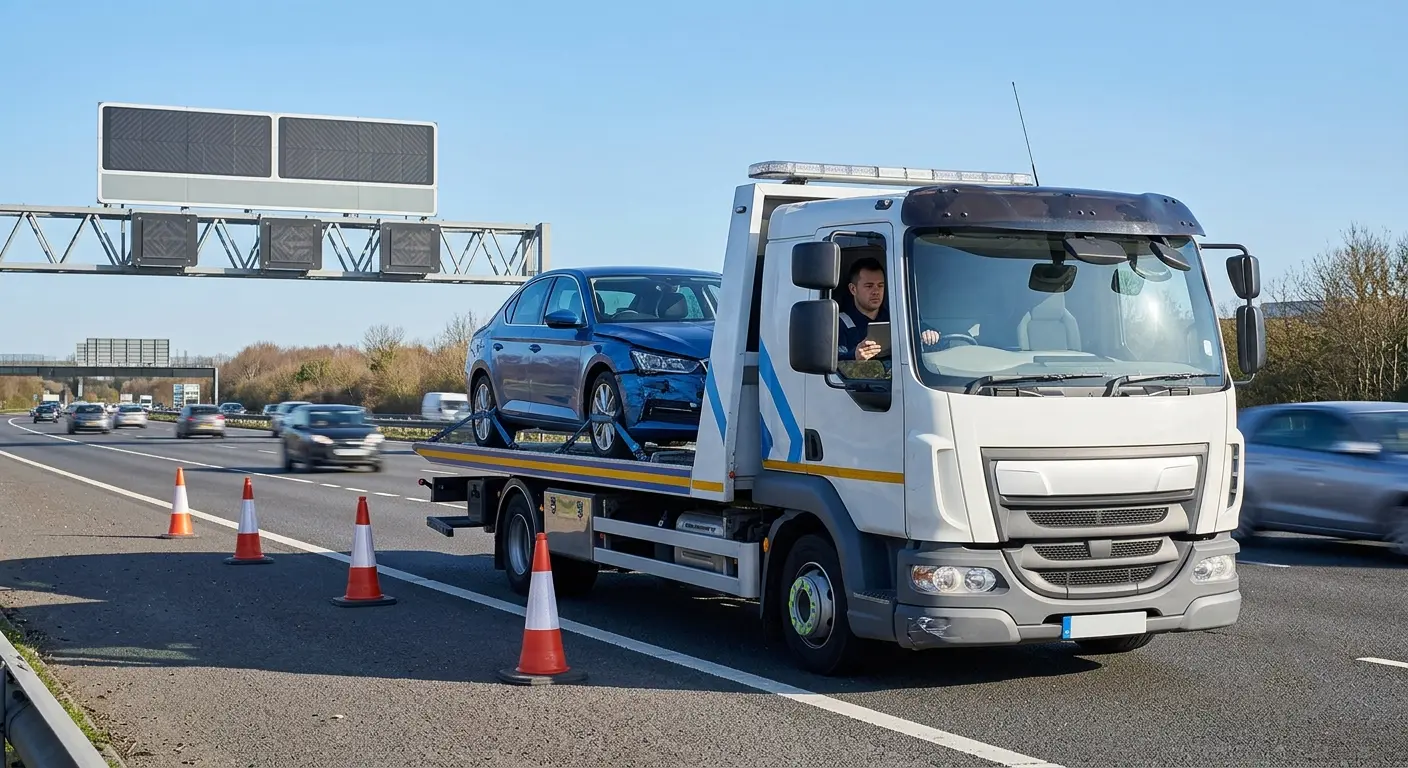
With an expired ITV, no insurance, or on temporary deregistration, a vehicle cannot be used on public roads. The fine is the least of it — the real exposure is losing cover in an accident. We move non-road-legal vehicles across Burgos on flatbeds, which is the lawful way to do it.
In Burgos the main constraint is reaching the centre. Historic quarters and restricted traffic zones limit which vehicles can get close, and the answer is often to agree an accessible meeting point rather than force an impossible street.
Burgos: how the area shapes the job
Burgos is a regular destination for our work, and it comes with conditions of its own. Burgos sits where the AP-1, A-1 and A-62 meet, on the Madrid-Irún corridor. Winters are cold with persistent fog that affects driving conditions.
The Villalonquéjar estate concentrates much of the local industrial activity.
How your vehicle is covered while it is being moved
A properly run move records the vehicle's condition before loading, normally photographically, and records it again at delivery. That evidence is what settles any later disagreement quickly.
It is worth confirming the company holds the relevant transport authorisation with the Spanish Ministry of Transport and a current policy. That is the difference between a professional service and someone with a hired trailer.
How the service works, step by step
A well-organised move holds no surprises: a fixed quote before starting, an agreed time window, condition recorded at loading and at delivery, and a clear contact at both ends.
If the vehicle is in a compound, a scrapyard or premises with restricted hours, that is resolved before the date is set so the day is not wasted.
What you risk by driving a non-compliant vehicle
Driving a few kilometres with an expired ITV feels like a minor risk, and in terms of the odds of being stopped it perhaps is. The problem is the asymmetry: the saving is the price of a transport job, and the potential loss has no defined ceiling.
There is also liability towards others. A vehicle that has not passed inspection may carry undetected safety defects, and if those contribute to an accident the driver's legal position becomes considerably worse.
Special administrative situations
A vehicle under an administrative seal or subject to a restriction on disposal cannot be driven and, in many cases, cannot be moved without express authorisation. The status needs verifying in the relevant register before transport is arranged.
It is an uncommon situation but worth knowing about, because attempting to move a vehicle under a live restriction can worsen the owner's position rather than resolve it.
Access restrictions in central Burgos usually run to specific time bands, and knowing them allows collection to be planned for the right moment.
The last journey: final deregistration
To deregister a vehicle permanently it must be handed over to an authorised treatment facility, which issues the certificate of destruction needed to complete deregistration with the traffic authority. That cannot be done at any scrapyard.
Since a vehicle being scrapped is usually no longer roadworthy, the move to the facility is made on a flatbed. It is worth confirming beforehand what documentation that particular facility requires.
Foreign-registered vehicles in Spain
A foreign-plated vehicle whose owner is permanently resident in Spain can fall into an irregular position if it is not registered within the deadline. That affects both the right to drive it and the validity of its insurance.
While registration is being sorted out, any necessary movement of the vehicle can be done by truck without committing an offence. It is the standard way of handling the transition period.
Imported vehicles awaiting Spanish registration
An imported vehicle that has not yet completed Spanish registration sits in a transitional position where its use on the road is restricted. Moving it from the point of entry to a garage, the ITV station or a home address is normally done on a flatbed.
Registration involves type approval, an import ITV and payment of the relevant taxes. During those steps the vehicle has to move between several locations, and doing so by truck avoids any difficulty with its administrative status.
The legal position: when transport stops being optional
Driving without a current ITV carries a fine and can result in the vehicle being immobilised under the rules the Dirección General de Tráfico (DGT) enforces. There is a larger problem behind it: in the event of an accident, your insurer may reduce or refuse cover entirely.
Royal Decree 920/2017 governing the ITV roadworthiness test allows a limited exception for travelling to a booked inspection, but it does not permit normal use of the vehicle. Any other journey requires it to be carried on a transporter.
Other services in Burgos
You can read more about non-road-legal vehicle transport or browse all our services. For a specific quote in Burgos, the quickest route is to get in touch.
Details worth keeping in mind
Keep the job documentation recording the vehicle's condition. It is the reference point if a question about damage and its timing comes up later.
Check whether your own policy covers the vehicle while it sits at a third-party workshop or compound. It is a frequent gap between the end of transport and the start of repair, and worth clarifying.
Make sure the alarm is disabled, or that the driver knows how to disable it. An alarm going off in transit means stopping and complicates the job for no reason.
If the vehicle has been in an accident, say what is damaged and whether the wheels still turn. A vehicle that will not roll needs a winch and sometimes dollies.
Be wary of quotes well below market rate. In vehicle transport, a low price usually means no goods-in-transit insurance, no operating authorisation, or neither.
On moves crossing several autonomous communities, bear in mind that heavy vehicle driving restrictions vary at weekends and on public holidays. That can affect the specific delivery day.
Realistic timescales depend on distance and route, not optimism. A company that promises any deadline without asking where the vehicle is probably will not meet it.
If the move includes a sea crossing, check what documentation the ferry operator requires for the vehicle. The registration document and owner details are usually needed, and a missing paper means missing the sailing.
If the vehicle has any quirk — lowered suspension, an automatic gearbox locked in park, a flat battery — mention it when requesting the quote so the right equipment turns up.
Get the name and number of the driver handling the job, or at least a direct operational contact. On the day, being able to resolve a question in two minutes prevents an hour of waiting.
Ask whether the price includes waiting time at loading and unloading. On moves to workshops, dealerships or compounds with slow procedures, that time can stretch, and it is worth knowing in advance how it is counted.
An accessible collection point saves both time and money. If the street is narrow or the garage has restricted headroom, agreeing a nearby spot where the truck can manoeuvre simplifies everything.
A vehicle leaking oil or fuel should be flagged before transport. It does not prevent the move, but it affects where the car sits on the deck and what protection goes underneath it.
On keyless-start vehicles, remember the fob must travel with you or be handed over at the destination, but never left inside the car in transit. It is a more common oversight than you would think and leaves the vehicle locked on arrival.
Open transporters are the standard option and perfectly safe for most vehicles. Enclosed transport makes sense for classics, high-value cars and anything with very low ground clearance.
In low-emission zones, verify whether the transport truck can enter during the planned time window. Many restrictions apply to heavy vehicles even where the car being carried would itself be allowed through.
If you are selling the vehicle and the buyer arranges transport, put in writing when responsibility passes. It is normally at key handover, but both parties benefit from having it stated.
Keep the job reference or delivery note. If you later need to evidence the move to an insurer, a workshop or the authorities, that document proves when and how the vehicle was moved.
Agree who signs for the vehicle at the destination. If it arrives at a closed workshop or an address where nobody is present, the driver cannot simply leave it, and waiting time or a second attempt both cost money.
Battery condition matters even for a transport job. If the vehicle has to move a few metres under its own power to get out of a garage or a parking bay, a live battery saves time and avoids resorting to auxiliary equipment.
If the move is a private sale, coordinate payment and key handover clearly. The carrier moves the vehicle; it takes no part in the transaction.
Leave the fuel tank low, around a quarter. It reduces weight, follows standard transport practice, and there is nothing to gain from a full tank during the journey.
Before collection, check no personal documents are left in the glovebox. It is where forgotten paperwork most often turns up, and some of it contains details you would not want travelling unsupervised.
If the collection is from a building with a communal garage, tell the manager or concierge. A transporter manoeuvring on a shared ramp without warning creates avoidable friction with neighbours.
Always ask whether the price covers collection and delivery at the points you need, or refers to a terminal-to-terminal move. The difference in cost and convenience is considerable.
If the vehicle will sit on a public street waiting for collection, check there are no timed restrictions or scheduled clearing on that road. A car towed by the local authority while waiting for transport complicates matters considerably and adds costs nobody planned for.
If the destination is an ITV test station, confirm you have a booked appointment and the time. Matching the vehicle's arrival to the appointment slot avoids long waits and a second visit.
Photograph the vehicle before loading, including all four corners, the roof and underneath if you can. It takes two minutes and settles any later disagreement about a scratch.
Flag it if the vehicle has stood unused for a long period. Flat tyres, seized brakes or a completely dead battery all change how it has to be loaded.
In summary
In short: in Burgos what makes the difference is a realistic timescale, a fixed price with no extras, and a move documented from start to finish. That is exactly what we provide, at any hour.
Vehicle not road legal in Burgos?
We move it on a flatbed, which is the lawful route. Fixed quote and no risk of a penalty.