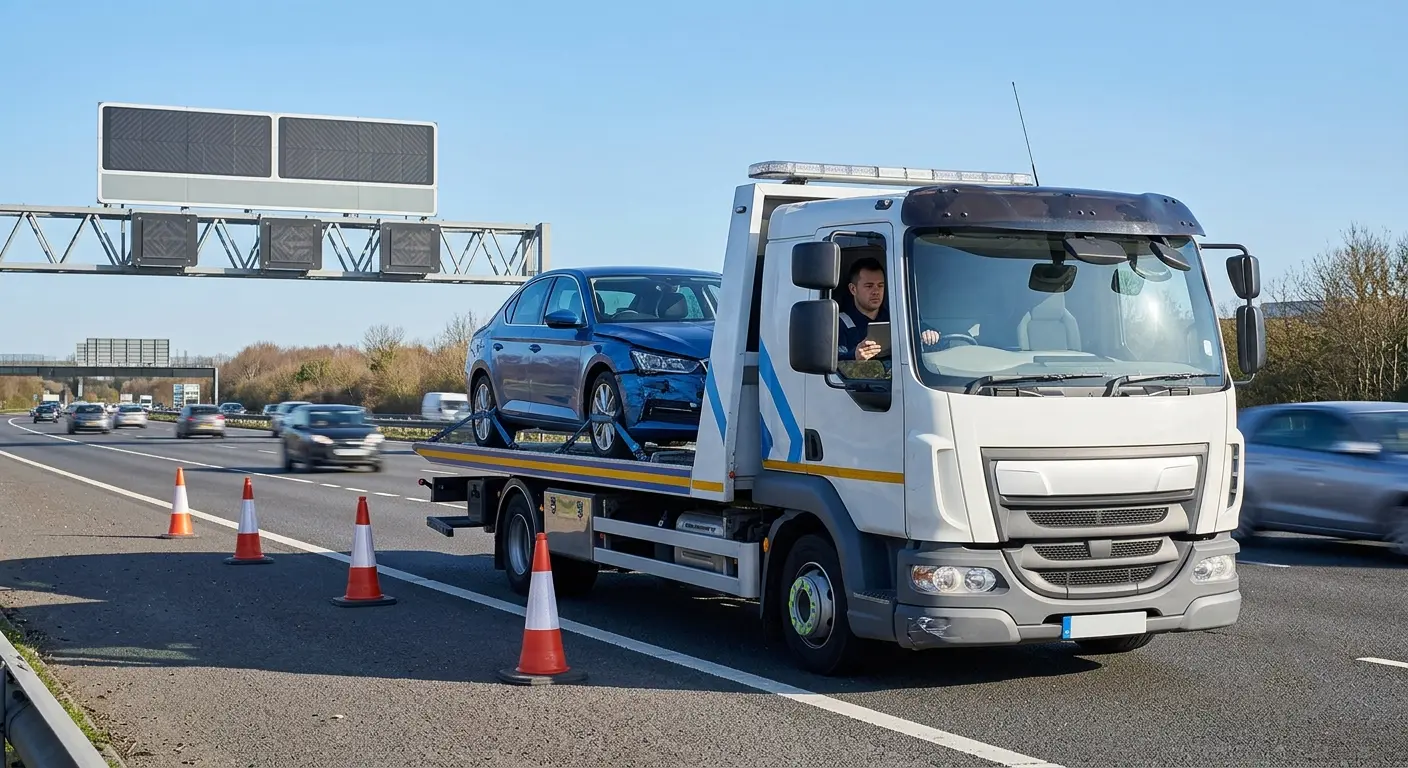
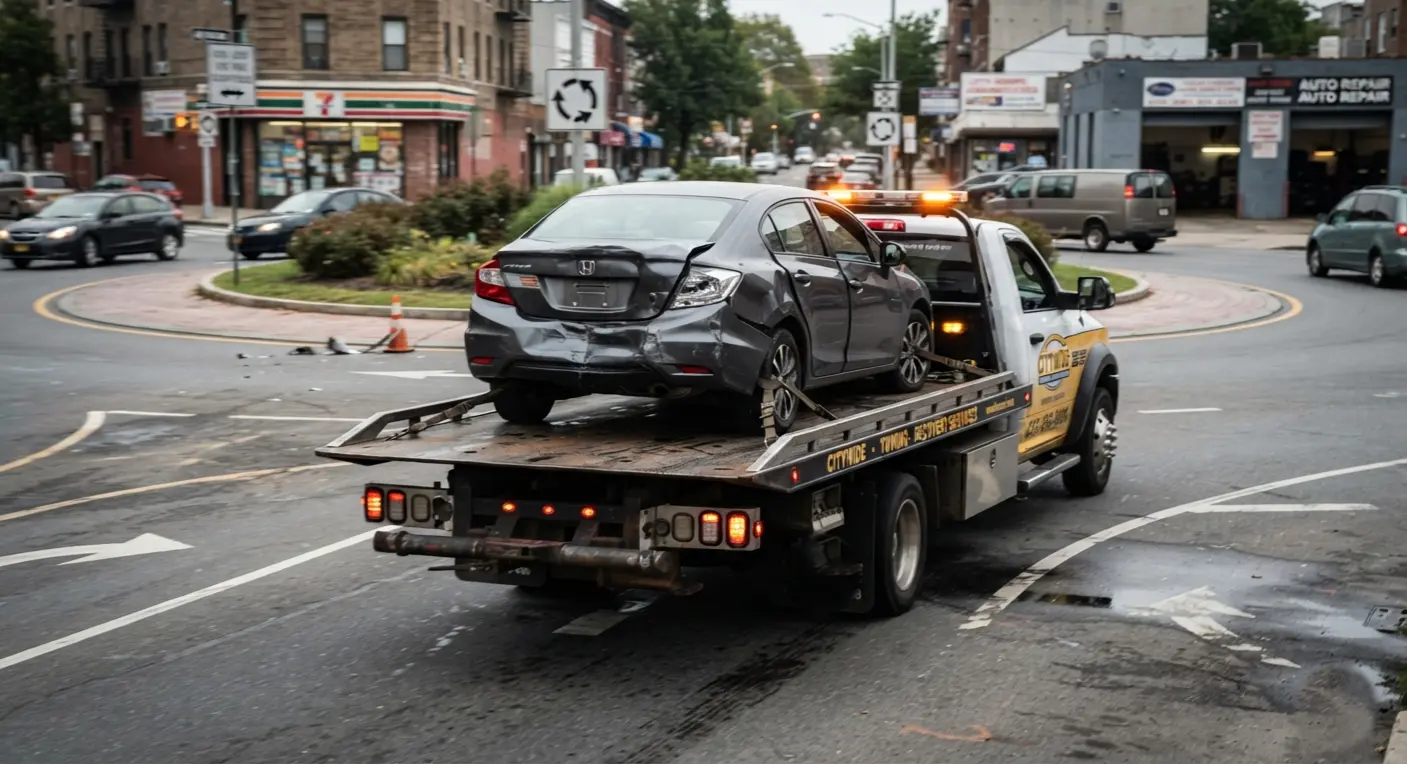
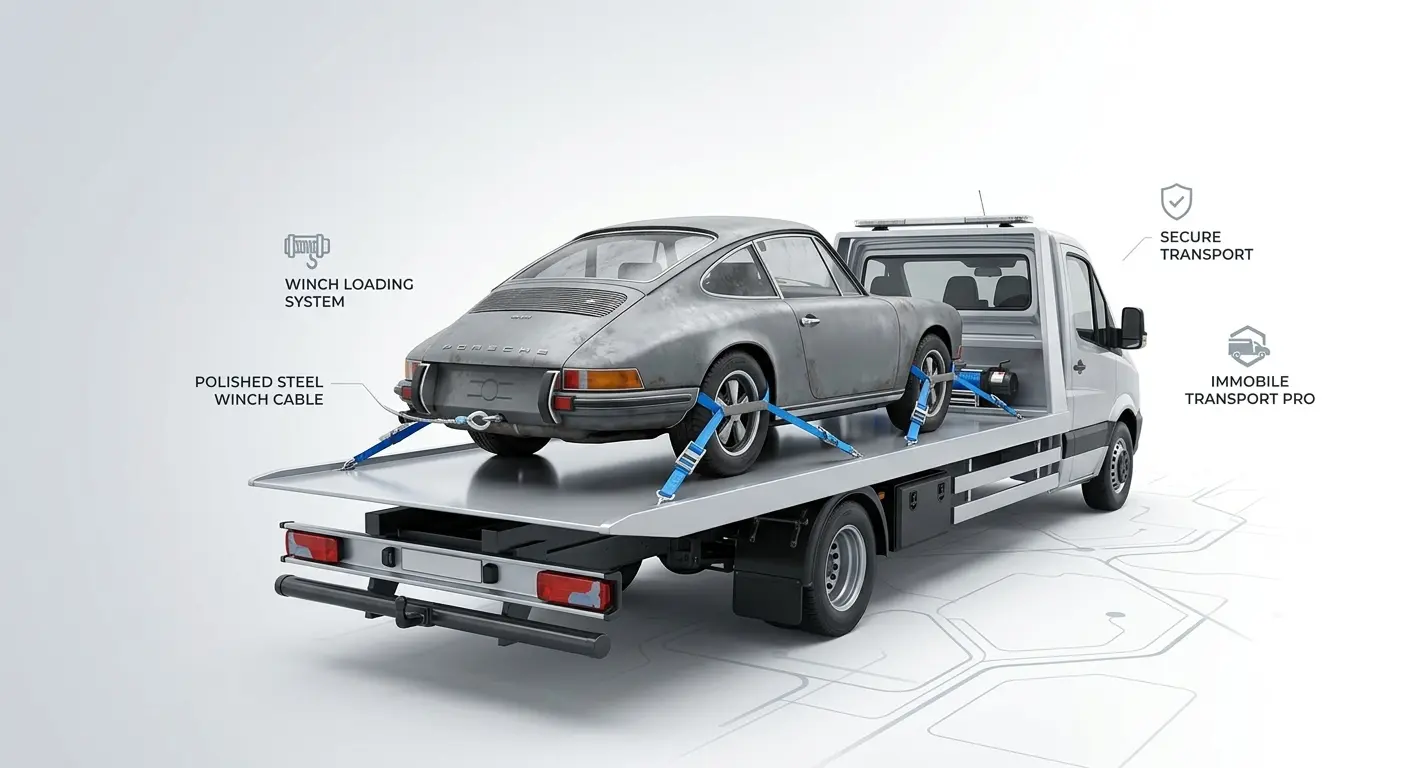
Driving a thousand kilometres to move a car costs more than it looks: fuel, tolls, a night away, meals, real wear and a whole day of your time. Once you total it up, the gap against transport is far smaller than most people assume. We move vehicles from Vitoria-Gasteiz to anywhere in Spain.
In an automotive centre like Vitoria-Gasteiz, moves often carry a different kind of urgency. A stranded vehicle may be holding up a delivery or a chain of repairs, not just someone's personal plans.
What makes Vitoria-Gasteiz different
It helps to set the context before going into detail. Vitoria is home to a landmark vehicle assembly plant and a very active industrial base. The city is notable for an orderly, accessible street layout that makes collections straightforward.
The AP-1 and A-1 link it to Burgos, Bilbao and San Sebastián on short runs. There is more background on the city in its Wikipedia entry.
How your vehicle is covered while it is being moved
Before handing keys to anyone, ask one specific question: is the vehicle covered while it sits on the transporter, for how much, and against what. An operator working legally and registered with the Spanish Ministry of Transport can evidence that without difficulty.
The carrier's cover is not the same as your own motor policy. Your insurance covers driving; during transport it is the carrier's goods-in-transit policy that responds. Confusing the two is behind most of the disputes that arise.
Transport with a sea crossing
An island move combines road and sea, which adds two variables: sailing frequency and shipping documentation. In high season, space availability becomes the factor that most affects the date.
For the Canaries there is also a separate tax and customs regime, with specific formalities worth resolving before the vehicle reaches the port.
What the law says about moving a vehicle that cannot be driven
Spanish law draws a clear line between a vehicle fit for the road and one that is not. Where the ITV has lapsed, insurance has ended, or the vehicle is on temporary deregistration, driving it stops being legal and the Dirección General de Tráfico (DGT) can penalise it.
Beyond Royal Decree 920/2017 governing the ITV roadworthiness test, road transport of vehicles is subject to operating requirements overseen by the Spanish Ministry of Transport, including transport authorisation and goods-in-transit insurance.
Moving several vehicles in a single job is common in Vitoria-Gasteiz, which brings the cost per unit down against individual transfers.
Realistic timings for a long move
Timing depends on the route, the number of loading and unloading points, and availability. A direct move between two large cities is quick; one collecting in a small village and delivering in another has to be fitted into a route.
An honest timescale comes after knowing origin and destination, not before. Any company promising a date without knowing where the vehicle is, is guessing.
Vehicles that should not make the trip on their own wheels
Enclosed transport makes sense in three cases: high-value vehicles, classics with original paint, and anything very low. For everything else an open transporter is perfectly safe and considerably cheaper.
On collector vehicles it is worth agreeing securing points in advance. Some classics lack the structural anchor points modern cars have and need a specific approach.
The cost of long-distance transport
Price is built on distance, but not linearly. The route and how frequently it runs, the vehicle type, whether it rolls, the type of transporter and the accessibility of both ends all feed in.
That is why a move between two well-connected cities can cost less than a shorter one between two small towns off the usual routes. Distance is not the only factor.
Getting the car to your new city
On international or long-distance moves within Spain, the vehicle tends to be the last thing organised and the one that causes most difficulty. Planning it as early as everything else simplifies matters considerably.
Where two vehicles move together, the cost per unit drops appreciably against two separate jobs.
Moving several vehicles
For businesses with recurring needs, what matters is not the headline rate but reliability of timing and ease of coordination. A vehicle that does not arrive when expected carries a cost that never appears on the transport invoice.
Grouping moves on the same route allows prices to be adjusted meaningfully. Where volume is predictable, planning in batches is almost always more efficient.
Other services in Vitoria-Gasteiz
You can read more about nationwide vehicle transport or browse all our services. For a specific quote in Vitoria-Gasteiz, the quickest route is to get in touch.
Practical advice for your move
For vehicles with bulky modifications or accessories — roof racks, bike carriers, bull bars — mention them. They can affect the overall height of the loaded truck and whether it clears certain access points.
If the destination is an ITV test station, confirm you have a booked appointment and the time. Matching the vehicle's arrival to the appointment slot avoids long waits and a second visit.
Before collection, check no personal documents are left in the glovebox. It is where forgotten paperwork most often turns up, and some of it contains details you would not want travelling unsupervised.
Moving several vehicles together usually works out considerably cheaper per unit than separate jobs. If you have more than one to move, it is worth quoting them as one.
On moves crossing several autonomous communities, bear in mind that heavy vehicle driving restrictions vary at weekends and on public holidays. That can affect the specific delivery day.
Leave the fuel tank low, around a quarter. It reduces weight, follows standard transport practice, and there is nothing to gain from a full tank during the journey.
If the vehicle will sit on a public street waiting for collection, check there are no timed restrictions or scheduled clearing on that road. A car towed by the local authority while waiting for transport complicates matters considerably and adds costs nobody planned for.
A vehicle leaking oil or fuel should be flagged before transport. It does not prevent the move, but it affects where the car sits on the deck and what protection goes underneath it.
If the vehicle is in an underground car park, check the clearance height first. Many garages cannot take a transporter and the car has to be brought up to street level.
Realistic timescales depend on distance and route, not optimism. A company that promises any deadline without asking where the vehicle is probably will not meet it.
If the vehicle has any quirk — lowered suspension, an automatic gearbox locked in park, a flat battery — mention it when requesting the quote so the right equipment turns up.
On vehicles with large-diameter wheels and low-profile tyres, the approach to the ramps needs more care. It is worth mentioning so the right angle is prepared and the tyre or rim is not scuffed.
If you are selling the vehicle and the buyer arranges transport, put in writing when responsibility passes. It is normally at key handover, but both parties benefit from having it stated.
Open transporters are the standard option and perfectly safe for most vehicles. Enclosed transport makes sense for classics, high-value cars and anything with very low ground clearance.
On keyless-start vehicles, remember the fob must travel with you or be handed over at the destination, but never left inside the car in transit. It is a more common oversight than you would think and leaves the vehicle locked on arrival.
Keep the job documentation recording the vehicle's condition. It is the reference point if a question about damage and its timing comes up later.
Photograph the vehicle before loading, including all four corners, the roof and underneath if you can. It takes two minutes and settles any later disagreement about a scratch.
Always ask whether the price covers collection and delivery at the points you need, or refers to a terminal-to-terminal move. The difference in cost and convenience is considerable.
If the move is a private sale, coordinate payment and key handover clearly. The carrier moves the vehicle; it takes no part in the transaction.
Get the name and number of the driver handling the job, or at least a direct operational contact. On the day, being able to resolve a question in two minutes prevents an hour of waiting.
If you need the vehicle by a fixed, immovable date, say so when booking rather than afterwards. With enough notice it can almost always be accommodated; with twenty-four hours, often not.
Before the truck arrives, take the documentation, spare keys and anything valuable out of the vehicle. It travels unaccompanied, and items left inside are not covered as luggage.
Check the overall height if the vehicle is a van, a camper or a 4x4 with roof accessories. The vehicle's height plus the deck height determines what the loaded truck can pass under.
Bear in mind that in peak periods — summer, or the start and end of the season — lead times stretch. Booking ahead is the simple way around it.
Flag it if the vehicle has stood unused for a long period. Flat tyres, seized brakes or a completely dead battery all change how it has to be loaded.
If the collection is from a building with a communal garage, tell the manager or concierge. A transporter manoeuvring on a shared ramp without warning creates avoidable friction with neighbours.
Ask whether the price includes waiting time at loading and unloading. On moves to workshops, dealerships or compounds with slow procedures, that time can stretch, and it is worth knowing in advance how it is counted.
In low-emission zones, verify whether the transport truck can enter during the planned time window. Many restrictions apply to heavy vehicles even where the car being carried would itself be allowed through.
Be wary of quotes well below market rate. In vehicle transport, a low price usually means no goods-in-transit insurance, no operating authorisation, or neither.
Where a tailgate or bonnet no longer closes properly after an impact, secure it before loading. A tailgate that springs open at eighty kilometres an hour is a genuine hazard to other traffic.
Know where the spare wheel and tools are if the vehicle carries them. On long moves, a loose item in the boot shifts during the journey and can damage the interior or the trim.
In summary
If you need a vehicle moved in Vitoria-Gasteiz, the most useful thing is an assessment of your specific situation. We give you a total price and a realistic timescale, not a per-kilometre rate that grows later.
Transport across Spain from Vitoria-Gasteiz
Give us origin, destination and vehicle type for a total price and a realistic timescale.