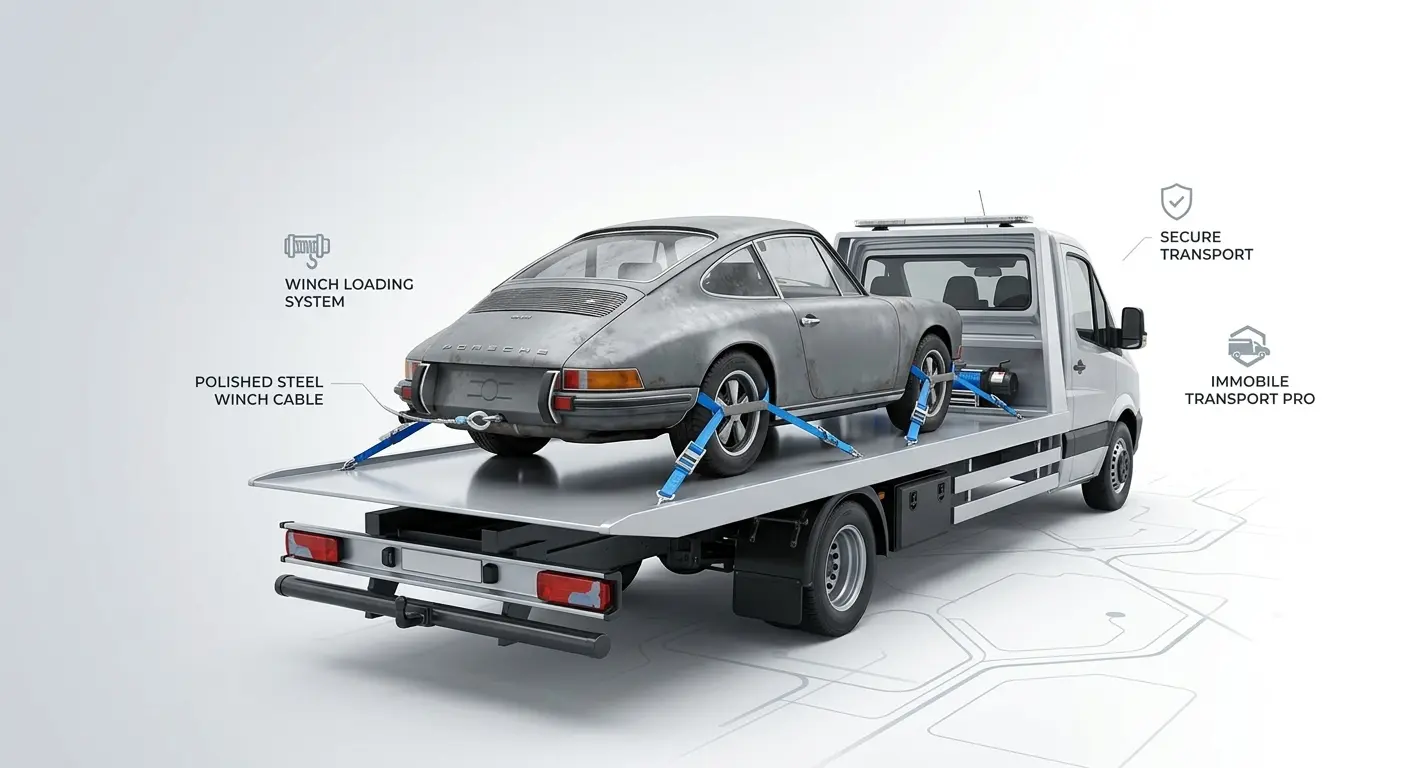
After an accident the car is the last thing on your mind, and rightly so. When the moment comes to move it, what matters is doing so without worsening the damage and recording the condition it was in. We recover accident-damaged vehicles in Madrid at any hour, with the equipment needed to load a car that will not roll.
In Madrid the main constraint is reaching the centre. Historic quarters and restricted traffic zones limit which vehicles can get close, and the answer is often to agree an accessible meeting point rather than force an impossible street.
Moving a vehicle in Madrid: what to know
It helps to set the context before going into detail. Madrid is the hub of Spain's radial road network — the A-1 through A-6 motorways all start here. Low-emission zones in the centre place real limits on heavy vehicle access.
The M-30, M-40 and M-50 ring roads allow the city to be bypassed on long-distance moves. There is more background on the city in its Wikipedia entry.
When more than one vehicle needs clearing
Multi-vehicle incidents create a situation where the priority is clearing the carriageway safely. Sometimes that means moving a vehicle to a nearby point first and loading it properly afterwards.
If several vehicles are going to the same destination, moving them together noticeably reduces the total cost against individual jobs.
Cover and liability during transport
Before handing keys to anyone, ask one specific question: is the vehicle covered while it sits on the transporter, for how much, and against what. An operator working legally and registered with the Spanish Ministry of Transport can evidence that without difficulty.
The carrier's cover is not the same as your own motor policy. Your insurance covers driving; during transport it is the carrier's goods-in-transit policy that responds. Confusing the two is behind most of the disputes that arise.
Because Madrid is a road junction, long-distance moves from here usually have more route options and therefore more scheduling flexibility.
Getting a car out of the pound
When a damaged vehicle is taken to a compound, every day of storage adds cost. Getting it out promptly is almost always the economically sensible move, and doing so requires the owner's documentation and often specific authorisation.
If the vehicle is not roadworthy — and after an accident it rarely is — it has to leave the compound on a flatbed. It is worth checking the compound's opening hours, which are frequently restricted.
The legal position: when transport stops being optional
Driving without a current ITV carries a fine and can result in the vehicle being immobilised under the rules the Dirección General de Tráfico (DGT) enforces. There is a larger problem behind it: in the event of an accident, your insurer may reduce or refuse cover entirely.
Royal Decree 920/2017 governing the ITV roadworthiness test allows a limited exception for travelling to a booked inspection, but it does not permit normal use of the vehicle. Any other journey requires it to be carried on a transporter.
Documenting condition before loading
On an already damaged vehicle, distinguishing pre-existing damage from transport damage would be impossible without a record. That is why the vehicle is photographed from several angles before loading and the condition noted on the job sheet.
The record protects both sides. It evidences the state at handover for the owner, and it defines clearly for the carrier what damage existed before anyone touched the vehicle.
Damage you cannot see from outside
A vehicle that has taken an impact can look driveable without being so. Steering geometry may have shifted, the brake circuit may be compromised, the chassis may have deformed invisibly, and safety systems may have been rendered inoperative.
There is a legal dimension too: driving a vehicle whose safety equipment does not function is an offence, and in the event of a second incident the driver's position with their insurer becomes very weak indeed.
Transport and the insurance claim
Your insurer needs to assess the vehicle, which means it has to be somewhere the assessor can reach. Moving it to the designated garage or an agreed compound is part of the process, and worth coordinating so that storage days do not pile up unnecessarily.
Keeping the transport documentation is useful: it evidences when the vehicle was moved and in what state, which can matter if there is later disagreement about the extent of the damage.
Loading a vehicle that will not roll
A crashed vehicle presents a practical problem: it may not roll, the steering may not turn, and it may be sitting somewhere awkward — off the carriageway or against a barrier. Each situation calls for a different technique and the right equipment.
Before loading, anything liable to detach in transit is removed, such as a hanging bumper or broken glass. That is part of the job and stops the recovery itself creating a hazard for other traffic.
Other services in Madrid
You can read more about accident vehicle recovery or browse all our services. For a specific quote in Madrid, the quickest route is to get in touch.
Practical advice for your move
Ask whether the price includes waiting time at loading and unloading. On moves to workshops, dealerships or compounds with slow procedures, that time can stretch, and it is worth knowing in advance how it is counted.
Where a tailgate or bonnet no longer closes properly after an impact, secure it before loading. A tailgate that springs open at eighty kilometres an hour is a genuine hazard to other traffic.
If the collection is from a building with a communal garage, tell the manager or concierge. A transporter manoeuvring on a shared ramp without warning creates avoidable friction with neighbours.
If you need the vehicle by a fixed, immovable date, say so when booking rather than afterwards. With enough notice it can almost always be accommodated; with twenty-four hours, often not.
On long moves, asking how many loading and unloading points the truck has helps explain the timescale. A truck making several stops takes longer than a direct run.
Be wary of quotes well below market rate. In vehicle transport, a low price usually means no goods-in-transit insurance, no operating authorisation, or neither.
If the vehicle has been in an accident, say what is damaged and whether the wheels still turn. A vehicle that will not roll needs a winch and sometimes dollies.
Make sure the alarm is disabled, or that the driver knows how to disable it. An alarm going off in transit means stopping and complicates the job for no reason.
If you will not be present at collection or delivery, put in writing who hands over and who receives the keys, with a phone number. This is the single most common cause of avoidable delay.
If the vehicle is in an underground car park, check the clearance height first. Many garages cannot take a transporter and the car has to be brought up to street level.
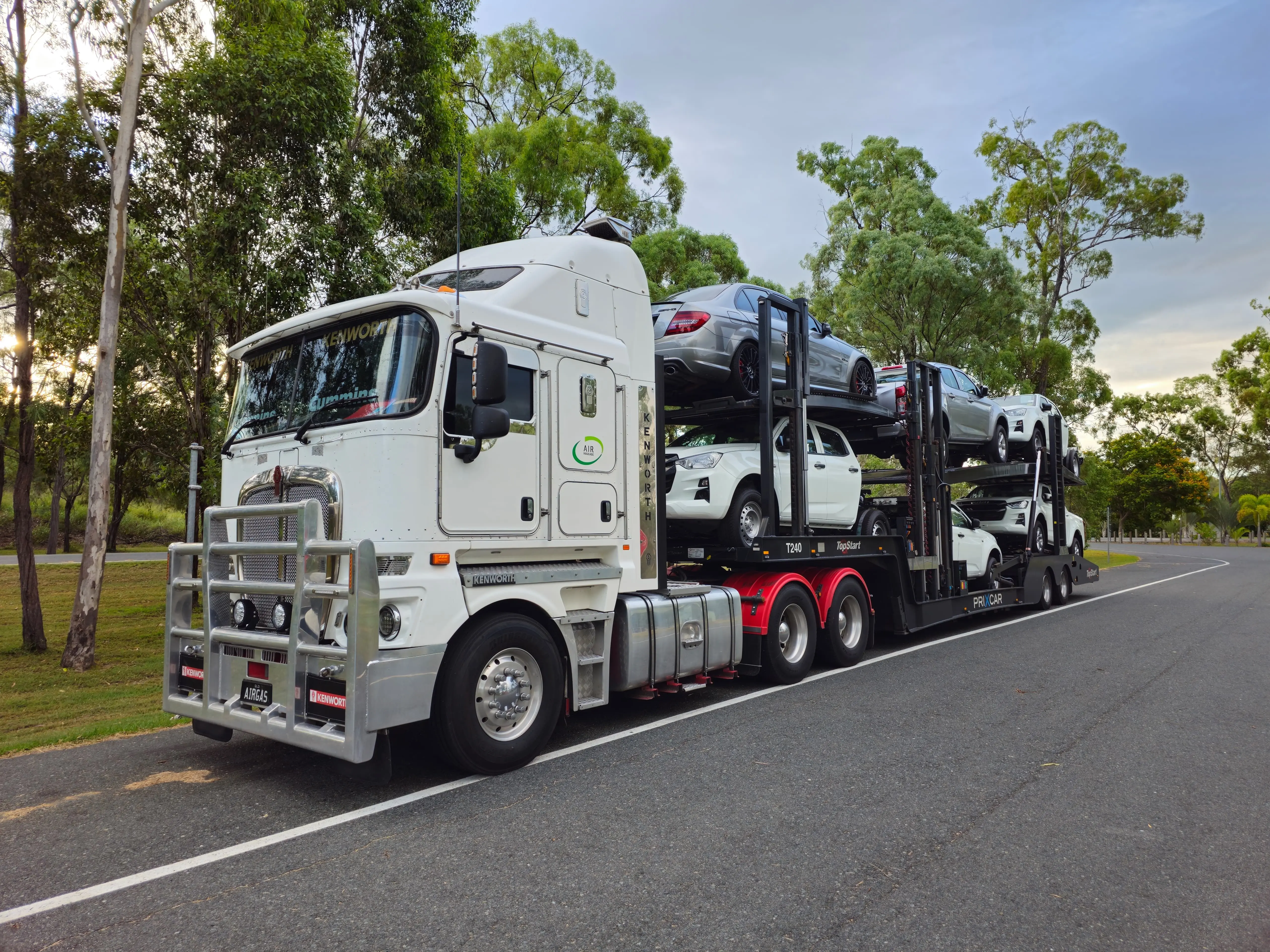
Moving several vehicles together usually works out considerably cheaper per unit than separate jobs. If you have more than one to move, it is worth quoting them as one.
Keep the job reference or delivery note. If you later need to evidence the move to an insurer, a workshop or the authorities, that document proves when and how the vehicle was moved.
Realistic timescales depend on distance and route, not optimism. A company that promises any deadline without asking where the vehicle is probably will not meet it.
On moves crossing several autonomous communities, bear in mind that heavy vehicle driving restrictions vary at weekends and on public holidays. That can affect the specific delivery day.
Always ask whether the price covers collection and delivery at the points you need, or refers to a terminal-to-terminal move. The difference in cost and convenience is considerable.
If the move is a private sale, coordinate payment and key handover clearly. The carrier moves the vehicle; it takes no part in the transaction.
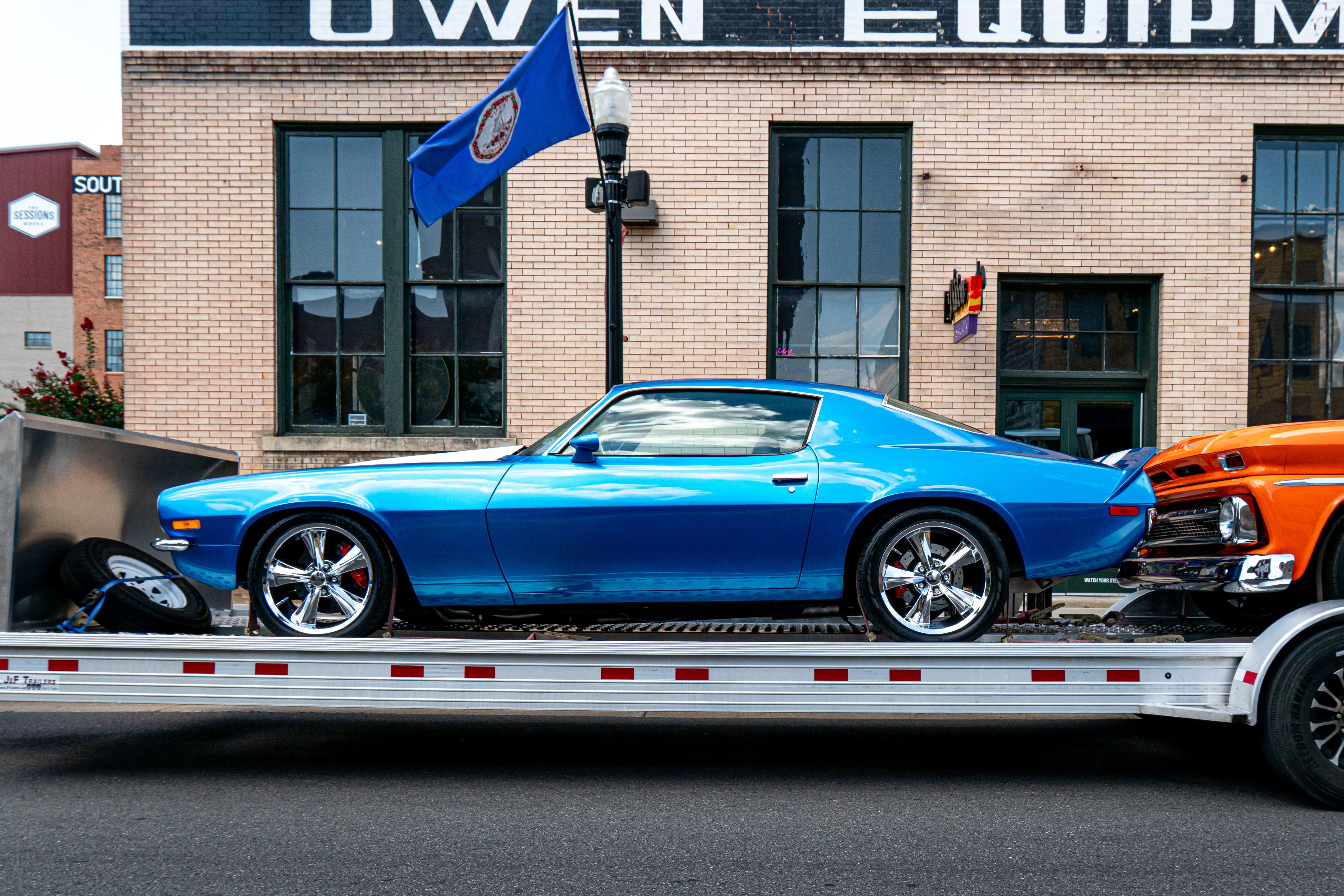
Open transporters are the standard option and perfectly safe for most vehicles. Enclosed transport makes sense for classics, high-value cars and anything with very low ground clearance.
For vehicles with bulky modifications or accessories — roof racks, bike carriers, bull bars — mention them. They can affect the overall height of the loaded truck and whether it clears certain access points.
If the vehicle has any quirk — lowered suspension, an automatic gearbox locked in park, a flat battery — mention it when requesting the quote so the right equipment turns up.
On keyless-start vehicles, remember the fob must travel with you or be handed over at the destination, but never left inside the car in transit. It is a more common oversight than you would think and leaves the vehicle locked on arrival.
Leave the fuel tank low, around a quarter. It reduces weight, follows standard transport practice, and there is nothing to gain from a full tank during the journey.
If the move includes a sea crossing, check what documentation the ferry operator requires for the vehicle. The registration document and owner details are usually needed, and a missing paper means missing the sailing.
On vehicles with large-diameter wheels and low-profile tyres, the approach to the ramps needs more care. It is worth mentioning so the right angle is prepared and the tyre or rim is not scuffed.
If you are selling the vehicle and the buyer arranges transport, put in writing when responsibility passes. It is normally at key handover, but both parties benefit from having it stated.
An accessible collection point saves both time and money. If the street is narrow or the garage has restricted headroom, agreeing a nearby spot where the truck can manoeuvre simplifies everything.
Check whether your own policy covers the vehicle while it sits at a third-party workshop or compound. It is a frequent gap between the end of transport and the start of repair, and worth clarifying.
Photograph the vehicle before loading, including all four corners, the roof and underneath if you can. It takes two minutes and settles any later disagreement about a scratch.
Get the name and number of the driver handling the job, or at least a direct operational contact. On the day, being able to resolve a question in two minutes prevents an hour of waiting.
In summary
In short: in Madrid what makes the difference is a realistic timescale, a fixed price with no extras, and a move documented from start to finish. That is exactly what we provide, at any hour.
Had an accident in Madrid?
We recover at any hour and take the vehicle to the garage or compound you need. Fixed quote.