We run nationwide transport from Córdoba on one rule we always apply: the timescale is given after we know origin and destination, never before. A company that promises a date without asking where the vehicle is, is guessing — and that ends in a delay nobody warned you about.
In Córdoba the main constraint is reaching the centre. Historic quarters and restricted traffic zones limit which vehicles can get close, and the answer is often to agree an accessible meeting point rather than force an impossible street.
What makes Córdoba different
It helps to set the context before going into detail. Córdoba's Jewish Quarter has a medieval street layout with very restricted access. The city sits where the A-4 and A-45 meet, on the Madrid-Seville-Málaga axis.
Extreme summer heat affects operations during the middle of the day. There is more background on the city in its Wikipedia entry.
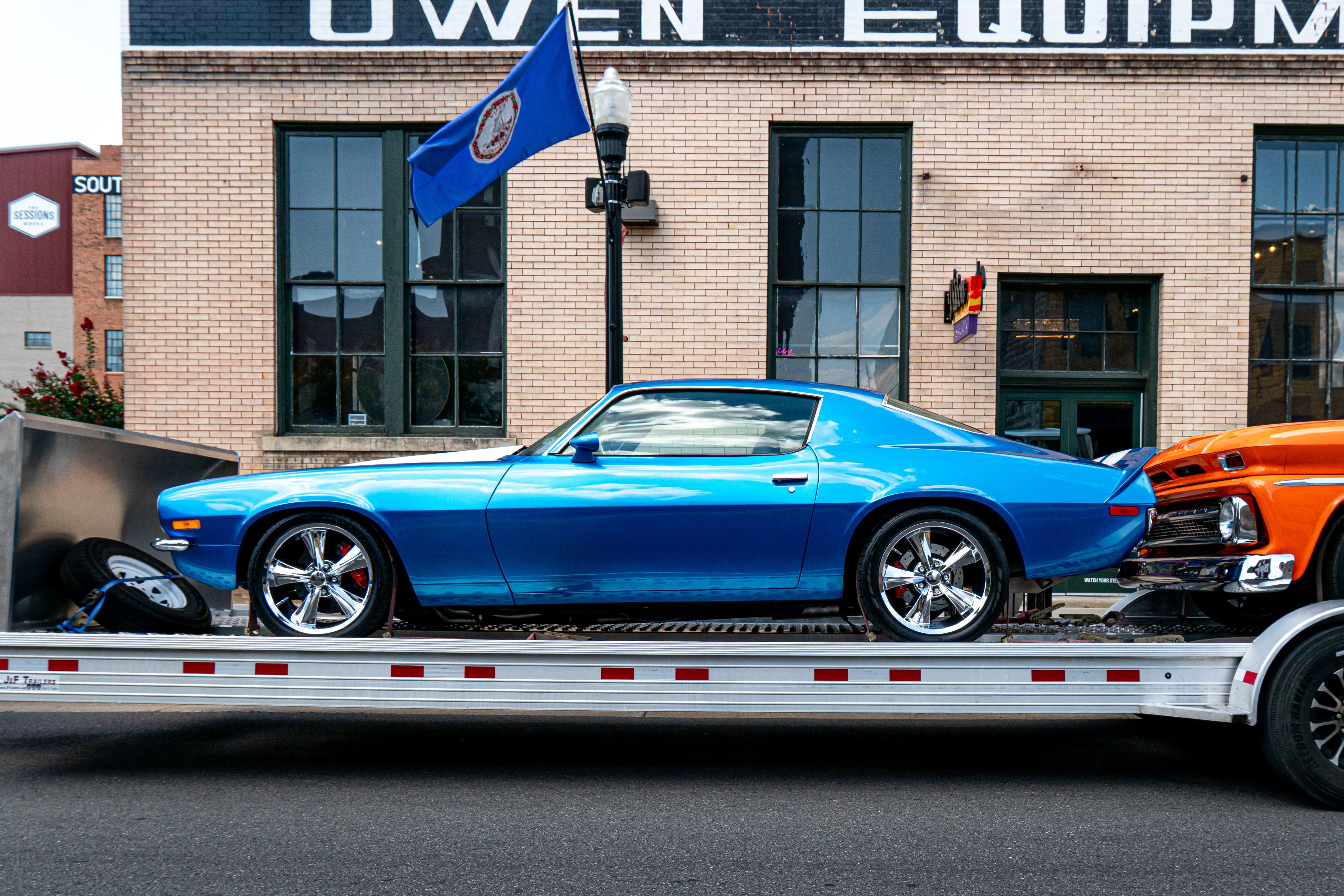
When the car deserves protected transport
On a classic, every kilometre counts twice: it adds wear to mechanicals that are hard to repair and exposes the bodywork to stones, insects and weather. Enclosed transport addresses both.
Sports cars with low ground clearance add a loading problem: they need shallow-angle ramps or skates so the underside and front splitter do not ground while going up.
Delivery times on long-distance moves
Timing depends on the route, the number of loading and unloading points, and availability. A direct move between two large cities is quick; one collecting in a small village and delivering in another has to be fitted into a route.
An honest timescale comes after knowing origin and destination, not before. Any company promising a date without knowing where the vehicle is, is guessing.
Access restrictions in central Córdoba usually run to specific time bands, and knowing them allows collection to be planned for the right moment.
Getting a vehicle to the islands
The timescale for an island move is set by the sailing calendar rather than the road distance. A vehicle can be at the port within a day and then wait for the next available crossing.
Booking ahead matters in summer, when demand for vehicle space rises sharply and dates close out weeks in advance.
Moving several vehicles
Moving several vehicles on one job cuts the cost per unit considerably. It is the natural option for dealerships, companies with fleets and private owners relocating two cars in a house move.
On multiple consignments it helps to establish whether everything goes to one destination or to different points within the same area. Both work, but the route planning differs.
How your vehicle is covered while it is being moved
Cover is the detail most often skipped when booking a move. It is not enough for a company to say it is insured — the scope matters, and it should appear on the job documentation alongside the vehicle's condition at the point of loading.
Road haulage is a regulated activity requiring authorisation, overseen by the Spanish Ministry of Transport. An informal operator without authorisation or a transit policy simply shifts the whole risk onto the owner.
Relocation: the vehicle moves too
On international or long-distance moves within Spain, the vehicle tends to be the last thing organised and the one that causes most difficulty. Planning it as early as everything else simplifies matters considerably.
Where two vehicles move together, the cost per unit drops appreciably against two separate jobs.
What the law says about moving a vehicle that cannot be driven
Spanish law draws a clear line between a vehicle fit for the road and one that is not. Where the ITV has lapsed, insurance has ended, or the vehicle is on temporary deregistration, driving it stops being legal and the Dirección General de Tráfico (DGT) can penalise it.
Beyond Royal Decree 920/2017 governing the ITV roadworthiness test, road transport of vehicles is subject to operating requirements overseen by the Spanish Ministry of Transport, including transport authorisation and goods-in-transit insurance.
Open transporter or enclosed transport
For most vehicles the open transporter is the right choice: the car arrives in the condition it left in and the cost is markedly lower. There is no technical reason to pay for enclosed transport for a family hatchback.
The calculation changes when a vehicle's value or irreplaceability justifies the extra protection. At that point the price difference stops being the main criterion.
Other services in Córdoba
More on nationwide vehicle transport and on the rest of our services. If you would rather we called you, leave your details on the contact page and we will assess your case in Córdoba.
Points to review in Córdoba
On keyless-start vehicles, remember the fob must travel with you or be handed over at the destination, but never left inside the car in transit. It is a more common oversight than you would think and leaves the vehicle locked on arrival.
Be wary of quotes well below market rate. In vehicle transport, a low price usually means no goods-in-transit insurance, no operating authorisation, or neither.
Realistic timescales depend on distance and route, not optimism. A company that promises any deadline without asking where the vehicle is probably will not meet it.
If the vehicle is in an underground car park, check the clearance height first. Many garages cannot take a transporter and the car has to be brought up to street level.
If the destination is an ITV test station, confirm you have a booked appointment and the time. Matching the vehicle's arrival to the appointment slot avoids long waits and a second visit.
Get the name and number of the driver handling the job, or at least a direct operational contact. On the day, being able to resolve a question in two minutes prevents an hour of waiting.
Before collection, check no personal documents are left in the glovebox. It is where forgotten paperwork most often turns up, and some of it contains details you would not want travelling unsupervised.
On vehicles with large-diameter wheels and low-profile tyres, the approach to the ramps needs more care. It is worth mentioning so the right angle is prepared and the tyre or rim is not scuffed.
If you will not be present at collection or delivery, put in writing who hands over and who receives the keys, with a phone number. This is the single most common cause of avoidable delay.
On moves crossing several autonomous communities, bear in mind that heavy vehicle driving restrictions vary at weekends and on public holidays. That can affect the specific delivery day.
Have the vehicle and ownership documents ready. On moves ending at a port terminal or crossing a border, that paperwork matters as much as the vehicle itself.
Agree who signs for the vehicle at the destination. If it arrives at a closed workshop or an address where nobody is present, the driver cannot simply leave it, and waiting time or a second attempt both cost money.
Keep the job documentation recording the vehicle's condition. It is the reference point if a question about damage and its timing comes up later.
Check the overall height if the vehicle is a van, a camper or a 4x4 with roof accessories. The vehicle's height plus the deck height determines what the loaded truck can pass under.
If the move is a private sale, coordinate payment and key handover clearly. The carrier moves the vehicle; it takes no part in the transaction.
If the vehicle is on rural land or at the end of an unsurfaced track, state the distance from the tarmac road. An articulated truck cannot enter every lane, and sometimes the car has to be brought out to a meeting point.
Know where the spare wheel and tools are if the vehicle carries them. On long moves, a loose item in the boot shifts during the journey and can damage the interior or the trim.
If the vehicle has any quirk — lowered suspension, an automatic gearbox locked in park, a flat battery — mention it when requesting the quote so the right equipment turns up.
If the collection is from a building with a communal garage, tell the manager or concierge. A transporter manoeuvring on a shared ramp without warning creates avoidable friction with neighbours.
In low-emission zones, verify whether the transport truck can enter during the planned time window. Many restrictions apply to heavy vehicles even where the car being carried would itself be allowed through.
Open transporters are the standard option and perfectly safe for most vehicles. Enclosed transport makes sense for classics, high-value cars and anything with very low ground clearance.
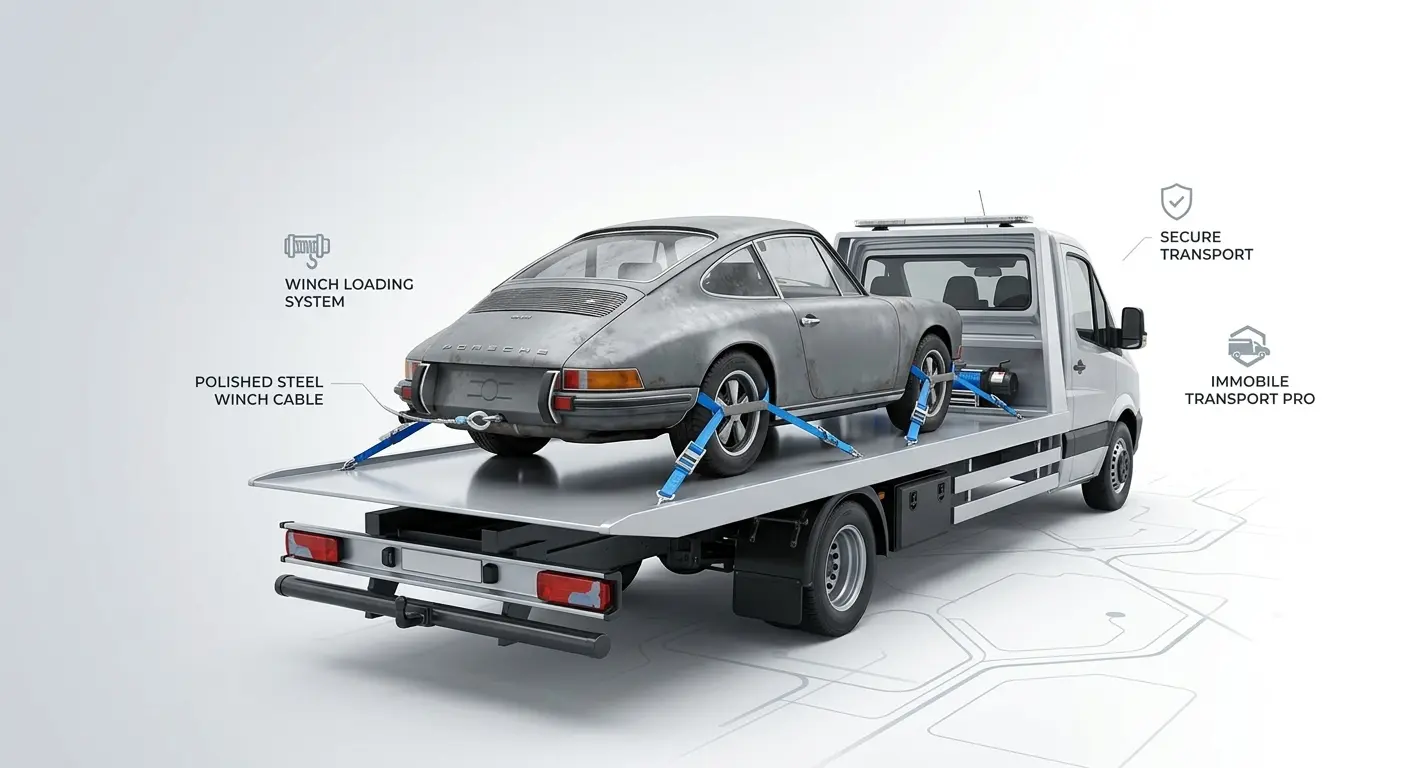
If the vehicle has been in an accident, say what is damaged and whether the wheels still turn. A vehicle that will not roll needs a winch and sometimes dollies.
Photograph the vehicle before loading, including all four corners, the roof and underneath if you can. It takes two minutes and settles any later disagreement about a scratch.
A vehicle leaking oil or fuel should be flagged before transport. It does not prevent the move, but it affects where the car sits on the deck and what protection goes underneath it.
Battery condition matters even for a transport job. If the vehicle has to move a few metres under its own power to get out of a garage or a parking bay, a live battery saves time and avoids resorting to auxiliary equipment.
Check the handbrake works and that the vehicle can be secured on the deck. If it cannot, there are solutions, but it is better known in advance.
Moving several vehicles together usually works out considerably cheaper per unit than separate jobs. If you have more than one to move, it is worth quoting them as one.
If the move includes a sea crossing, check what documentation the ferry operator requires for the vehicle. The registration document and owner details are usually needed, and a missing paper means missing the sailing.
Leave the fuel tank low, around a quarter. It reduces weight, follows standard transport practice, and there is nothing to gain from a full tank during the journey.
An accessible collection point saves both time and money. If the street is narrow or the garage has restricted headroom, agreeing a nearby spot where the truck can manoeuvre simplifies everything.
Ask whether the price includes waiting time at loading and unloading. On moves to workshops, dealerships or compounds with slow procedures, that time can stretch, and it is worth knowing in advance how it is counted.
In summary
Car Transport 247 works across Córdoba and the whole of Spain, 24 hours a day, with goods-in-transit cover for the journey and the price fixed before we start. Tell us your situation and we will give you an honest answer on how it works and what it costs.
Shall we move your car from Córdoba?
Door to door, insured, at a fixed price. No per-kilometre rates that grow later.